In context: Federal safety officials are examining how Tesla's Full Self-Driving software was being used before a Model 3 slammed into a house outside Houston, killing a woman inside and leading to a manslaughter charge against the driver. The case is sharpening questions about how the software responds when drivers push it beyond its limits and what happens when those choices end in a fatal crash.
According to court records and an arrest affidavit, 44-year-old Michael David Butler was driving a 2025 Tesla Model 3 through a residential neighborhood in Katy, Texas, on June 19 when the car left the street and crashed into the home of 76-year-old Martha Avila.
She was taken to a nearby hospital and died there after the crash, the documents say. Butler is now in custody at the Harris County jail on a manslaughter charge. His attorney did not respond to a request for comment.
From the beginning, investigators have focused on how Butler was using Tesla's system. Butler told officials and paramedics that he was working as a DoorDash driver and that the car was in FSD mode before he "passed out" while changing music on the car's touchscreen, according to the affidavit. The affidavit said tests found no alcohol or drugs in his system.
Investigators turned to the car's data and cameras to check Butler's account. They seized the car's so-called "black box" and went through dash-camera footage and event data.
The affidavit says Butler manually pressed the accelerator pedal several times in the neighborhood where the crash occurred, "overriding the default FSD speed." At one point, the car reached 73 miles per hour on the residential street – more than twice the posted limit. The affidavit also notes there was no brake pedal input recorded in the final minute before the crash.
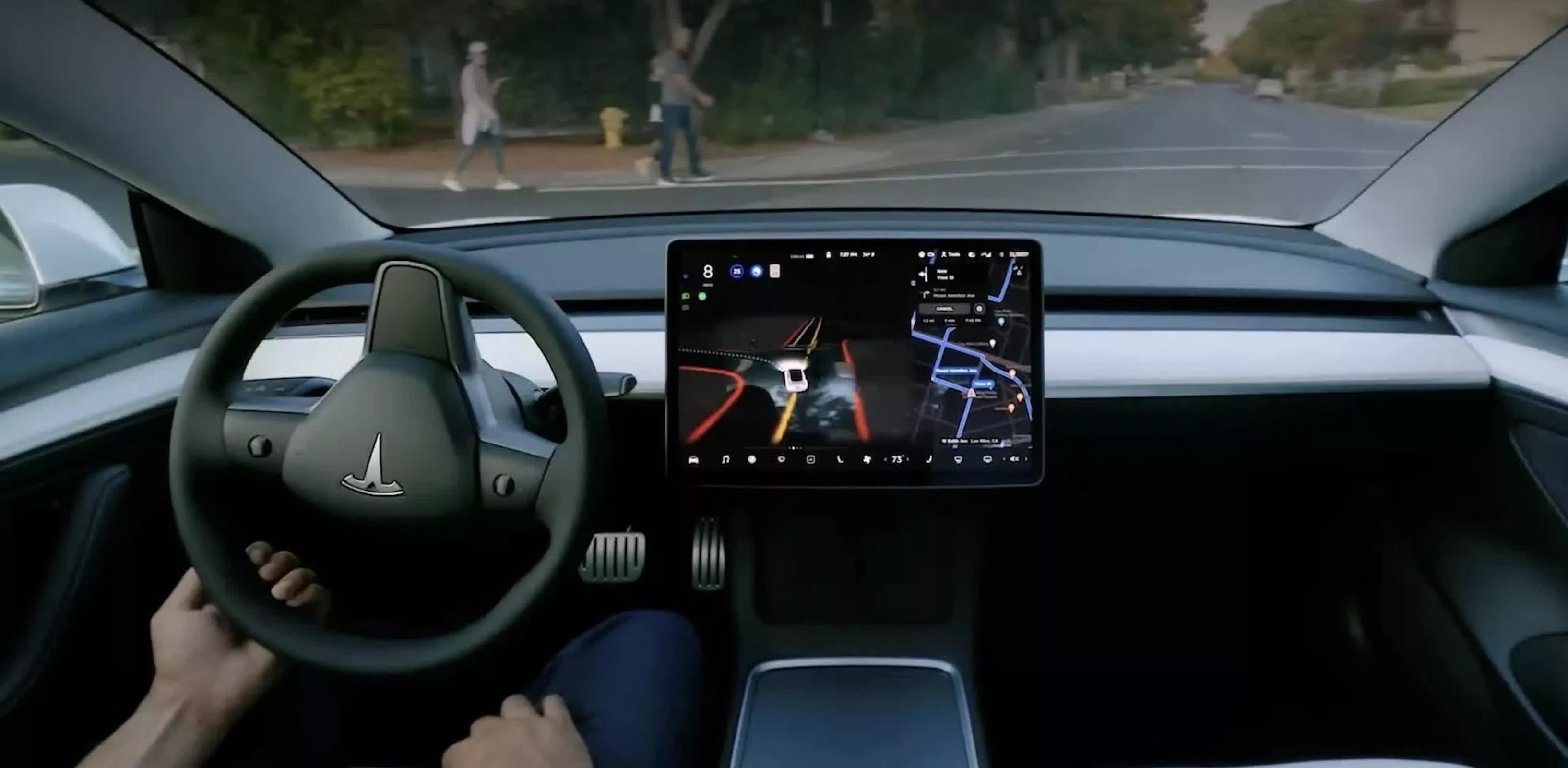
Tesla executives publicly disputed Butler's version of events. On social media, they said the driver pressed the accelerator pedal down and kept it pressed even after the crash. The company says FSD doesn't make its cars self-driving and that drivers still have to stay alert and be ready to step in.
Investigators also looked at Butler's phone. The affidavit says he ran several Google searches that indicated he was frustrated that FSD wasn't "aggressive" enough. That detail suggests a driver who wanted the software to push harder, even though it is designed to leave a safety margin and still depend on human oversight.
FSD is built to manage steering, acceleration, and braking while the driver oversees the system. It uses cameras and software to follow lanes, handle turns, and navigate through city streets, but it remains a driver-assistance feature.
Drivers are expected to stay alert and take over when the system makes a mistake or runs into something it can't handle. In this crash, investigators say Butler's manual use of the accelerator effectively overrode the automated side of the system.
The National Highway Traffic Safety Administration has opened an investigation into the Katy crash. The agency has launched dozens of probes into incidents tied to Tesla's driver-assistance features over the years and requires automakers to report all fatal crashes involving systems like Full Self-Driving.