Now let's learn something
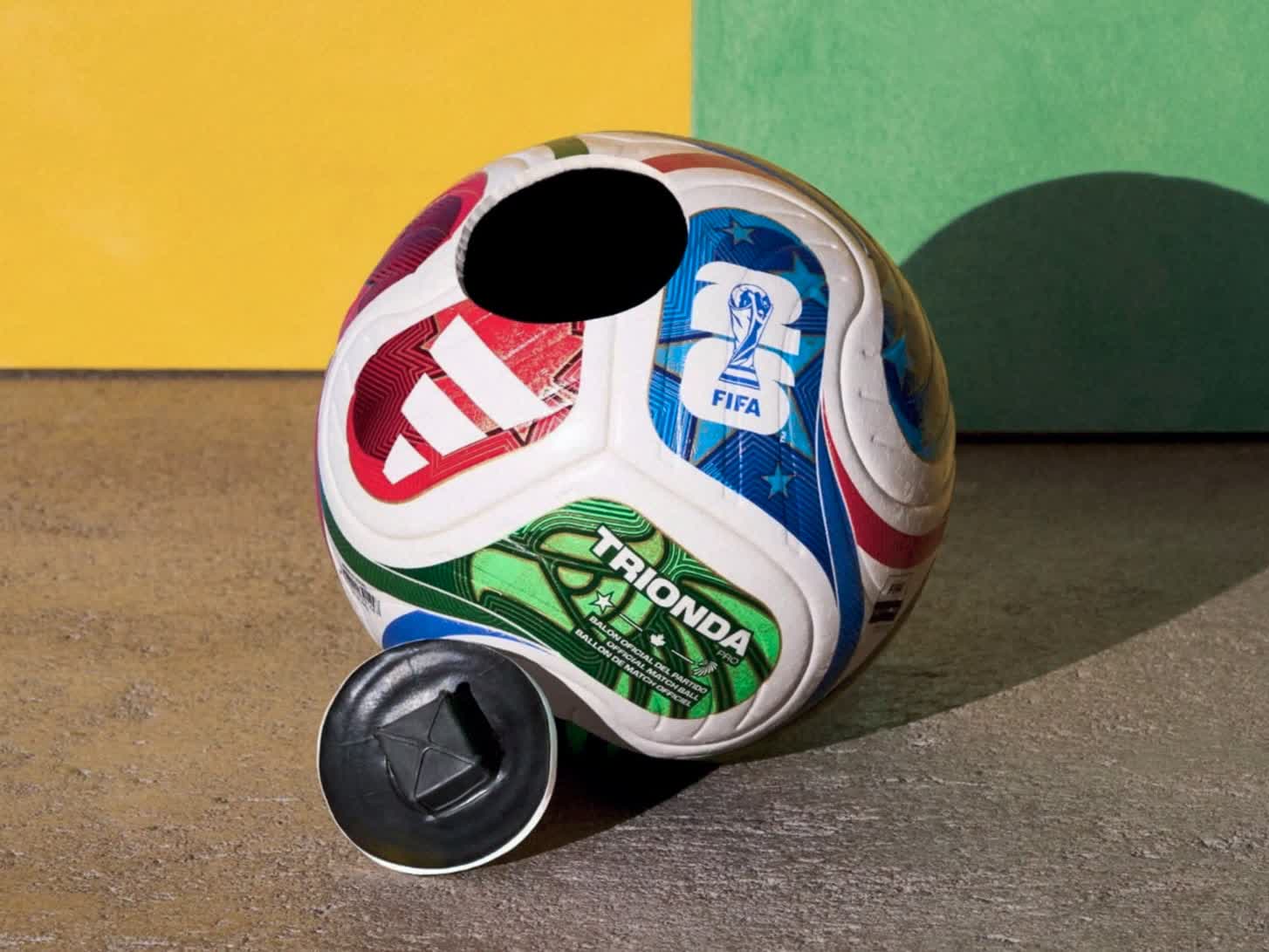
The official ball of the 2026 FIFA World Cup captures data far faster than any camera pointed at the pitch. The Adidas Trionda contains a 500Hz inertial measurement unit, or IMU, which records information about the ball's movement 500 times every second – a new reading every two milliseconds.
That unusually high sampling rate allows the system to pinpoint the moment a player touches the ball with far greater precision than conventional broadcast footage alone. A 60 FPS camera captures a new image roughly every 16.7 milliseconds, while even a 120 FPS feed leaves about 8.3 milliseconds between frames. The ball's sensor fills those gaps with a much denser stream of motion data.
Where that matters most is semi-automated offside decisions. The system combines ball data with player-position tracking and AI to establish the precise "kick point" – the moment the pass was played. Officials can then compare that instant against the tracked positions of both the attacking and defending players. The sensor can also help identify faint or disputed touches, potentially cutting the time VAR spends reviewing deflections and possible handballs.
The 500Hz figure itself is not new. Adidas introduced the same sampling rate with Al Rihla at the 2022 World Cup in Qatar. What has changed for 2026 is where the sensor lives. Qatar's ball suspended the electronics in the center of the bladder. In Trionda, the chip sits inside a specially designed layer beneath one of the ball's four panels.
Mounting electronics on one side would normally risk creating an uneven weight distribution, so Adidas placed counterbalances beneath the other three panels. The arrangement is designed to preserve the ball's balance and flight stability while simplifying the internal construction.
The Trionda's exterior has also been substantially redesigned. It uses just four thermally bonded panels, with deep seams and textured elements intended to distribute aerodynamic drag evenly and improve grip in wet or humid conditions. The connected-ball electronics therefore form only one part of a larger engineering package combining sensors, wireless data transmission, materials science, and aerodynamics.
The ball makes no officiating decisions on its own. Instead, it supplies another high-resolution data source to the VAR system. To viewers it may still look like a conventional football, but internally it functions more like a ruggedized motion-tracking device being kicked around at highway speeds.