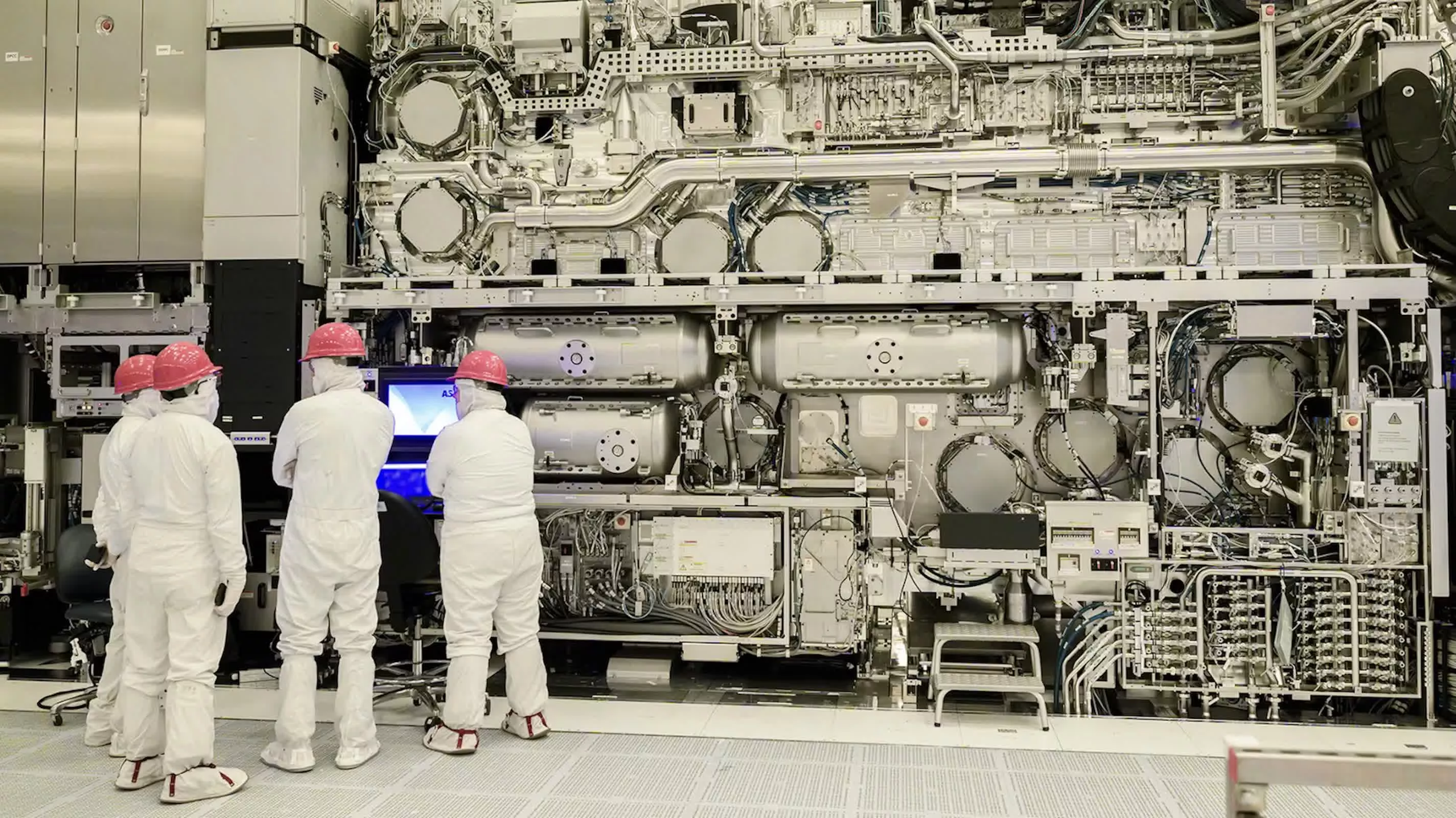
Crystal ball: ASML is the only company that makes the EUV lithography machines needed to produce the world's most advanced chips. Its CEO, Christophe Fouquet, says the AI boom will play out over 10 to 15 years and that we're only seeing the tip of the iceberg. Meeting that demand will depend on better optics, vertical chip designs and a sprawling supplier network that can't be scaled up quickly. That makes ASML's roadmap a useful gauge of how far AI hardware can go, and how fast.
One planned upgrade is a larger mirror aperture in ASML's extreme ultraviolet lithography systems. Larger apertures would let the tools focus EUV light more precisely, supporting finer patterning and future leading-edge manufacturing processes.
At the same time, ASML expects more circuits to be built vertically rather than spread across a flat surface. Stacking transistors and other circuitry could give chipmakers another way to improve density and performance when further shrinking becomes harder. That approach is likely to be important for AI chips, which need more computing power and faster access to memory.
"I think the AI effect on society and industry is going to take 10 to 15 years," Fouquet said. "We're only seeing the tip of the iceberg."
The company's outlook suggests that AI is creating a longer-term need for advances in semiconductor manufacturing, not simply a short-term surge in demand for accelerators. That demand reaches beyond processors to the production tools, packaging technologies, memory, networking equipment and data-center systems needed to support AI workloads.
ASML sits at the center of that manufacturing chain. It is the only company that makes EUV lithography systems, which produce the most advanced chips, and leading foundries use its machines to make processors for AI applications.
The technology is famously difficult to replicate. An EUV system costs up to about $400 million and contains more than 100,000 parts. Lasers, mirrors, vacuum systems and molten tin droplets work together to generate EUV light and direct it onto silicon wafers. The machines are roughly the size of a double-decker bus.
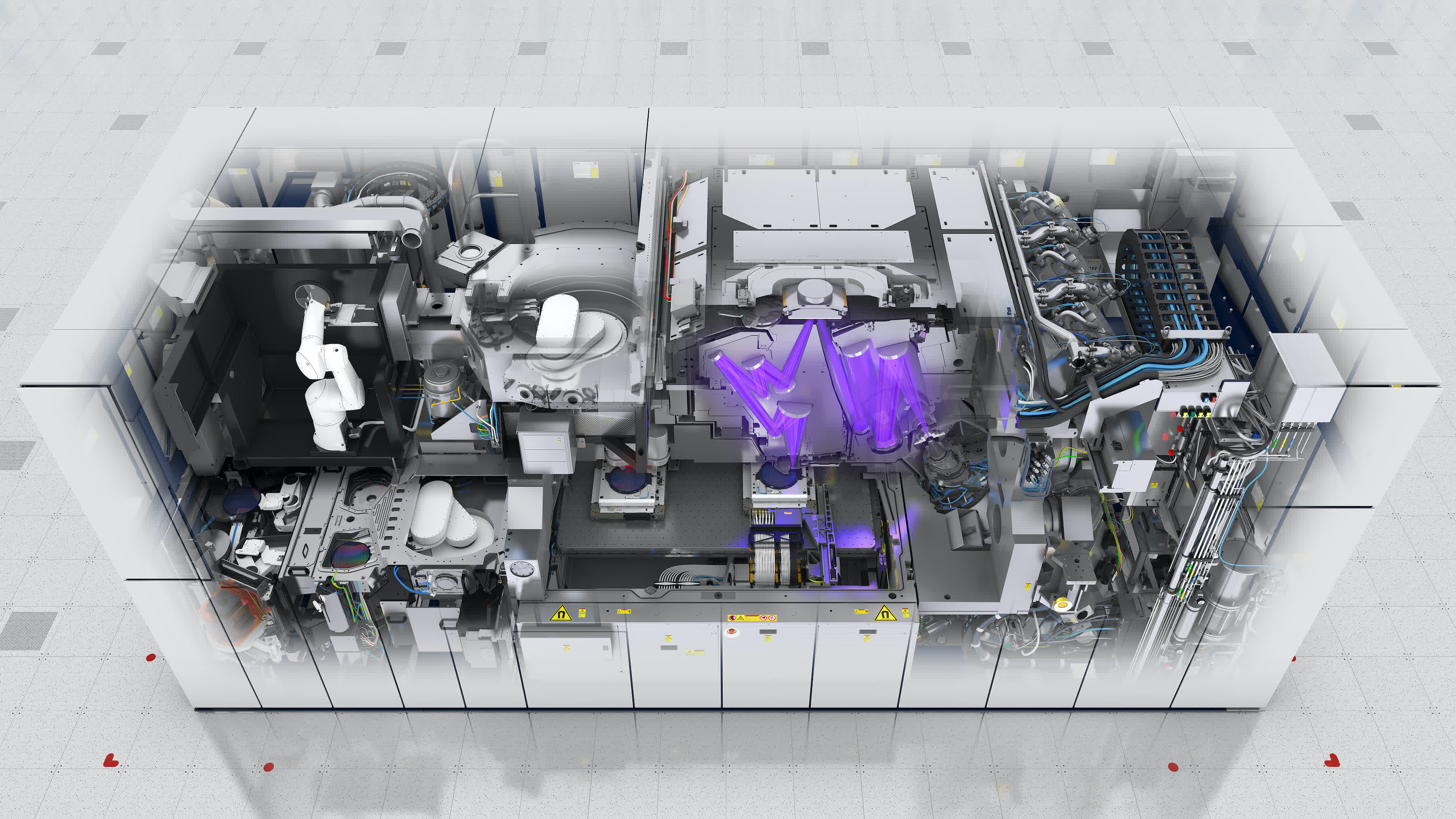
ASML depends on a large group of specialist suppliers. For its EUV systems alone, it works with about 200 main suppliers and roughly 2,000 companies in the broader supply chain. Zeiss provides key optics, Trumpf supplies lasers and VDL makes mechatronic systems. ASML acquired laser maker Cymer in 2013 to secure a critical part of the EUV system.
That supply chain limits how quickly ASML can increase production. The company cannot simply add capacity by spending more on assembly plants. It needs access to highly specialized components, production expertise and suppliers that can meet exact technical requirements.
"The more complex our products became . . . the more advantage we got in terms of competitiveness," Fouquet said. "We could [develop] a lot faster than anyone else."
Nikon and Canon, once major competitors in lithography, remain focused on deep ultraviolet (DUV) systems. DUV tools are still widely used in chip production, but EUV is needed for the most advanced manufacturing.
ASML's position has also made its technology a focus of export restrictions. The company cannot sell EUV systems to China. The policy keeps Chinese chipmakers from buying the most advanced lithography tools, but it also gives China a reason to develop its own equipment supply chain.
Fouquet cited Huawei as an important player in China's work on DUV equipment. China is not close to producing an EUV alternative, but it is working to build capability in DUV systems, components, materials and other parts of semiconductor manufacturing.
ASML has also taken an 11% stake in French AI company Mistral. The investment gives it a connection to Europe's AI software market, although its main role in the AI industry remains its equipment.
For the chip market, ASML's next advances will matter as much as its current systems. Better EUV optics and vertical chip designs could help the industry keep raising performance. But they will also increase the need for specialized manufacturing equipment and a supply chain that can keep pace with demand.