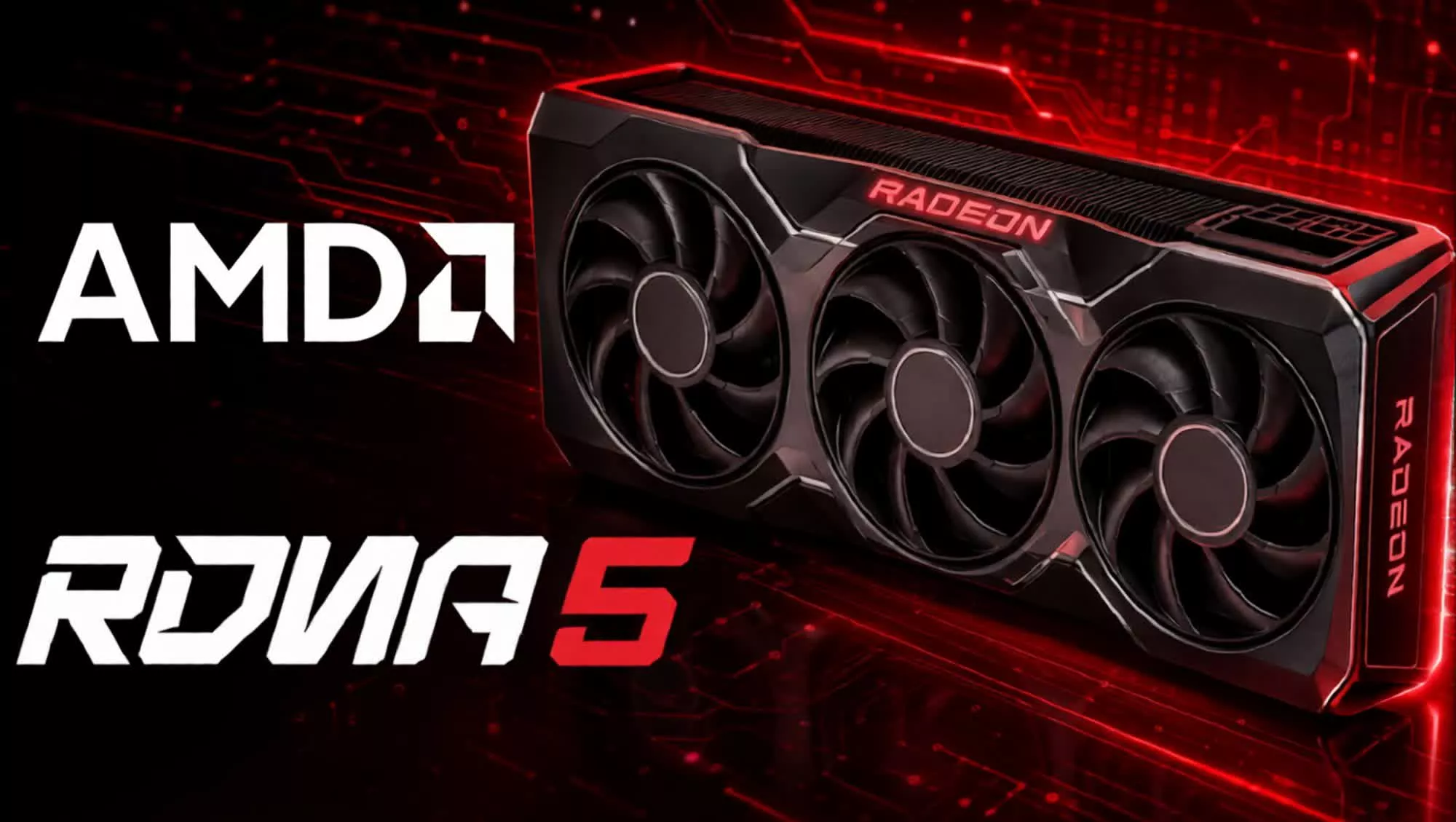
Rumor mill: AMD is on its RDNA 5 graphics architecture as the successor to the RDNA 4-based Radeon 9000 series. A reputable tipster has now revealed that Team Red's next-generation GPUs could ship with clock speeds up to 3.4 GHz, roughly 15% higher than the 2.97 GHz boost clock on the RDNA 4 flagship, the Radeon RX 9070 XT.
According to a post on the AnandTech Forums by the generally reliable leaker Kepler_L2, internal AMD documentation points to a 3.1 to 3.4 GHz target frequency range for RDNA 5. The comment came in response to another forum member questioning whether the integrated graphics in AMD's next-generation APUs could clock as high as 4 GHz.
Kepler_L2 didn't clarify whether that frequency range applies to a specific card or to RDNA 5 as a whole. Since the new architecture is expected to underpin discrete, integrated, and console graphics alike, it's likely only the high-end SKUs will clock above 3 GHz, while entry-level parts settle for lower frequencies.

Earlier leaks suggest the flagship Navi 5X die could pack up to 96 compute units, each with 128 cores, for a total of 12,288 cores. It's also tipped to carry a 384-bit memory bus, 50% wider than the 256-bit bus on the 9070 XT. That wider bus, combined with denser VRAM dies, could pave the way for up to 32GB of GDDR7 memory on the flagship card.
Meanwhile, the mid-tier die is rumored to pack 40 compute units and 5,120 cores, with a memory bus scaling up to 384-bit and as much as 24GB of memory.
A step below that, the low-tier die reportedly features 24 compute units (3,072 cores), a 256-bit to 128-bit memory bus, and 8 to 16GB of VRAM. The entry-level die is tipped to feature 12 CUs with 1,536 total cores, a 64-bit memory bus, and between 8 and 16GB of VRAM.
If the leaks prove accurate, that would mark a massive upgrade over RDNA 4, which caps out at 64 cores per compute unit. AMD could still tweak the RDNA 5 lineup, though, given the ongoing spike in memory prices. With prices unlikely to ease anytime soon, it remains to be seen whether gamers will have to wait for yet another generation before a 32GB graphics card becomes reality.
AMD is now expected to unveil RDNA 5 in late 2027 or early 2028. Board partners had originally anticipated a mid-2027 announcement, but the ongoing memory crunch has pushed the launch back.
Nvidia, for its part, was also expected to launch its Rubin-based gaming GPUs sometime in 2027, though the company has gone quiet on that front for months.