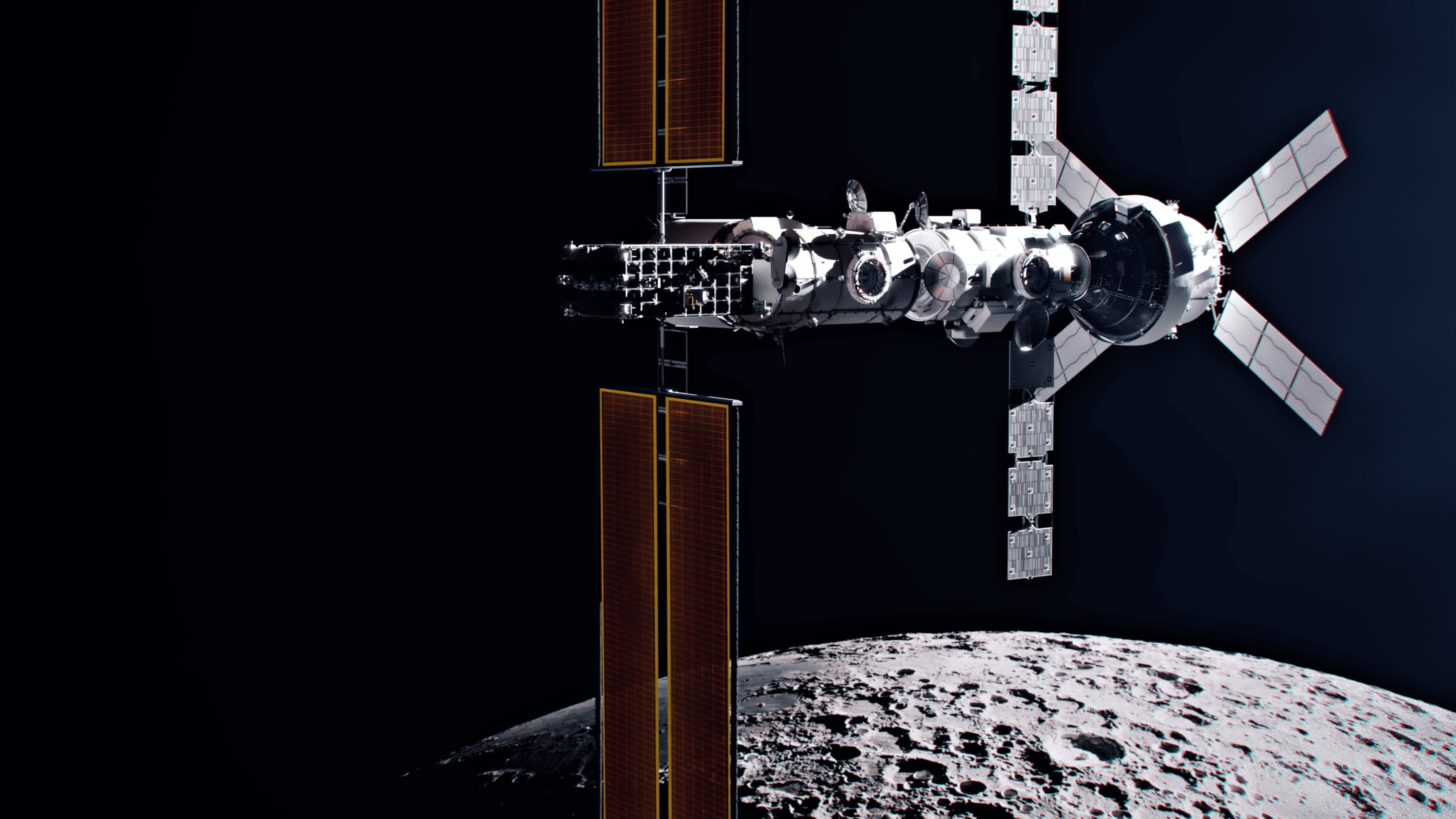
Forward-looking: Fans of sci-fi games and movies might recall the familiar sight of an airport in space, one packed with aliens traveling on ships to different planets. NASA plans to make a more reality-based version of this within the next two decades: Gateway, a lunar-orbiting station billed as the first lunar spaceport.
A team from Texas A&M University, NASA's Johnson Space Center, and Purdue University has now devised the mathematical flight manual and rules of the road that could stop this cosmic airport from descending into Futurama-style chaos.
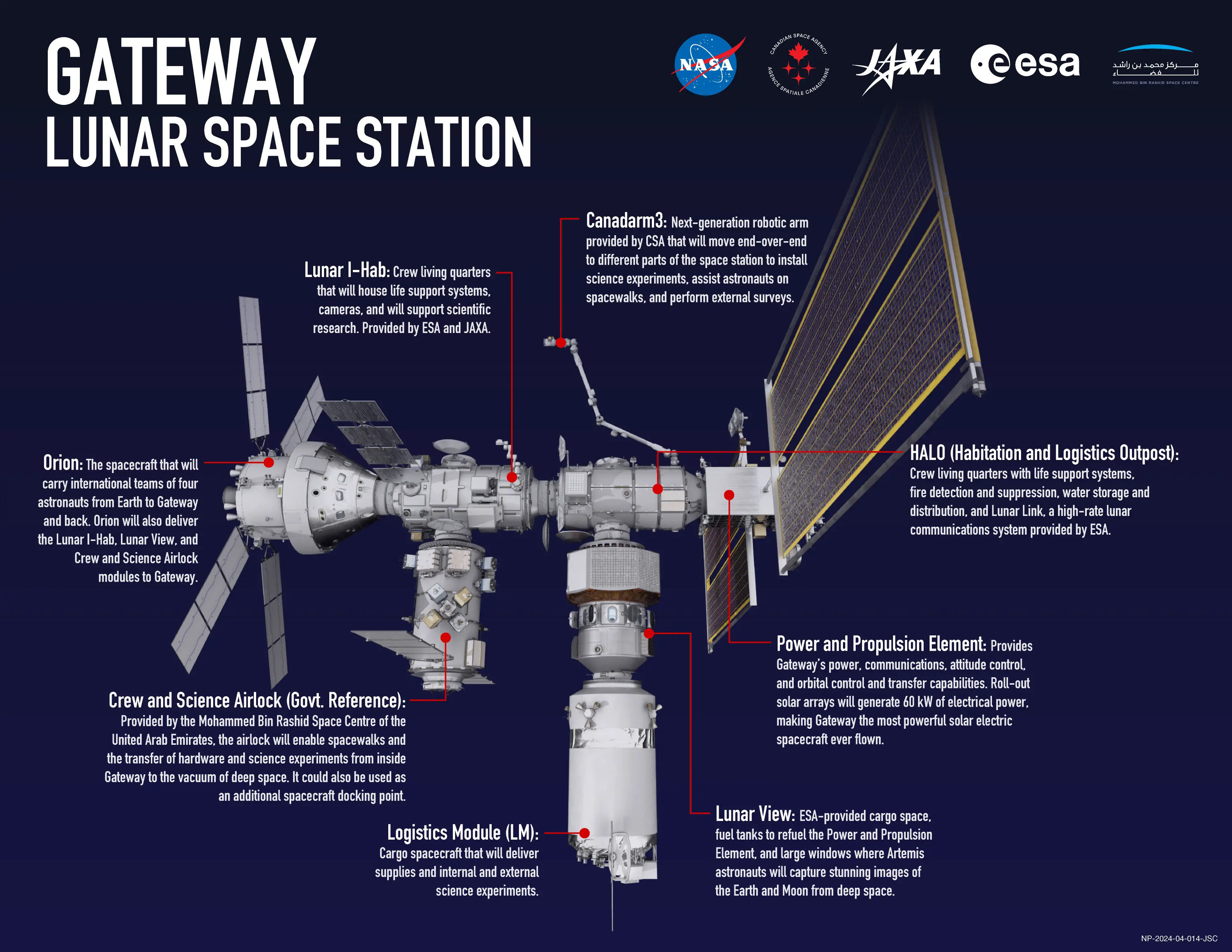
Gateway, which NASA officially describes as humanity's first space station around the Moon, is scheduled to launch "no earlier than 2027." It will act as a hub for Orion crew capsules, cargo vehicles, and lunar landers supporting the Artemis program. Previous reports covered the station's powerful solar-electric thrusters and SpaceX's contract to deliver supplies.
The station will follow a near-rectilinear halo orbit, or NRHO. This elongated, egg-shaped route takes it within about 1,000 miles of the Moon's north pole before sending it almost 40,000 miles past the south pole.
The path offers continuous communication with Earth and requires relatively little propellant to maintain, but the combined gravitational influence of Earth and the Moon makes managing several nearby spacecraft complicated.
Visiting vehicles can't just pull over and park while waiting for a docking port. Everything remains in motion, and spacecraft may need to loiter for hours, days, or weeks before approaching Gateway.
The researchers used thousands of simulations to test how multiple vehicles could safely share the orbit, factoring in navigation errors, imperfect thruster burns, and other disturbances. Their proposed solution places waiting spacecraft at calculated intervals ahead of or behind Gateway, forming what the team calls a string of pearls.
Rather than having each vehicle independently maintain its own version of the orbit, a relative orbit-maintenance algorithm tracks its position against Gateway. Slightly more frequent course corrections kept the spacecraft in tighter formations while using little extra fuel, making their positions easier to predict and reducing the risk of collisions.
The findings, published in Acta Astronautica, aren't enforceable air-traffic regulations. Instead, they're a technical framework for handling future arrivals, departures, and orbital holding patterns.
NASA already maintains interoperability standards covering Gateway docking, rendezvous, communications, and robotics; this research tackles the equally important question of where visiting spacecraft should wait.
There are no baggage carousels, duty-free stores, or arguments over the middle seat in NASA's plans, but this could be the first step toward that vision. Who knows what space travel will look like in a few decades?