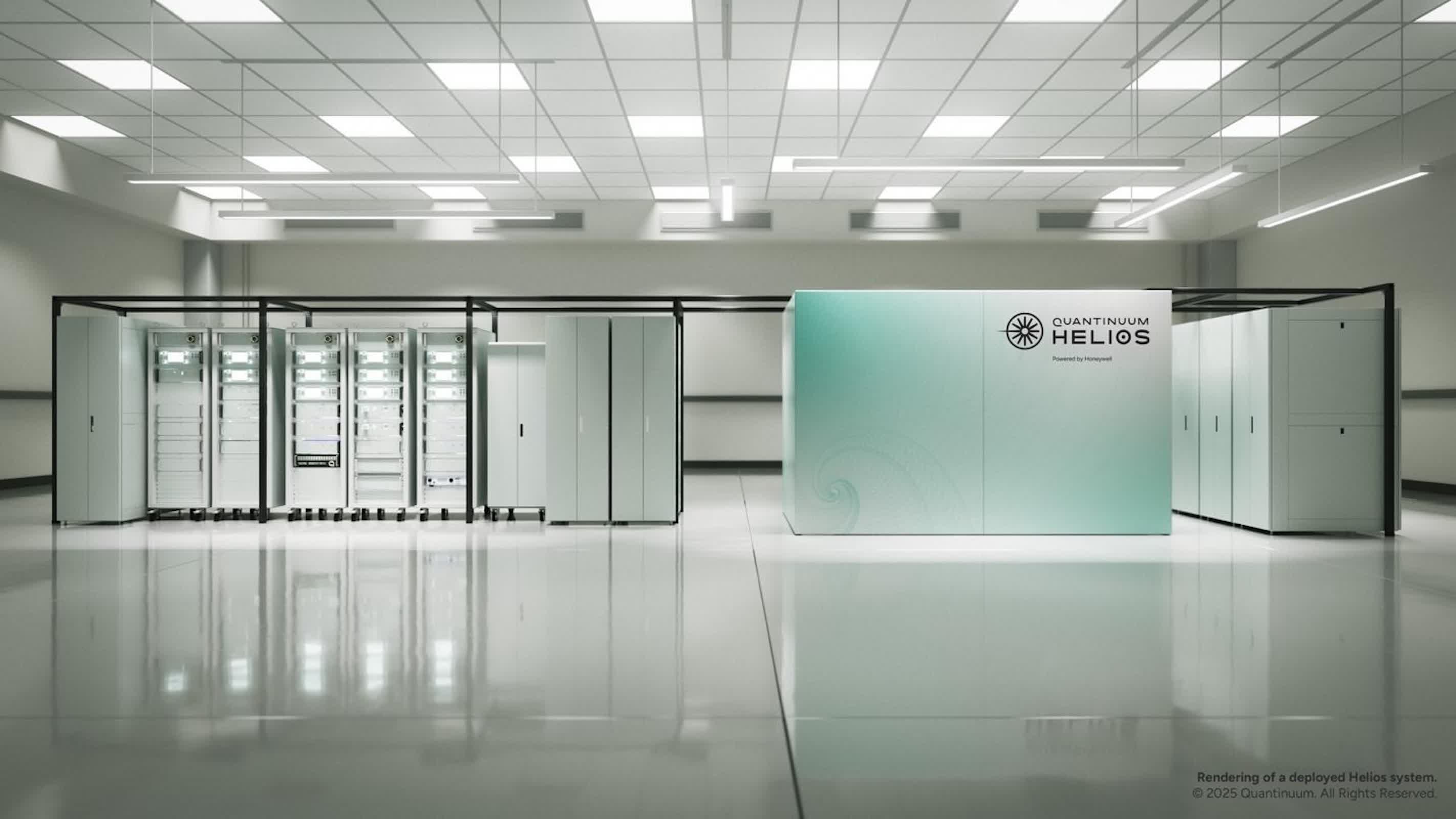
First look: Quantinuum's new Helios processor is a major engineering step for trapped-ion quantum computing, built to solve a problem that gets harder as systems grow: moving qubits through a machine without undermining their performance. The 98-qubit processor uses a four-way junction to route ions between memory and processing areas. It also relies on a control system that plans those movements while coordinating quantum operations. Together, the hardware and software give Helios more room to run operations in parallel than earlier trapped-ion designs.
Helios is the largest trapped-ion quantum computer demonstrated so far. Quantinuum, which is based in Cambridge, UK, and Broomfield, Colorado, previously demonstrated machines with 32 qubits in 2023 and 56 qubits in 2025.
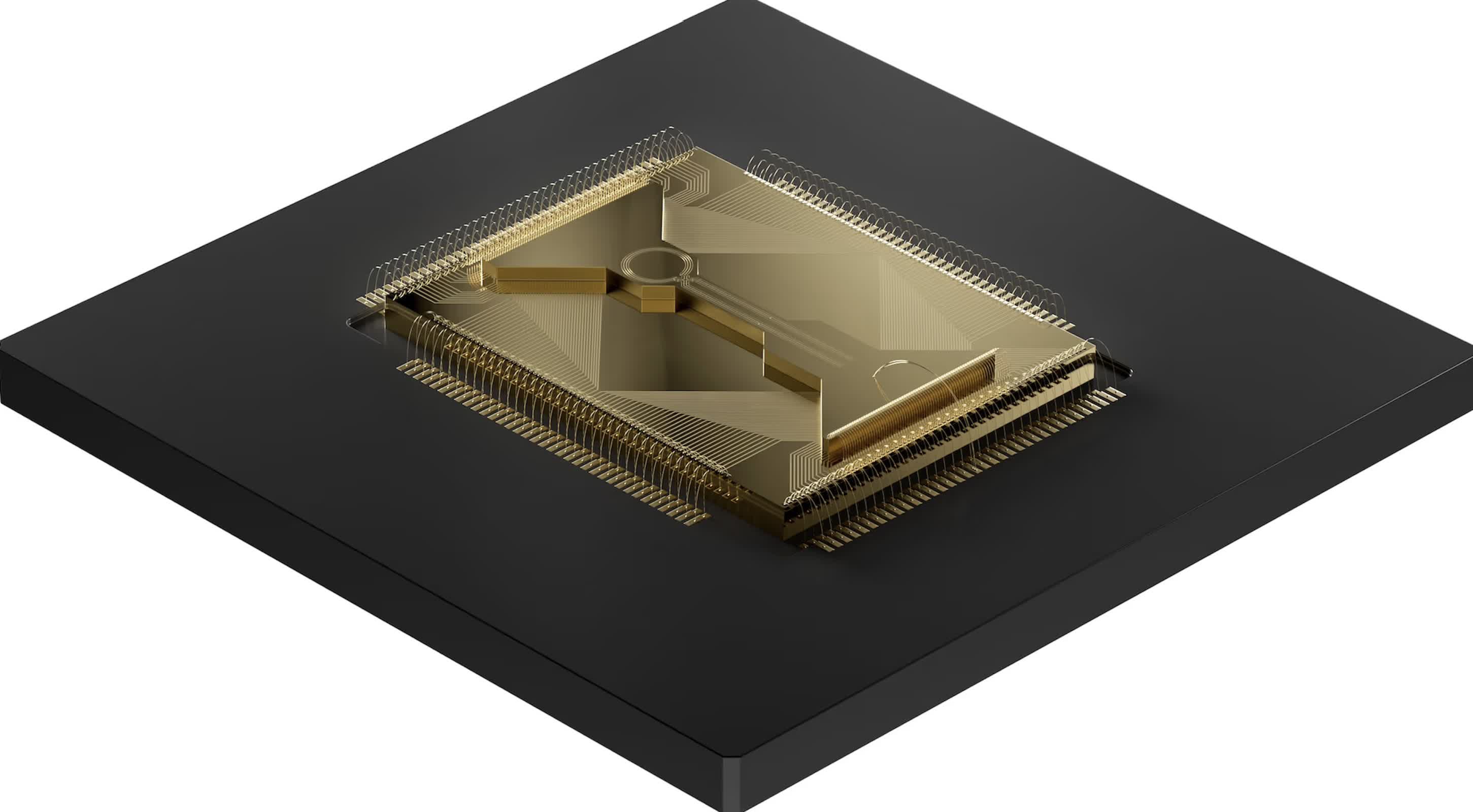
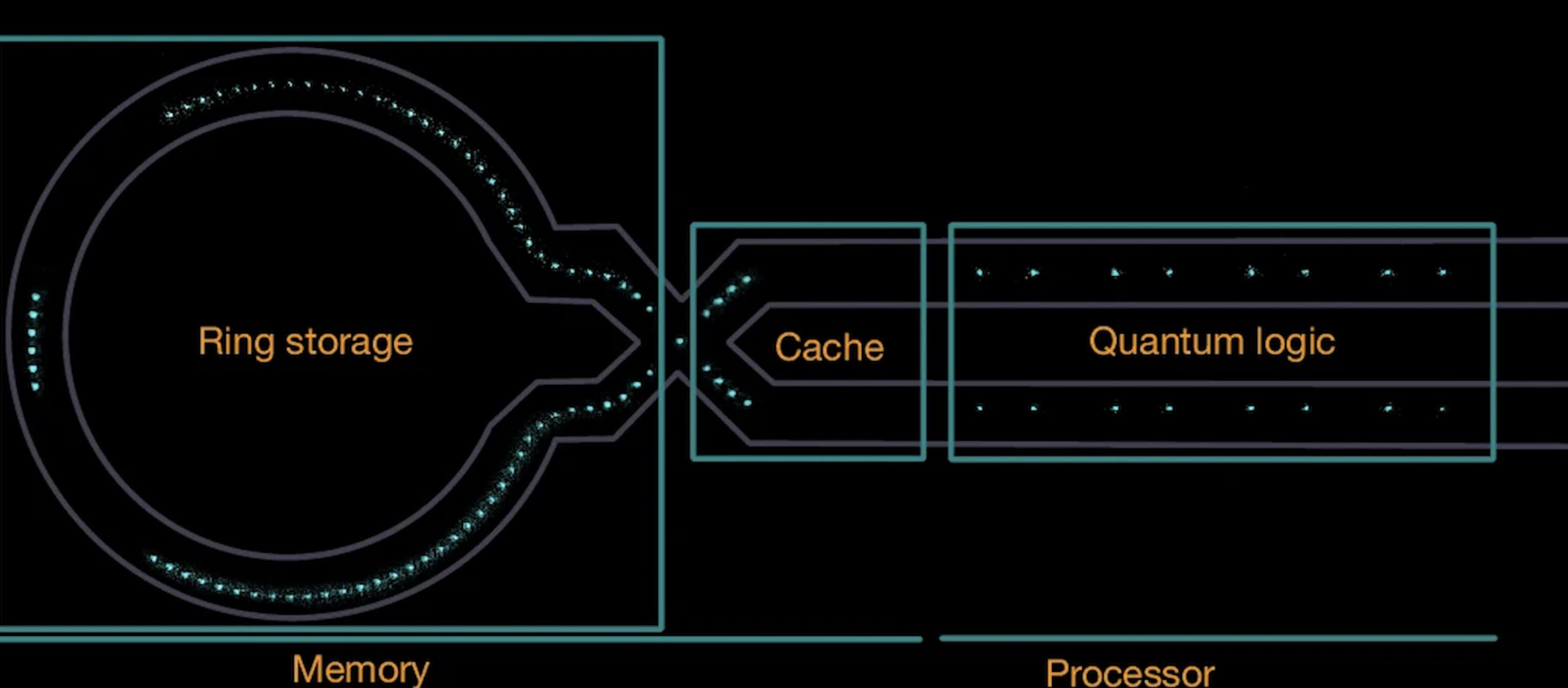
The processor uses charged atoms, known as ions, as qubits. Electromagnetic fields hold the ions above the chip, and laser pulses carry out the quantum gates. Helios follows a quantum charge-coupled device, or QCCD, design. Instead of keeping every qubit in one fixed place, it stores ions in one part of the machine and moves them into separate areas for processing.
Its layout includes a ring-shaped memory region connected to two processing paths. The four-way X junction sits where those regions meet. Earlier QCCD designs could move ions through a line or loop. The new junction gives the system more possible routes and lets it handle multiple tasks at once.
That physical design is only part of the advance. Helios also uses software called Helios runtime to organize the work. The software determines when ions should move, where they should go and when laser operations should be performed. It must avoid routing conflicts while keeping the quantum circuit moving efficiently.
The design differs from superconducting quantum computers, where qubits are generally fixed in place and controlled by electrical signals. In a trapped-ion QCCD system, moving qubits is part of the calculation. The system must transport ions to the proper processing region before certain gates can be performed.
The approach is intended to reduce crosstalk, in which an operation on one qubit interferes with another. It also allows qubits to be measured and reset during a computation, which can help detect and correct errors before they spread. Because ions can be moved through the device, the system can also bring distant qubits together for operations.
Helios demonstrated calculations that known classical methods could not reproduce within practical time and power limits. The work involved random benchmark tests, not scientific or commercial applications. That distinction matters. The processor does not yet show that quantum computing can solve a useful business or research problem better than a classical computer.
The system is also far from fault-tolerant quantum computing. Practical systems are generally expected to require roughly a million qubits. The UK National Quantum Strategy has set a target for a fault-tolerant computer able to perform one trillion operations. Helios' longest reported computation involved about 4,000 operations on 98 qubits.
Scaling the technology would require linking many QCCD devices through quantum connections. Proposed designs envision two-dimensional grids with more qubits and junctions, but that would bring fresh problems. Ions could face traffic bottlenecks as they move through the system, while voltage controls would need to remain extremely precise across a much larger machine.
Helios is not a practical fault-tolerant quantum computer. It is, however, a meaningful breakthrough in the hardware and control systems needed to scale trapped-ion processors.