In a nutshell: China is removing Windows from government systems sooner than planned, telling some state-linked organizations to uninstall a customized edition of Windows 10 several months ahead of schedule. The order brings Microsoft's attempt to build a version specifically for Beijing closer to an end. It also supports the country's long-running campaign to replace foreign hardware and software with domestic alternatives.
Bloomberg reports that China's Ministry of State Security recently issued the instruction to affected organizations. C&M Information Technologies, the developer of the special operating system, had planned to retire it in February 2027.
People familiar with the matter said the accelerated timetable was prompted by data-security concerns, though officials did not identify any vulnerabilities.
Microsoft said it was unaware of any security incident involving the product and that it continues to receive regular security updates. China's State Council Information Office and CMIT did not respond to requests for comment.
The directive arrived just weeks before President Donald Trump's planned meeting with Chinese leader Xi Jinping, amid continuing tensions over technology and national security. The accelerated schedule reportedly surprised some state-agency employees, though there is no indication that it was directly connected to the summit.
CMIT was established in 2016 as a joint venture between Microsoft and the state-owned China Electronics Technology Group Corporation. Windows 10 China Government Edition arrived a year later, following negotiations involving Microsoft CEO Satya Nadella and Chinese finance officials.
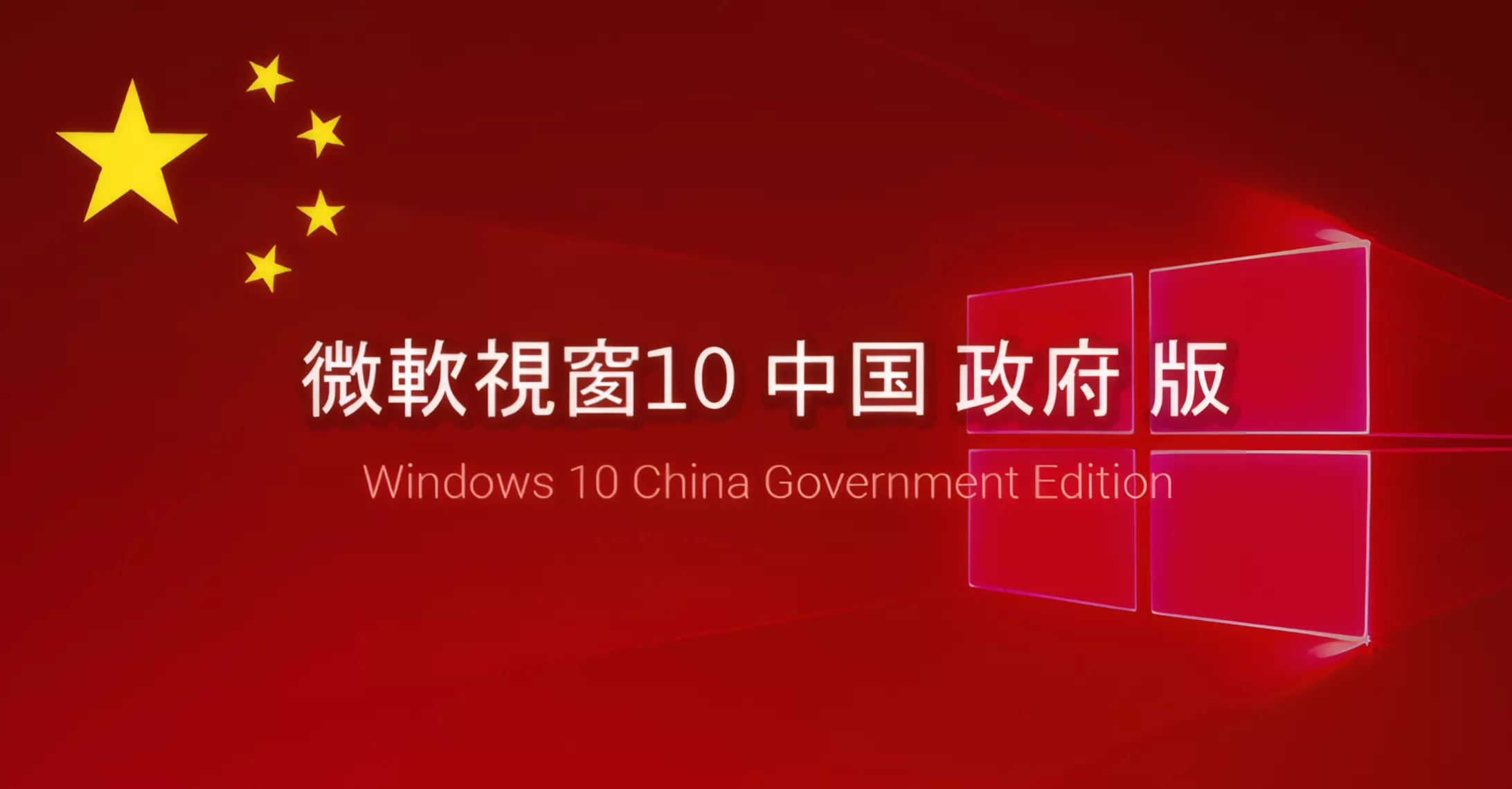
The OS was based on Windows 10 Enterprise but modified for government use. Microsoft said it removed features that officials didn't need, including OneDrive, gave authorities control over telemetry and updates, and supported China's own encryption algorithms. China Customs, the City of Shanghai, and state-owned Westone Information Technology were among its first pilot customers.
The customized build ultimately failed to win the kind of adoption Microsoft wanted. Reuters recently reviewed six Chinese government computer procurement guides published between December 2023 and May 2026. Five did not recommend Microsoft, while the sixth listed Windows 10 China Government Edition with unspecified additional management requirements.
China has been lessening its reliance on foreign tech for years. The country introduced government purchasing rules requiring "safe and reliable" processors and operating systems in 2023. The approved CPU list consisted entirely of Chinese products, while Intel and AMD chips, Windows, and foreign database software were being phased out.
Domestic replacements include operating systems from Kylin Software and Tongxin Software Technology, most of which are based on Linux. China has also backed openKylin, an open-source project intended to replace Windows and macOS.
As a result of these policies, Microsoft's presence in China has been shrinking. At least 15 of its Chinese branch offices and joint ventures have closed in the past five years. However, the company remains in the country, where it sells cloud and AI services to local businesses operating internationally.