
Connecting the dots: Buying a smartphone for under $100 could soon become something you used to be able to do. According to the latest sales figures, this segment declined by 64% YoY in the second quarter – and there are no prizes for guessing why.
Counterpoint Research writes that US smartphone sales fell by 5% YoY in Q2 2026, with memory price increases the main culprit alongside other macroeconomic factors weakening consumer demand.
The market research firm writes that rising RAM demand from hyperscalers continues to drive up memory costs. Meanwhile, higher prices for other goods stemming from conflict in the Middle East are reducing consumers' purchasing power for smartphones and other electronics.
The problem is especially bad for smaller brands, several of which, including HMD, have left the US market or downsized operations. As a result, sub-$100 smartphone sales declined 64% as OEMs either stopped shipping these devices or were forced to increase prices to offset increased memory costs.
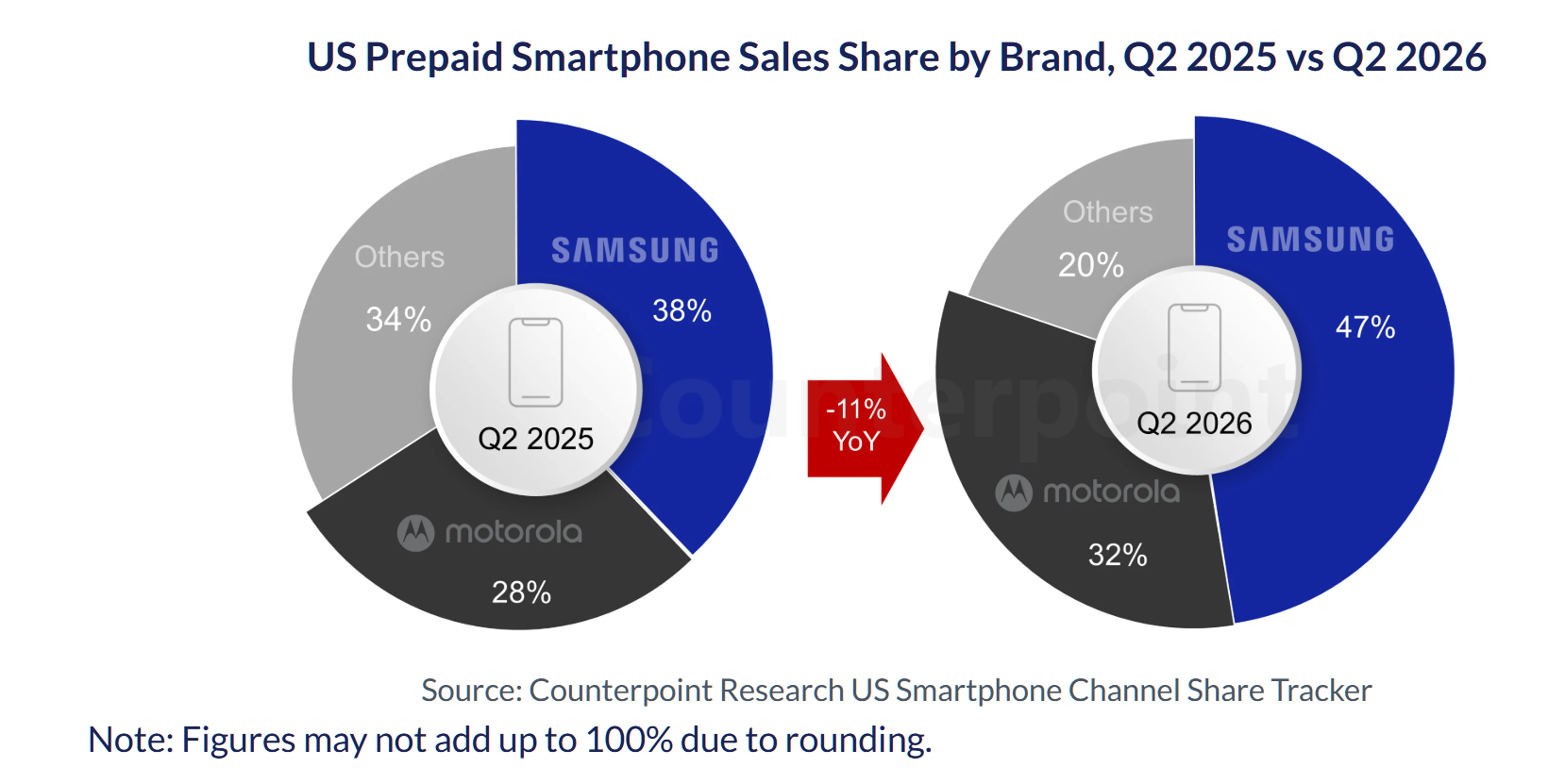
Carrier-branded white-label phones were among the hardest hit. The jump in component costs has narrowed the price gap between these devices and entry-level handsets from larger manufacturers such as Samsung and Motorola, giving buyers less reason to choose the lesser-known alternatives.
Motorola's price increases have seen its G-series phones moved into the previously sparse $200 – $299 bracket, helping sales in that segment grow by almost 200% YoY and tripling its share of the US market.
The squeeze is unlikely to end in the current quarter. Counterpoint expects average smartphone selling prices to continue rising in Q3, when Apple is also expected to increase prices for its iPhone 18 series. Earlier this year, CEO Tim Cook confirmed that price hikes across Apple's product lineup were becoming unavoidable, while one estimate suggested base iPhones could increase by more than $200. Apple has since raised prices on all of its MacBooks and iPads.
This isn't the first time we've heard of a budget electronics category facing extinction because of the memory crunch. In March, Gartner predicted that the rising cost of RAM and NAND could result in the sub-$500 PC market disappearing by 2028.

It was recently reported that global sales of smartphones costing less than $400 are expected to fall 22% this year. Omdia found that memory represented nearly 60% of the bill of materials for these phones in Q1, rising above 64% for devices priced below $99.