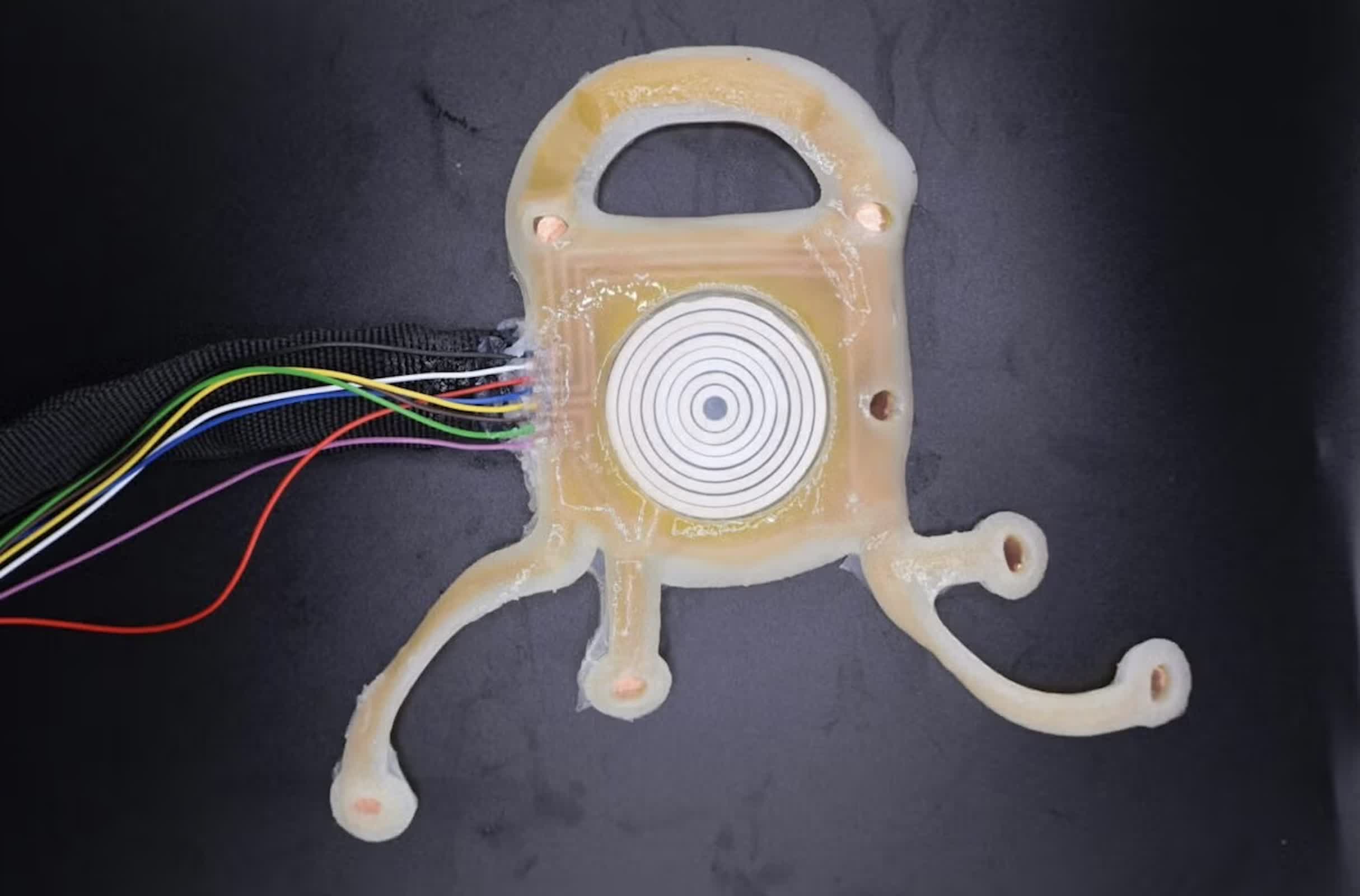
Something to look forward to: Engineers at the University of Texas at Austin have developed a soft patch that helps people enter REM sleep faster and stay in that stage longer, without drugs or surgery. In a study involving 28 people, participants who used the patch, called NEUSLeeP, reached REM sleep 43 minutes earlier than usual and remained in that stage for about 16 minutes longer.
The device works by combining two things that don't usually go together in a wearable: gentle ultrasound stimulation and electrodes that read brain activity. This allows it to reach deep brain regions associated with REM sleep while also tracking the brain's response in real time from outside the skull.
Kai Wing "Kevin" Tang, the recent UT biomedical engineering Ph.D. graduate who led the work, said the achievement, which was published in Nature Communications, marks new territory for the field.
Researchers have never before been able to noninvasively reach deep brain regions involved in REM sleep while simultaneously monitoring brain activity as it occurs. According to Huiliang "Evan" Wang, an assistant professor in UT's Department of Biomedical Engineering who supervised the research, the combination of stimulation and real-time monitoring gives the device its practical edge. He noted that a skin-attached device such as NEUSLeeP could give researchers and doctors new ways to study sleep and treat sleep disorders in patients' homes.
The benefits weren't limited to sleep timing. In healthy participants, the stimulation also increased heart rate variability, a measure used to assess how well the body responds to stress. Brain scans showed changes in circuits associated with emotion, suggesting that the patch could do more than help people sleep – it might also help them cope with stress.
Gregory Fonzo, an assistant professor in the Dell Medical School's Department of Psychiatry and Behavioral Sciences and a co-principal investigator, tied these findings to the role REM sleep plays in the brain. He explained that REM isn't just the stage when dreaming happens – it is also when the brain processes emotions and adapts to stress. As a result, boosting REM sleep could potentially give people a new tool for coping with stress and improving overall well-being.
That's significant because disruptions in REM sleep are repeatedly associated with depression, anxiety, and PTSD. Current treatments, such as medication and therapy, don't always address underlying sleep problems and can come with side effects.
Both healthy sleepers and people with existing sleep problems responded well to the patch in the study. Participants described it as comfortable, and researchers reported few side effects.
The researchers plan to conduct larger trials to confirm the findings and determine whether the patch can help people with PTSD, depression, and chronic insomnia specifically. They also believe it could be useful for at-home sleep monitoring and neuroscience research, since noninvasive tools that can simultaneously stimulate and record brain activity are relatively uncommon.
The researchers are working with Discovery to Impact, UT's commercialization office, to bring the patch closer to market. A patent application has already been filed.