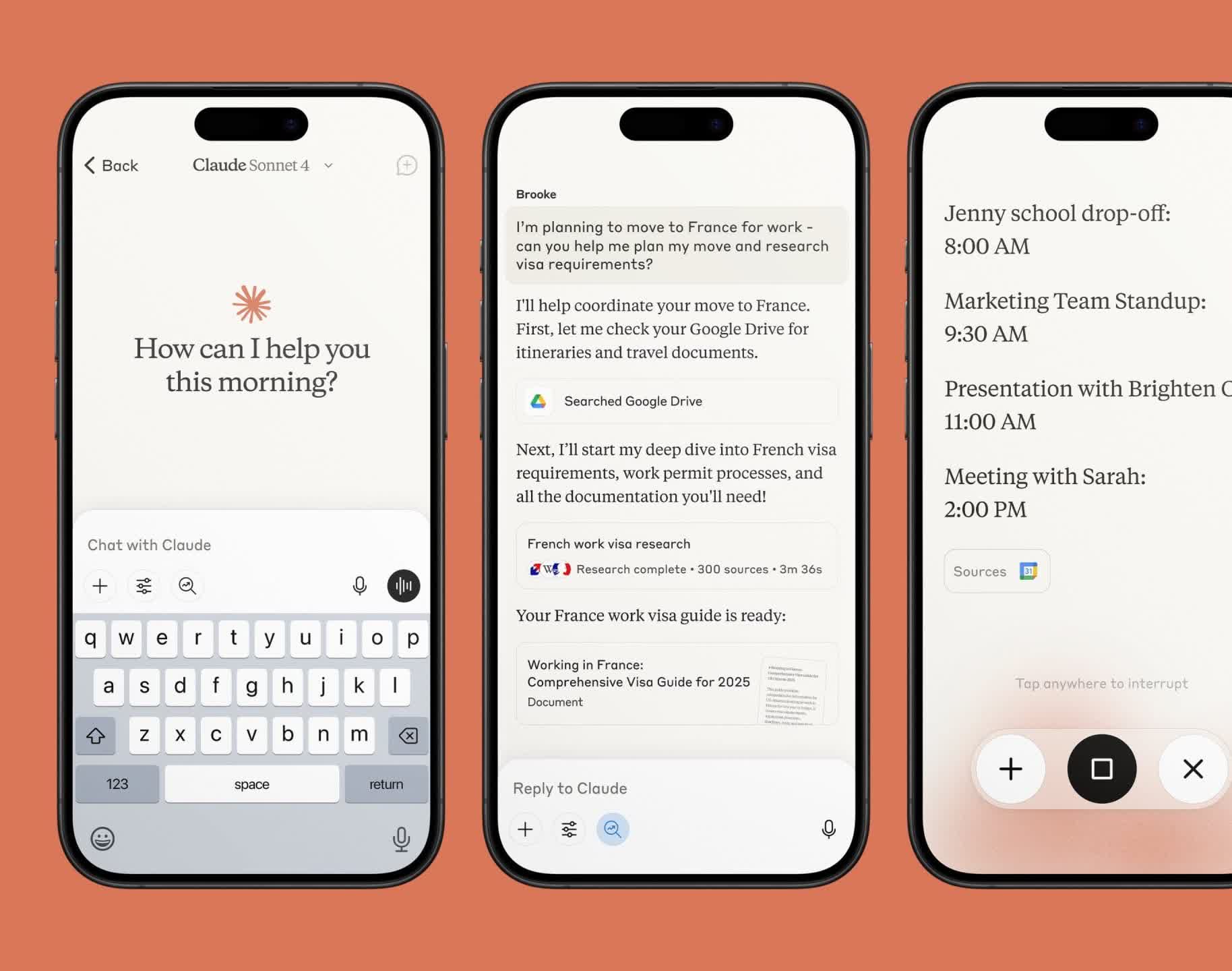
What just happened? Anthropic has moved to block search engines from indexing shared Claude conversations after hundreds of chats appeared in public search results, highlighting how easily user interactions with AI tools can spread beyond their intended audience. The issue stemmed from Claude's sharing feature, which lets users create a link to a conversation. Those links were accessible without requiring a login, and search engines indexed them like any other public webpage.
The exposure first came to light on Reddit, where users demonstrated how to surface the chats. At least 200 conversations appeared across more than two dozen pages of search results, including some created recently. Although the links have since been removed from search indexes, many of the conversations had already been saved and circulated.
The chats themselves covered a wide range of subjects, but some contained sensitive information. Users shared resumes containing names, contact details, and work histories. In other cases, prompts included what appeared to be workplace material, such as a request to draft an unpublished blog post about a cloud security project. There were also conversations involving healthcare topics and what appeared to be transcripts of private exchanges.
Anthropic said the situation was the result of user behavior, not a system failure. A company spokeswoman said users control when and how they share conversations, and that the links are not discoverable unless someone chooses to distribute them.
– Om Patel (@om_patel5) July 26, 2026
"When someone shares a conversation, they are making that content publicly accessible, and like other public web content, it may be archived by third-party services," she told The Guardian. She added that the links are "not guessable or discoverable unless people choose to share them themselves."
Even so, the way the feature works leaves room for confusion. Claude tells users that "anyone with the link" can view a shared conversation, but it does not clearly warn that the link could be indexed by search engines. Once a page is publicly accessible, web crawlers can discover and catalog it unless steps are taken to prevent that.

Google said it does not control what content becomes public. A spokesperson said the company provides website owners with tools to control whether their pages are crawled or indexed and that it adheres to those settings. In this case, Anthropic appears to have used those controls after the issue became public, removing the links from search results.
The same links were also visible on other search engines, including Bing, Brave, and DuckDuckGo.
This is not the first time AI chat logs have surfaced this way. OpenAI dealt with a similar issue last year involving ChatGPT, while X's Grok chatbot also saw large numbers of conversations become searchable. In each case, the underlying problem was not a breach but the way shared links interact with standard web indexing.
The Claude episode makes clear how thin the line can be between private use and public exposure. Once a conversation is turned into a public link, it effectively becomes part of the open web, where it can be indexed, cached, and redistributed.