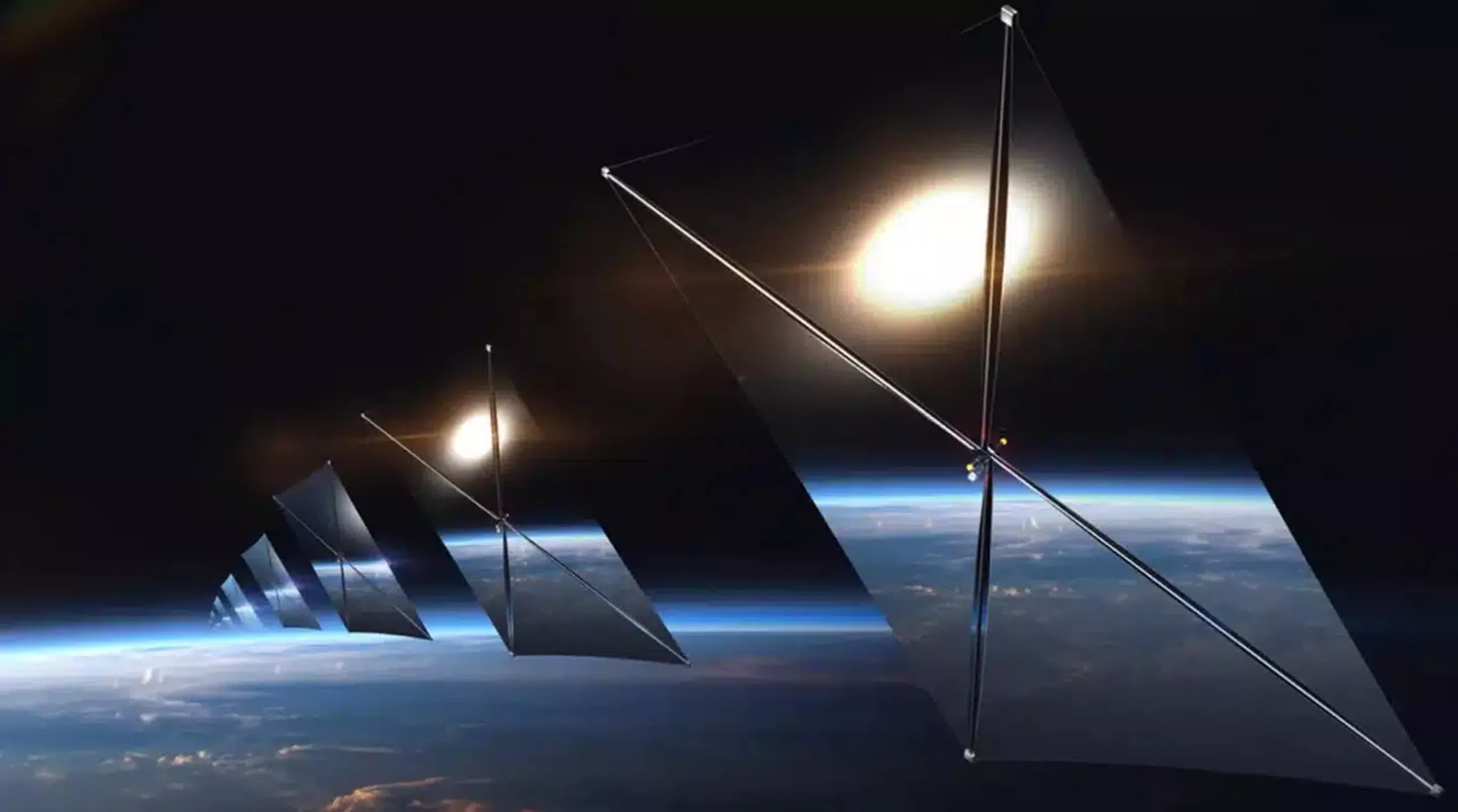
WTF?! Remember the California startup that was developing a constellation of satellites with giant Mylar mirrors to beam sunlight back to Earth after dark? Despite the plan generating a slew of controversy, those satellites have passed another hurdle toward becoming a reality after the FCC approved them.
Back in July 2025, Reflect Orbital submitted an application to launch Eärendil-1, a demonstration satellite designed to test whether sunlight can be redirected from orbit onto specific locations on Earth. The FCC has now granted the satellite permission to operate its radio equipment.
The regulator also rejected calls to block the project over its enormous reflective surface, arguing that the mirror itself falls outside the FCC's authority because the agency primarily regulates communications spectrum.
Eärendil-1 is expected to operate in a near-polar orbit roughly 625 kilometers (388 miles) above Earth. Once deployed, it will unfold an 18 x 18-meter (59 x 59 feet) aluminized Mylar reflector, giving it a surface area of 324 square meters (1,062 feet).
Reflect Orbital says the satellite will direct a moving beam of sunlight onto areas approximately five kilometers (3.1 miles) wide. The demonstration is designed to test the company's ability to deploy, control, and precisely aim the mirror from orbit.
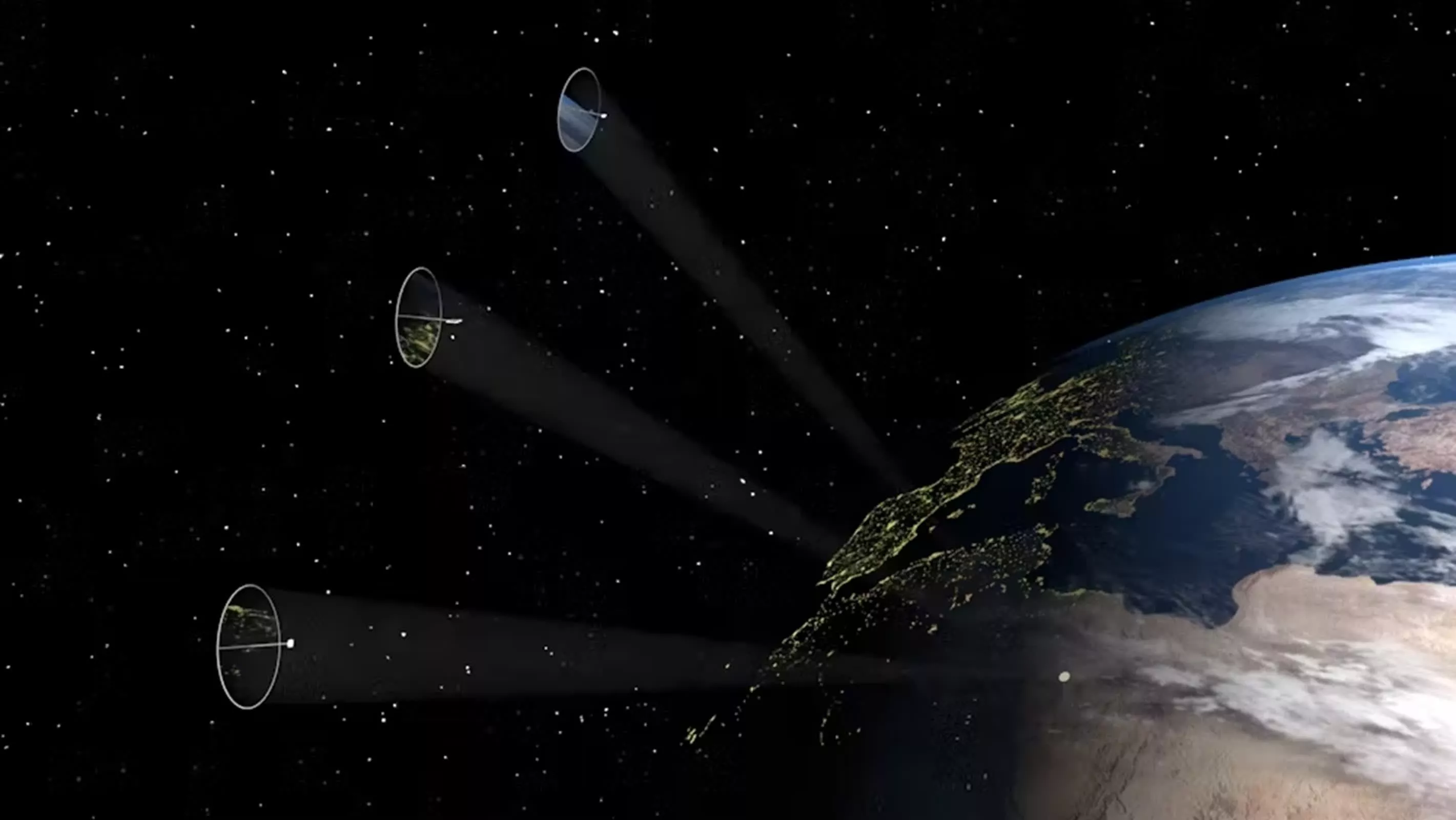
The idea isn't some Simpsons-like plan to keep us awake all the time. The startup ultimately wants to sell "sunlight on demand" to solar farms, allowing them to continue generating electricity after sunset. However, it has also floated possible some more unconventional uses, including emergency response, construction, agriculture, military operations, and large outdoor events.
Beyond the Eärendil-1 prototype, Reflect Orbital has discussed deploying thousands of mirrors by the end of the decade and as many as 50,000 by 2035.
Unsurprisingly, astronomers are not thrilled by the prospect of tens of thousands of giant reflective objects crossing the night sky. The European Southern Observatory recently warned that Reflect Orbital's satellites could become the brightest artificial objects ever placed in orbit.
Researchers say a full constellation could severely interfere with ground-based telescopes, create bright trails across astronomical images, increase overall sky glow, and make observations of faint celestial objects far more difficult.
Other critics have raised concerns about the effects on nocturnal wildlife, human sleep patterns, aviation, and the issue of a private company deciding where and when parts of the planet should be illuminated.

Another concern is the potential to worsen Earth's growing orbital debris problem. Reflect Orbital must comply with strict disposal requirements by deorbiting each satellite within 25 years of the end of its mission, or earlier.
The company insists the beams will be tightly controlled and directed only toward approved locations. It has also said that the mirrors can be angled away from Earth when not in use and that it intends to coordinate with astronomers to limit disruption.
The FCC approval does not authorize Reflect Orbital's planned full constellation, and the company still needs to successfully build, launch, deploy, and control Eärendil-1. SpaceX was selected to carry the startup's first two demonstration satellites aboard Falcon 9 rockets.
Russia attempted a similar concept in the 1990s with its Znamya experiments. The first test briefly produced a moving patch of light across Europe, while a second mission failed after the reflector became tangled during deployment.