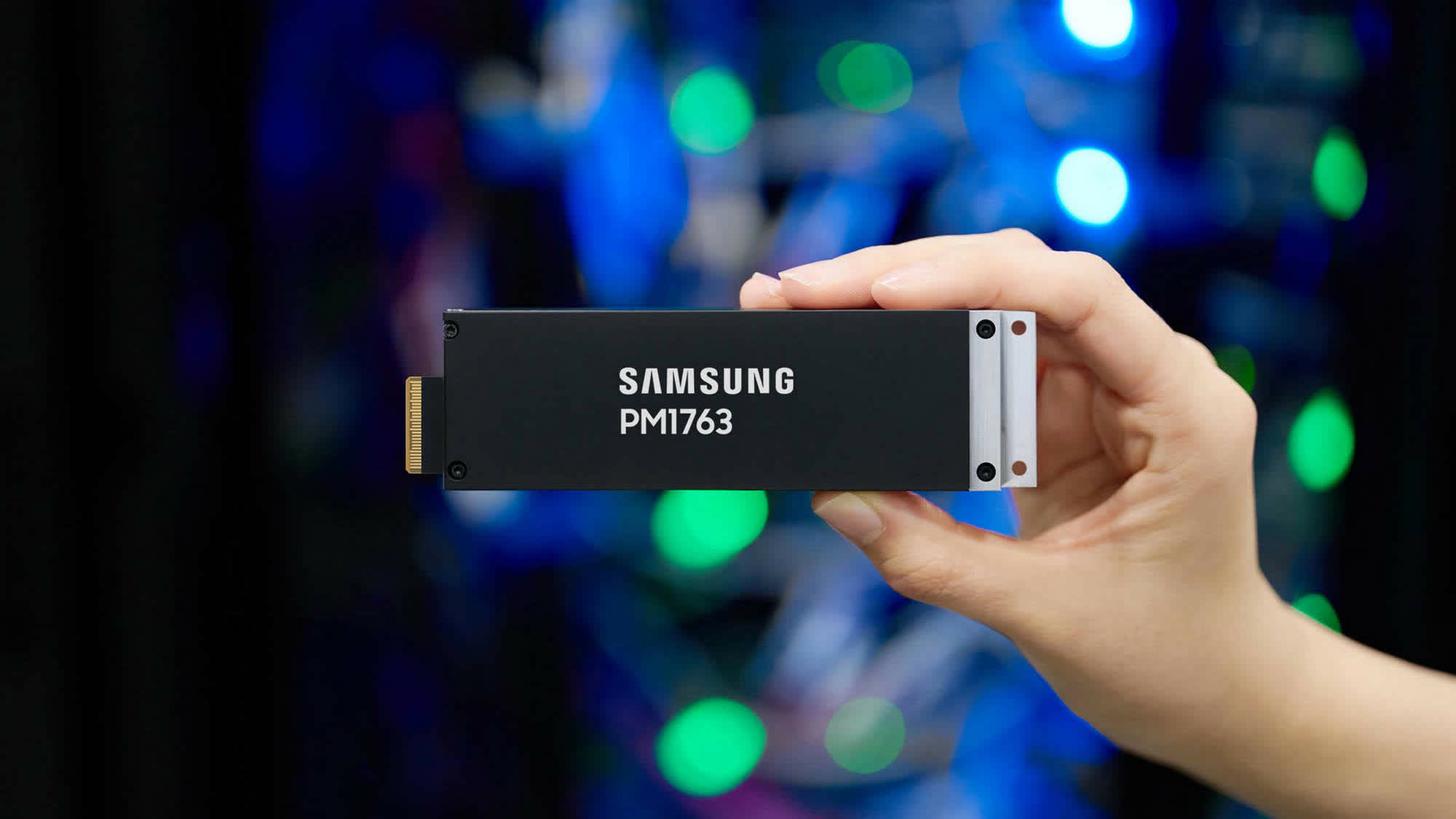
In brief: Samsung has started mass production of its PM1763 enterprise-class SSD, featuring a PCIe 6.0 interface that promises double the throughput of PCIe Gen 5. The new drives are designed to meet the fast, reliable storage demands of cutting-edge AI data centers and high-performance computing environments.
The 16TB model delivers sequential read and write speeds of up to 28.4 GB/s and 21.9 GB/s, respectively, while claimed random read and write performance reaches up to 6,800K and 950K IOPS. At these speeds, the new SSDs can transfer a 40GB LLM in just 1.4 seconds, roughly twice as fast as the PCIe Gen 5-based PM1753 drives, which require around 2.7 seconds to complete the same task.
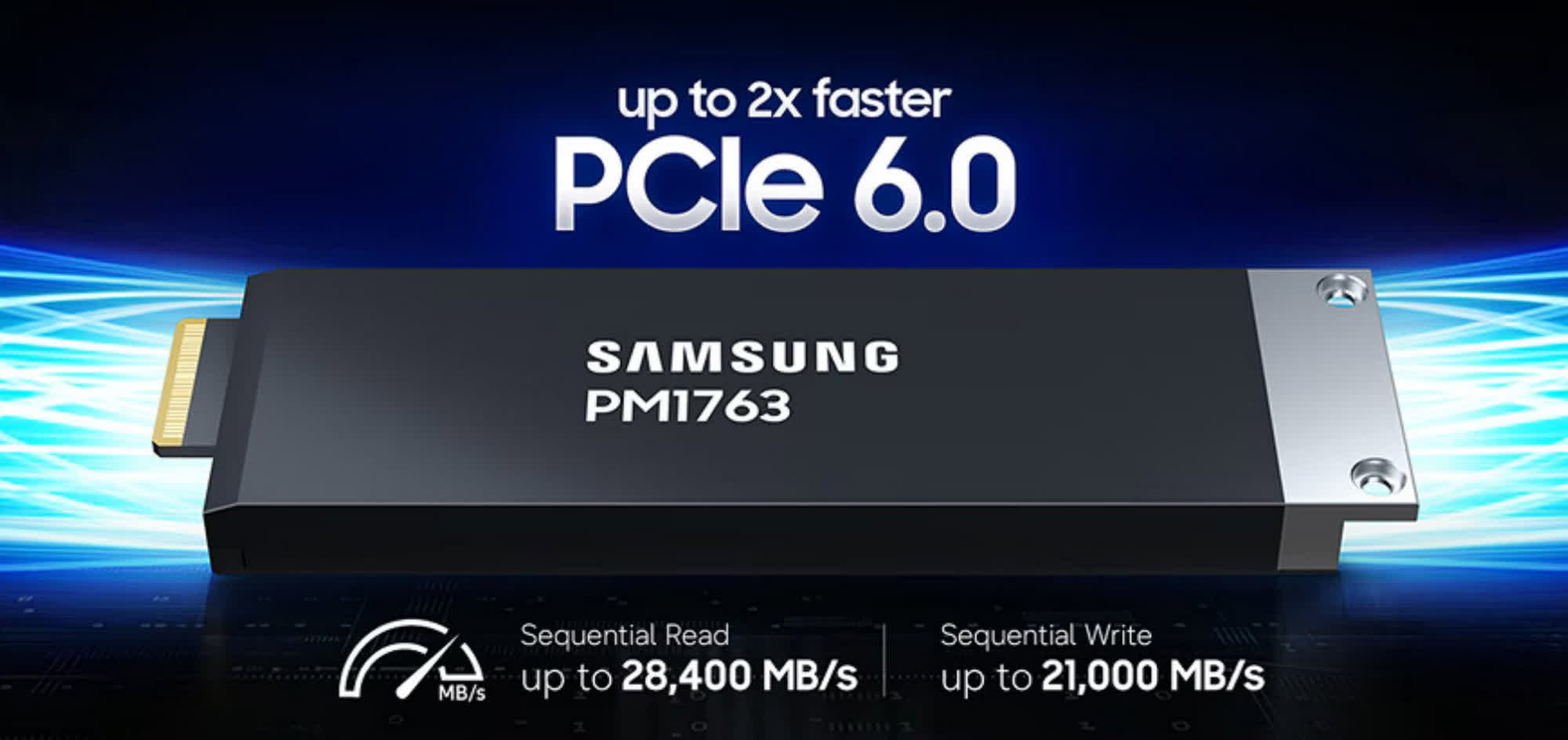
The Gen 6 drives are built using Samsung's 9th-generation V-NAND and a newly developed 4nm controller, which the company claims delivers a significant improvement in power efficiency compared with its previous-generation chips. According to Samsung, power efficiency has improved by up to 1.8x over its Gen 5 models, helping reduce data center operating costs.
Samsung says the new drives are optimized for liquid-cooled server racks through direct-to-chip cooling technology. They are also designed to deliver sustained peak performance and long-term stability, ensuring data integrity across a range of demanding workloads, including analytics, databases, and AI inferencing.
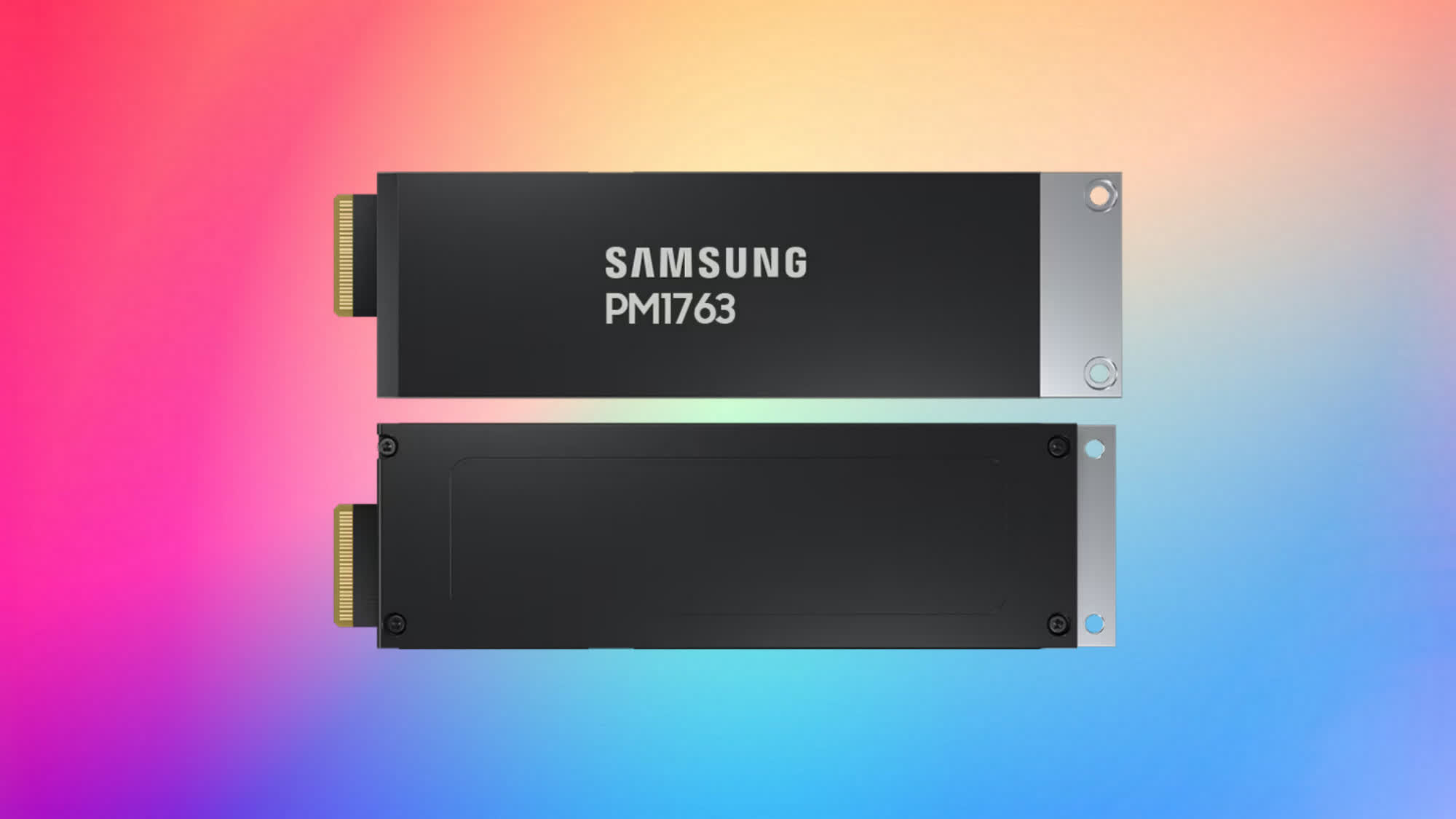
The PM1763 is available in 4TB, 8TB, and 16TB configurations at launch, but Samsung has also listed "30.72TB" and "61.44TB" capacities on its official product page, suggesting that the lineup could expand to include 32TB and 64TB models in the near future. All new drives are available in 2.5-inch E1.S and E3.S form factors and comply with NVMe 2.1 and OCP 2.6 standards.
The PM1763 SSDs incorporate the latest security protocols, including post-quantum cryptography algorithms designed to protect against future quantum computing threats. This represents a major addition to the PM1763's security features, as quantum computers are expected to eventually break traditional RSA encryption and elliptic curve cryptography far more efficiently than conventional systems.
The new drives also support the SPDM open standard and TDISP security architecture. While SPDM enables hardware components to securely authenticate and verify each other's identities, TDISP allows encrypted virtual machines to directly access hardware components while establishing secure data pathways between the guest VM and the device.
The PM1763 is Samsung's latest enterprise-class PCIe Gen 6 SSD lineup, delivering significantly faster data transfer speeds and improved power efficiency compared with PCIe 5.0-based drives. However, these drives are unlikely to remain the fastest storage solutions for long, with PCIe 8.0 expected to debut in 2028 with up to 1TB/s of bidirectional bandwidth.