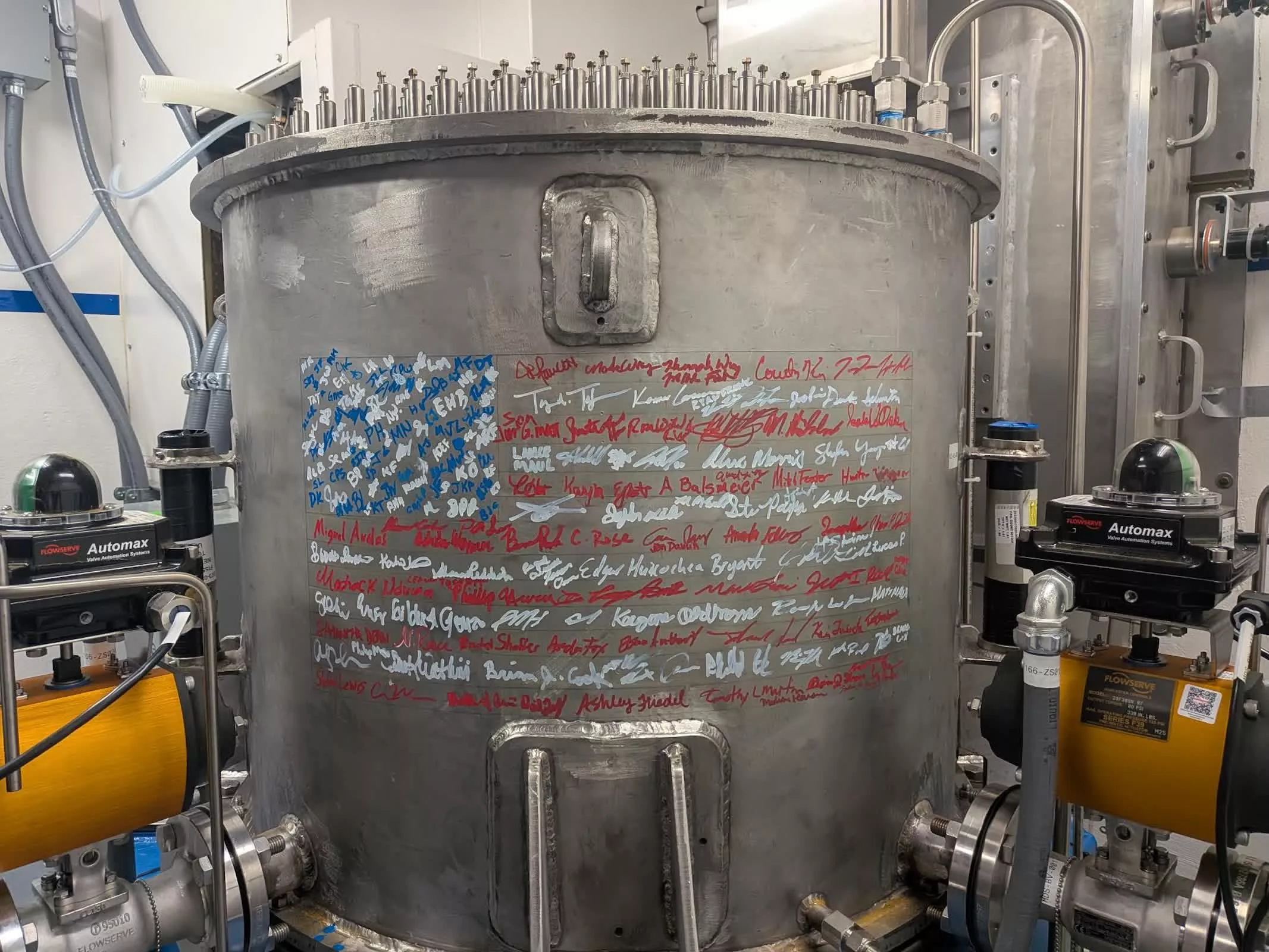
What just happened? The Trump administration has reported that a new experimental nuclear reactor has reached criticality – the point at which it sustains a controlled nuclear chain reaction. That makes three advanced test reactors backed by the Energy Department that have now hit this key operating milestone. The program is aimed at next-generation nuclear technology that could serve high-demand power uses such as data centers.
Unity, a microreactor from Houston-based Deployable Energy, is the latest of the three to reach criticality as part of a Department of Energy effort to accelerate advanced nuclear demonstrations. A reactor from Torrance-based Antares and another from El Segundo-based Valar Atomics cleared the same hurdle in June.
All three are far smaller than traditional nuclear plants. They are being used to test new reactor designs and fuels that industry hopes will be easier and cheaper to deploy than today's large reactors, which provide roughly one-fifth of US electricity.
The Energy Department has given Antares and Deployable access to its laboratories and overseen detailed safety reviews for their demonstration units. It also provided the final authorization that allowed the reactors to go critical. Bobby Gallagher, CEO and co-founder of Deployable, said meeting the criticality benchmark would not have been possible "without the firm dedication of the DOE for safety, quality and speed" or without support from staff at Idaho National Laboratory, where Unity is being tested.
The administration's push comes as power demand in the United States is rising, especially from data centers built for artificial intelligence and cloud computing. These facilities use enormous amounts of electricity, and some developers are looking at microreactors and small modular reactors as possible dedicated power sources.
Michael Goff, principal deputy assistant secretary in DOE's Office of Nuclear Energy, told Politico that the recent progress shows nuclear projects do not have to drag on for decades. "The fact that they can do this and do this so quickly, it shows that the preconceived notions we've had about nuclear are no longer valid anymore," he said. "Nuclear doesn't have to take a long time if we have the right enabling environment to move forward. Nuclear can move forward fairly rapidly."
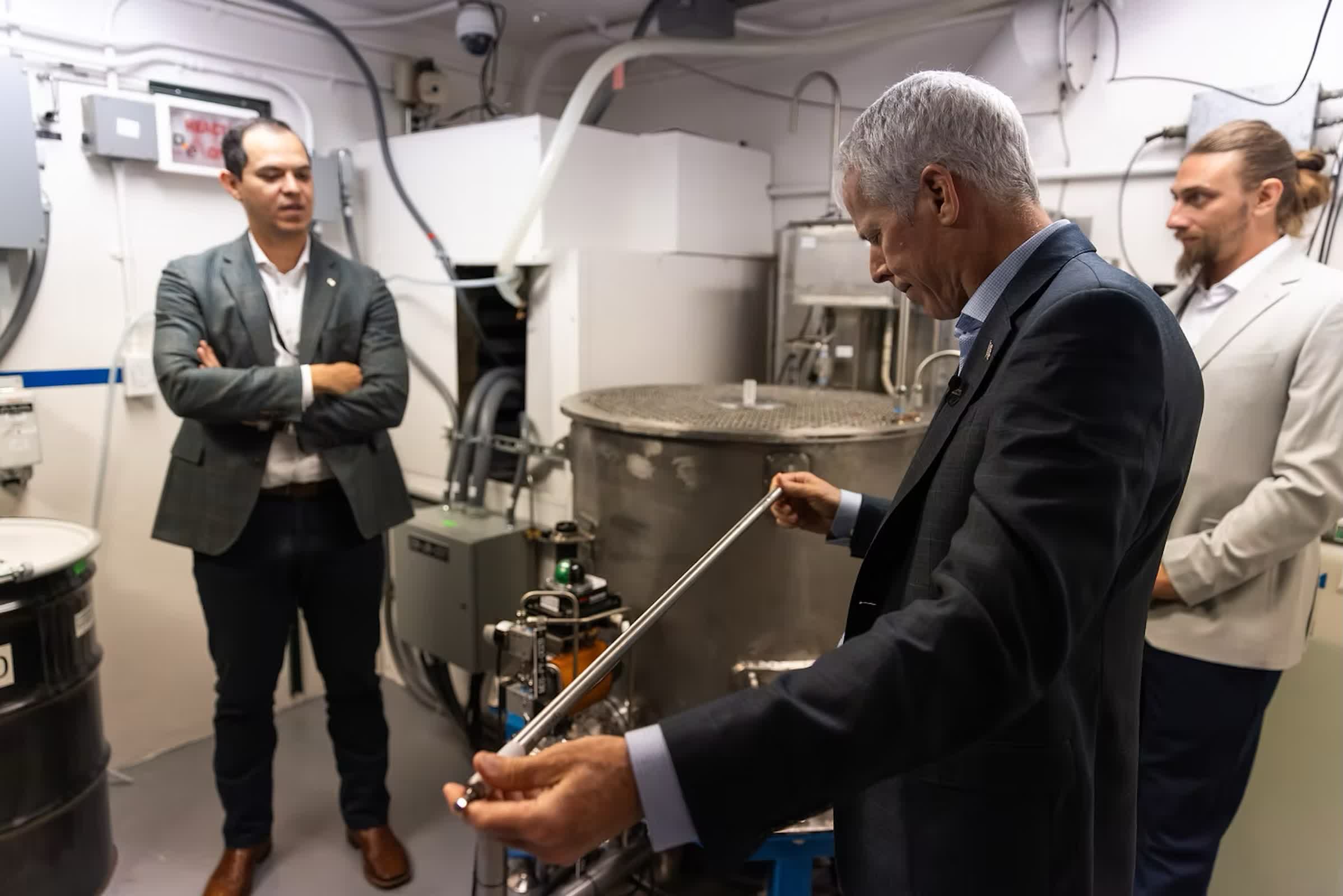
The broader policy goal is to revive nuclear power after years of slow growth. The administration has set an objective of quadrupling net nuclear generating capacity to 400 gigawatts by 2050, a steep climb for an industry that has seen only a handful of new reactors come online in three decades.
Support from both parties in Congress, the recent start-up of two large reactors in Georgia, and concern over rising electricity costs have all fed interest in small modular designs and microreactors.
Unity and Aalo Atomics' reactor are part of two related DOE efforts to push advanced designs toward commercialization. Aalo's unit is included in a reactor pilot program launched last year, while Deployable's is in a separate department program that began in March. Both are designed to help companies move from concept to demonstration and, eventually, toward commercial deployment.
Though none of these microreactors or small modular reactors is yet in commercial use in the United States, they have drawn interest from data center developers watching electricity demand climb.
For the demonstrations, DOE has cut much of the red tape that critics say slowed nuclear development in the past. But the authority to grant commercial licenses still lies with the Nuclear Regulatory Commission (NRC). The agency is undergoing changes prompted by a White House directive and the bipartisan ADVANCE Act, passed in 2024, which directs regulators to streamline reviews of new reactor designs.
DOE officials, including Energy Secretary Chris Wright, say NRC staff have been involved throughout the process of bringing the demonstration reactors to criticality. Goff said he hopes that early involvement translates into an "accelerated process" when companies seek full licenses.
A proposed rule would give advanced reactors a faster path to NRC approval if they have already been reviewed by DOE or the Defense Department. Gallagher said Deployable is likely to apply for a commercial license later this year, once a new microreactor licensing rule is finalized. He expects the NRC review to take six to twelve months. However, people in the sector caution against assuming that successful tests mean commercial power is close at hand.
Energy advisers and former DOE officials say the pilot projects are important but limited, echoing the caution voiced by Emily Tucker and Alison Hahn. Tucker, vice president on the energy team at advisory firm Capstone, said the criticality milestones matter from a technology and demonstration standpoint, but do not signal that commercialization is near.
Alison Hahn, former head of advanced reactors at DOE and now a senior director at the Nuclear Energy Institute, noted that the pilot program is explicitly for demonstration reactors. "The pilot program itself is for demonstration reactors. It is not for commercial power to the grid," she said. "However, it does move the needle technically and in terms of the supply chain, it does move the industry forward."
Companies face other hurdles before small reactors can play a major role. Some designs depend on high-assay low-enriched uranium, or HALEU, which is in short supply and has no commercial source in the United States today.

Without a steady fuel supply, developers will struggle to build fleets of reactors. At the same time, some of the smallest units may not produce enough power on their own to meet the needs of large data centers.
James Richards, manager of economics and project development at the Nuclear Innovation Alliance, said that scaling up remains a major challenge. "It'll be incumbent on these companies to really take what they've learned and actually kind of apply that in a scaled-up production," he said. "That's not a given. That's still a very difficult task."
Financing is another major obstacle. DOE's pilot program does not provide construction funding, leaving companies to raise money for projects that can still cost billions of dollars, even at smaller sizes. Deployable did not receive federal dollars for its reactor. Edwin Lyman, director of nuclear power safety at the Union of Concerned Scientists, described the pilot program as a "performative exercise" without federal financing attached. "The program doesn't actually come with any financing for these projects, and that is probably the number one obstacle to reactor deployment – the lack of sufficient financing for the multibillion-dollar capital costs of even a small reactor," he said.
The focus on hitting criticality has drawn criticism from some nuclear advocates as well. The center-left nonprofit Third Way has called DOE's emphasis on the pilot program "an unhelpful diversion" from broader nuclear ambitions, including more than $17 billion in federal loans aimed at large reactors. The group says that while criticality yields useful data on new fuel and reactor designs, it does not amount to a commercial breakthrough.
Goff, however, described criticality as the "first step" on a longer path. "We've got to go beyond criticality," he said. "If we were just focused on criticality, I think it might just be misplaced."
Even with the caveats, Goff is optimistic that advanced reactors will start to contribute to the US energy mix this decade. He said several companies in DOE's pilot efforts are already talking with data center developers and hinted that announcements could be coming soon. "I know there are a number of companies that are in the pilot program that are already in discussions on data centers, and I expect in the very near future them to start making some announcements of, 'This technology is going to deploy a data center for this company,'" he said. "I think it'll be just a matter of a few years."