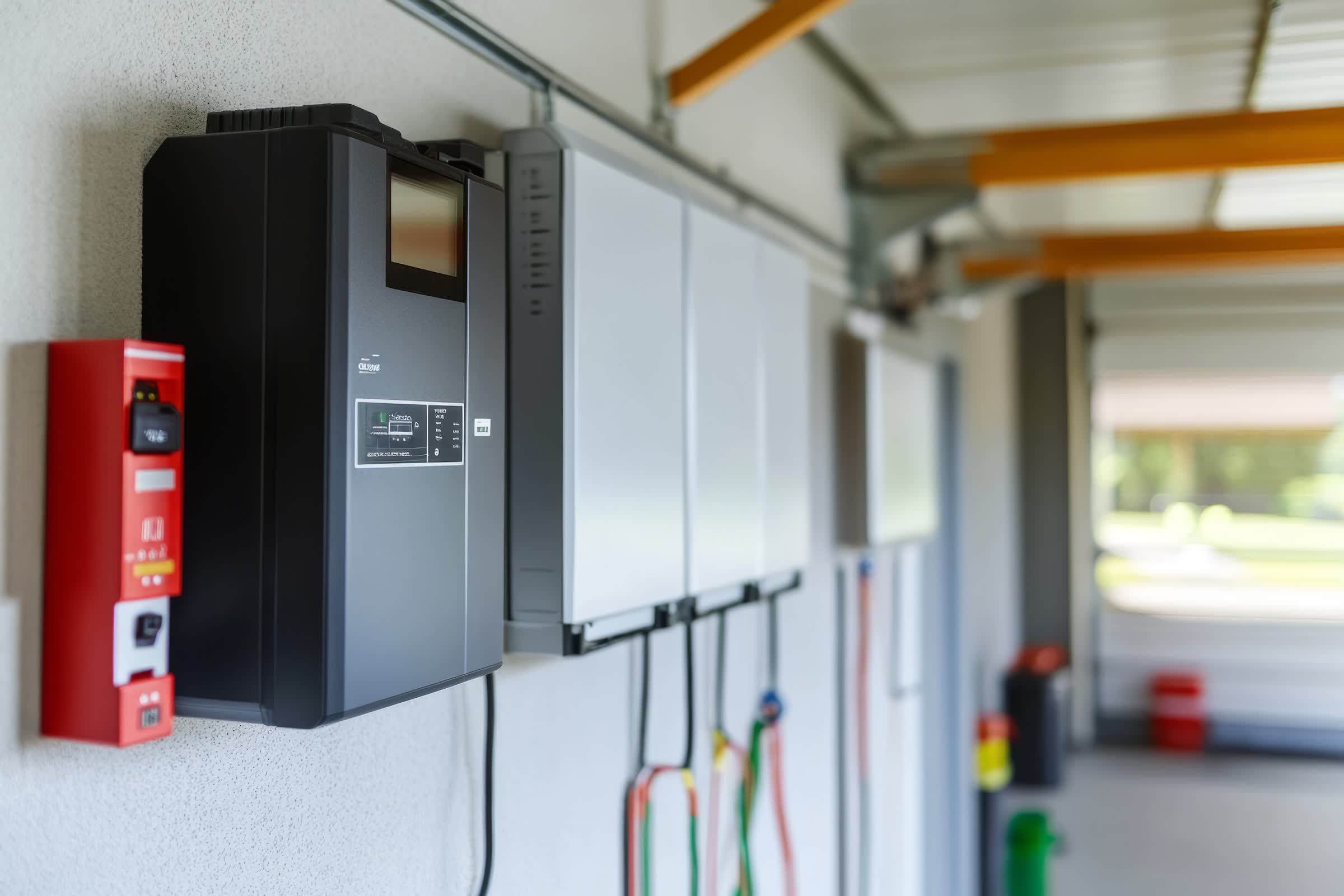
Bottom line: A growing slice of the country's energy storage capacity is being built in an unlikely place: inside people's homes. Residential battery systems are increasingly used for more than simple backup power, as homeowners and grid operators seek greater flexibility. Homeowners are installing batteries at a rapid pace, and that expanding fleet is being integrated into virtual power plant programs that grid operators can call on when demand spikes.
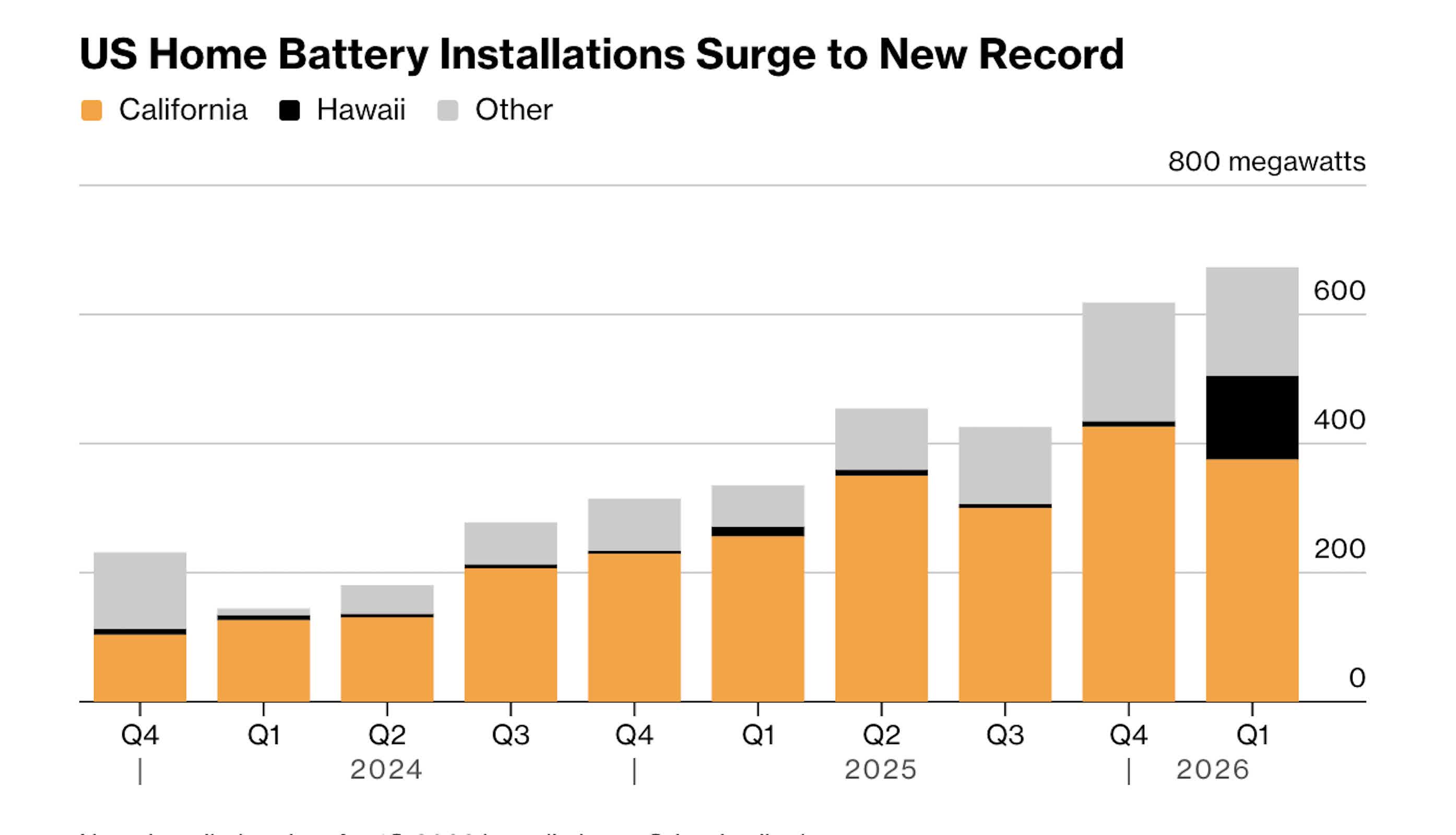
Recent data underscores how fast the market is moving. US homeowners installed 673 megawatts of battery storage in the first quarter of 2026, a record level, according to the Energy Information Administration. Much of that growth is concentrated in states where electricity is expensive and policies encourage storage, including California and Hawaii, as well as Texas and Arizona.
At a basic level, the appeal is practical. Batteries allow homeowners to store electricity when it is cheaper – often during the day when solar production is high – and use it later when prices rise. Growing numbers of home batteries are being managed collectively through virtual power plant schemes, which coordinate when they store and discharge energy so homes can act as part of a larger grid resource.
Policy has played a major role in pushing adoption forward. "You're seeing state policy demonstrate its importance," Ari Matusiak, founder and chief executive officer at Rewiring America, told Bloomberg.
California, for example, has adjusted how it compensates homeowners for sending electricity back to the grid, placing more value on power delivered after sunset. Hawaii has taken a different approach, offering a one-time payment of $400 per kilowatt of installed battery capacity.
Those incentives are landing at a moment when the economics of residential solar are shifting. The rollback of a federal tax credit for solar installations has slowed new rooftop projects, with installations down 10% in the first quarter compared to a year earlier. Batteries, however, are benefiting from a different set of incentives and use cases.
Credit: Bloomberg
"The fact that California, Hawaii, Texas and Arizona are incentivizing battery adoption is the main reason for the trend," said Cosmo van Steenis, a solar and storage analyst at BloombergNEF. He said batteries now open up additional revenue opportunities that solar alone cannot. "The economics have suddenly shifted towards batteries because if you add on a battery to a system, you can access all these extra revenue streams," he said. "And solar on its own is no longer as economic as it was."
Installers are adjusting accordingly. Martyna Kowalczyk, who runs the Dallas-based solar company Solartime, said customer demand has tilted heavily toward storage. "Three years ago we would sell three batteries for 10 systems that we sold," she said. "Right now it's more like eight homeowners out of 10 are electing to do a battery."
The biggest change is how these systems are being used once they are installed. Increasingly, home batteries are being linked together through virtual power plant programs, which allow operators to coordinate thousands of systems at once. Instead of acting as isolated units, they function more like a single, flexible power source that can be dispatched when needed.
That model is gaining traction. According to Yale E360, the amount of US home battery capacity tied into virtual power plants jumped 153% in 2025. A demonstration that year showed that a network of 100,000 home batteries could deliver more power than a traditional gas peaker plant.
Some companies are building entire business models around that concept. Austin-based Base Power offers heavily discounted home batteries and discounted electricity rates in exchange for managing its customers' battery fleet as a virtual power plant. The company effectively aggregates those systems into a shared energy resource.
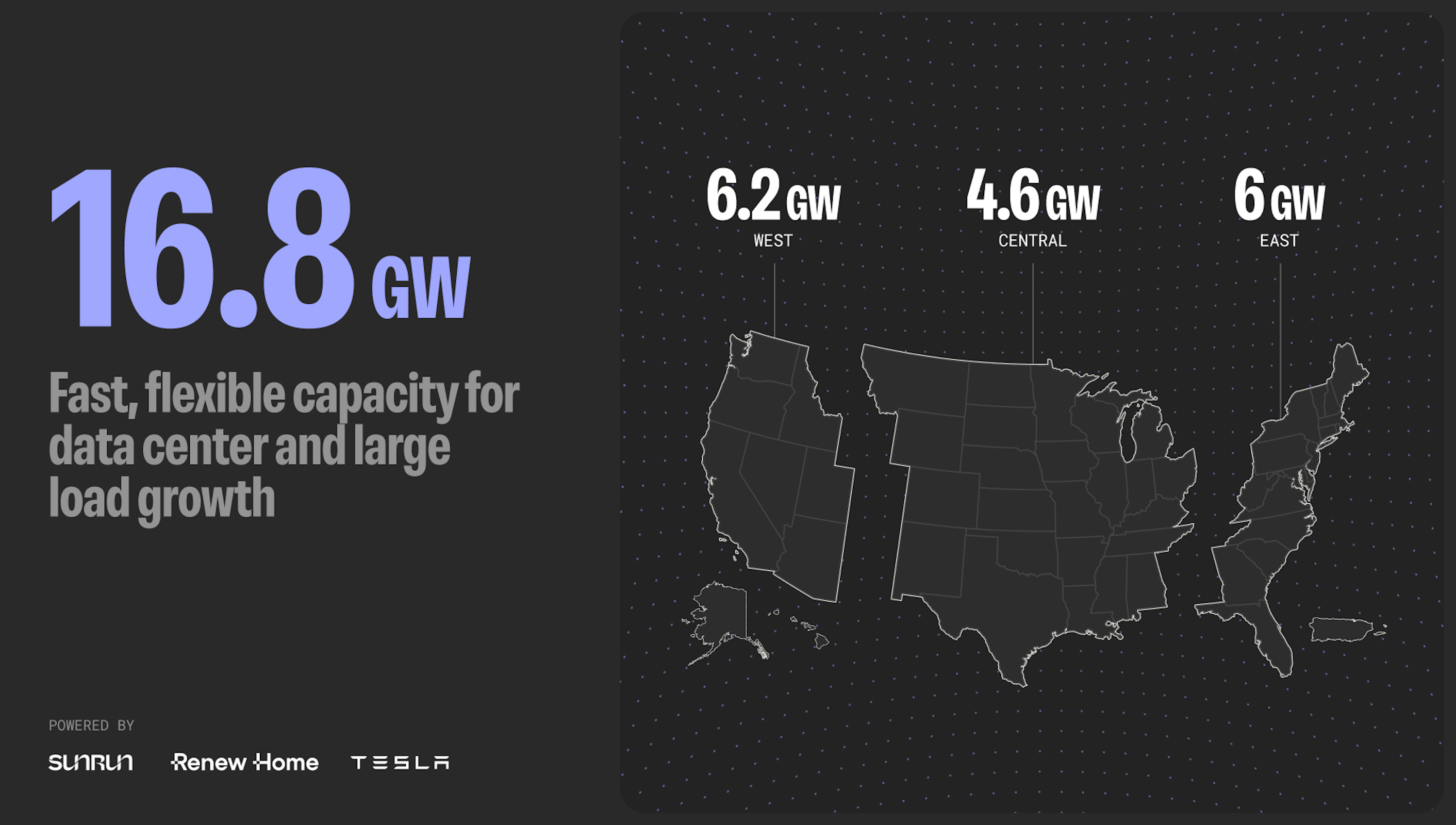
There is also growing interest in using that distributed capacity beyond traditional grid support. As demand from AI data centers continues to rise, energy providers are looking for new ways to supply power. On June 24, Sunrun, Renew Home, and Tesla announced a plan to combine "hundreds of thousands of home battery systems operated by Sunrun and Tesla" into "the largest distributed power plant in the country." The companies said the network could supply more than 16 gigawatts of electricity to both utilities and large-scale data centers.
Some ideas go even further. Startup SPAN is exploring whether homes themselves could host small-scale data center infrastructure, supported by on-site batteries and, in some cases, solar panels. The proposal would place data center servers in suburban homes, backed by residential batteries and, in some cases, rooftop solar.
Rising electricity prices are adding another layer of urgency. The EIA reported that residential electricity costs were up more than 7% in April compared to the same month a year earlier. For homeowners with battery systems, that creates a clear financial incentive to manage when and how energy is used.