
Why it matters: Good news for those worried about losing their jobs to AI. More evidence is emerging that companies are losing faith in the technology's ability to replace humans, with an increasing number of firms rehiring people who were let go because of AI automation.
It was reported last week that Ford was re-employing and promoting more than 350 veteran engineers. Because their often-undocumented experience was not captured in the datasets used to train the AI systems, Ford was running into knowledge gaps when it came to identifying and preventing issues.
It's not just Ford, either. CNBC reports that the Commonwealth Bank of Australia laid off more than 40 customer service staff last year and replaced them with an AI voice bot. Unsurprisingly, it couldn't perform its job as well as a human, leading to an increase in the number of calls and CBA reversing its job cuts.
CBA later admitted that it "did not adequately consider all relevant business considerations" when announcing the redundancies.
Elsewhere, IBM, a company that cut thousands of jobs last year as it pushed deeper into AI and automation, said in February that it would triple entry-level hiring for roles covering "all these jobs we're being told AI can do."
The company said the new positions will focus on tasks requiring human judgment, customer interaction, and oversight of AI systems.

There was also Klarna. The buy now, pay later/shopping service admitted it was hiring humans again after their AI replacements offered a "low quality" output.
This doesn't mean that layoffs because of AI have stopped. Oracle was the latest tech giant to announce huge cuts – 21,000 people are going – while admitting that AI is playing a part. And let's not forget that there have been 122,524 tech employees laid off from 214 companies this year.
However, it's starting to look more like executives' once-unfaltering belief that AI can replace everyone is starting to falter. In June, it was reported that multiple studies showed more employers rehiring recently eliminated positions after overestimating AI's productivity gains and cost savings – or, at the very least, regretting the decision.
A report by Orgvue found that while 39% of business leaders made employees redundant due to AI deployment, 55% admitted wrong decisions about those redundancies were made. Another 2025 report from Forrester Research predicted that roughly half of AI-attributed layoffs would be quietly reversed.
According to data from Robert Half sent to CNBC, 32% of US hiring managers said they eliminated a role primarily due to AI and later rehired for the same or a similar position.
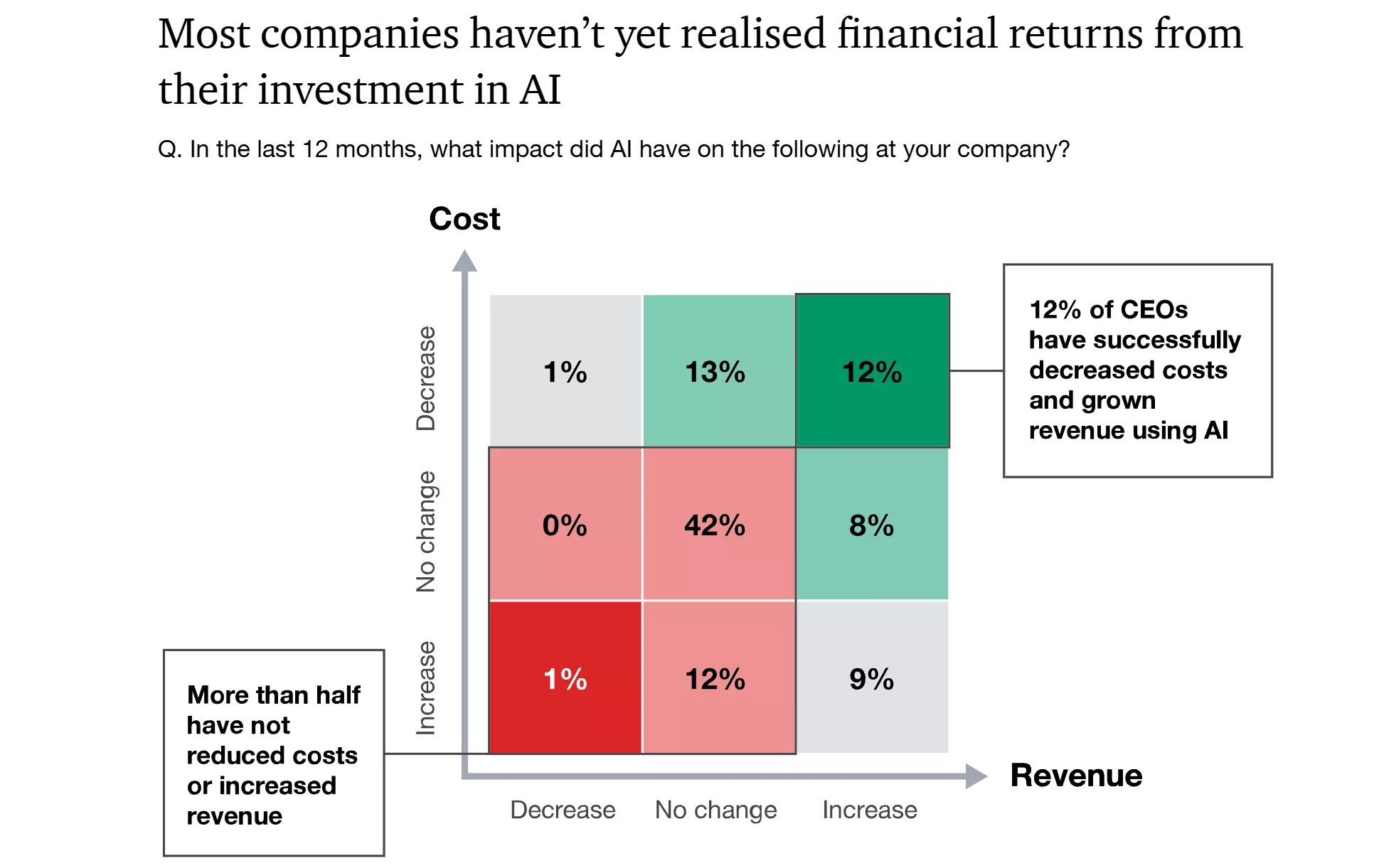
The rehiring shouldn't come as a surprise to anyone who has seen this report, which revealed that 56% of CEOs said introducing AI hasn't produced any cost or revenue benefits for their companies.
There's little doubt that AI-related job losses will continue, but it appears those who are laid off are increasingly likely to be rehired once their bosses realize there are some human skills a machine can't replace.