
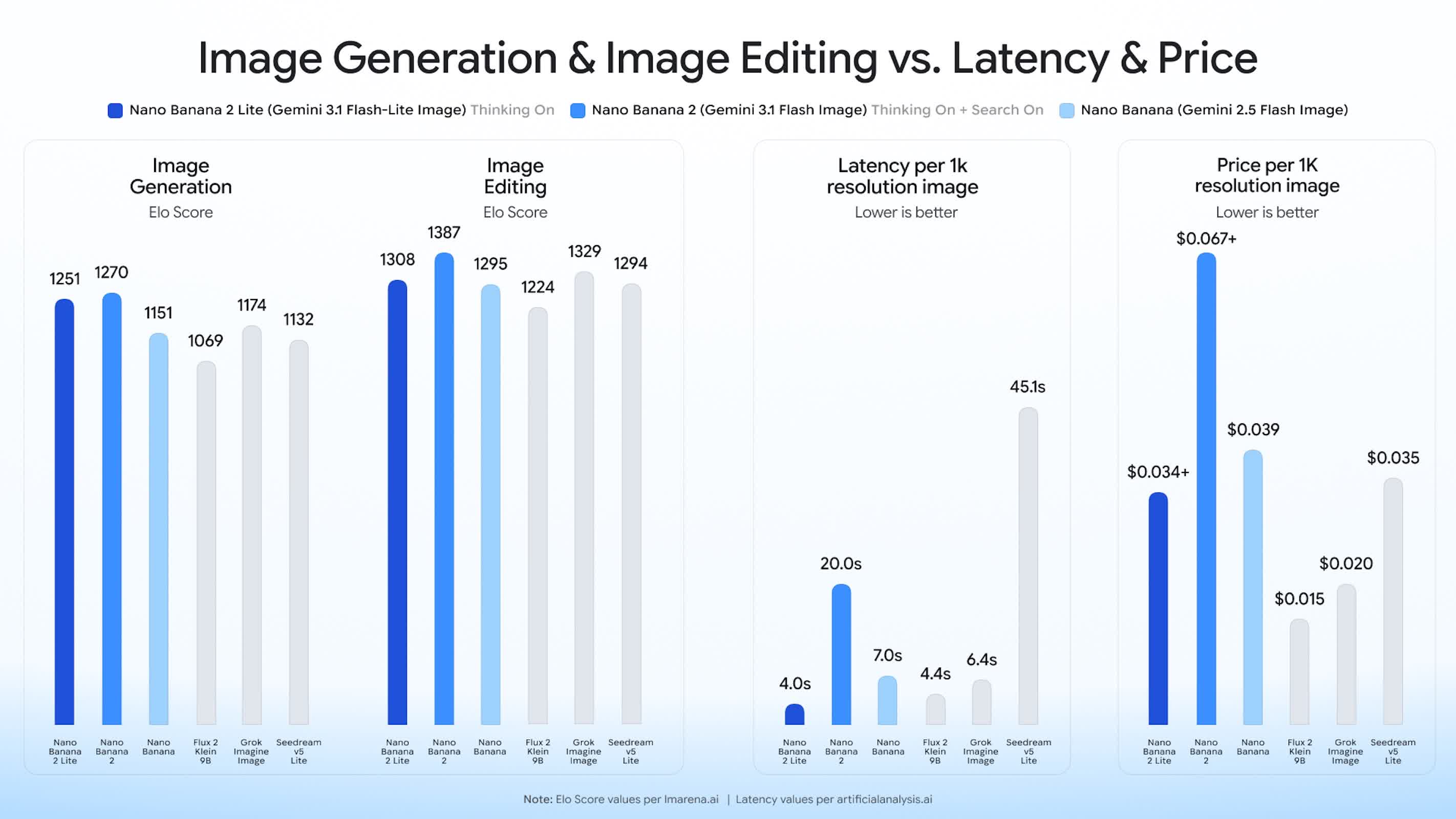
First look: Google has rolled out a faster, lower-cost AI model designed for large-scale image generation. The new system, Nano Banana 2 Lite, was introduced Tuesday as part of Google's Gemini-powered image generation lineup. It is designed for fast-turnaround workflows, with Google saying it can generate images in about four seconds. That level of latency makes it well suited for workflows in which teams need to iterate quickly, whether they're testing image variations, producing large batches of assets, or integrating the model into automated pipelines.
Pricing is a key part of the model's positioning. Google says Nano Banana 2 Lite costs $0.034 per 1,000 images, a price intended to make large-scale image generation more routine and accessible. In practical terms, that combination of speed and low cost makes the model better suited for high-volume workloads than precision-focused applications.
Nano Banana 2 Lite follows a series of updates to the company's in-house image generator. The original Nano Banana launched last summer on Gemini 3.1 Flash, followed by Nano Banana 2 in February with improved realism and broader capabilities.
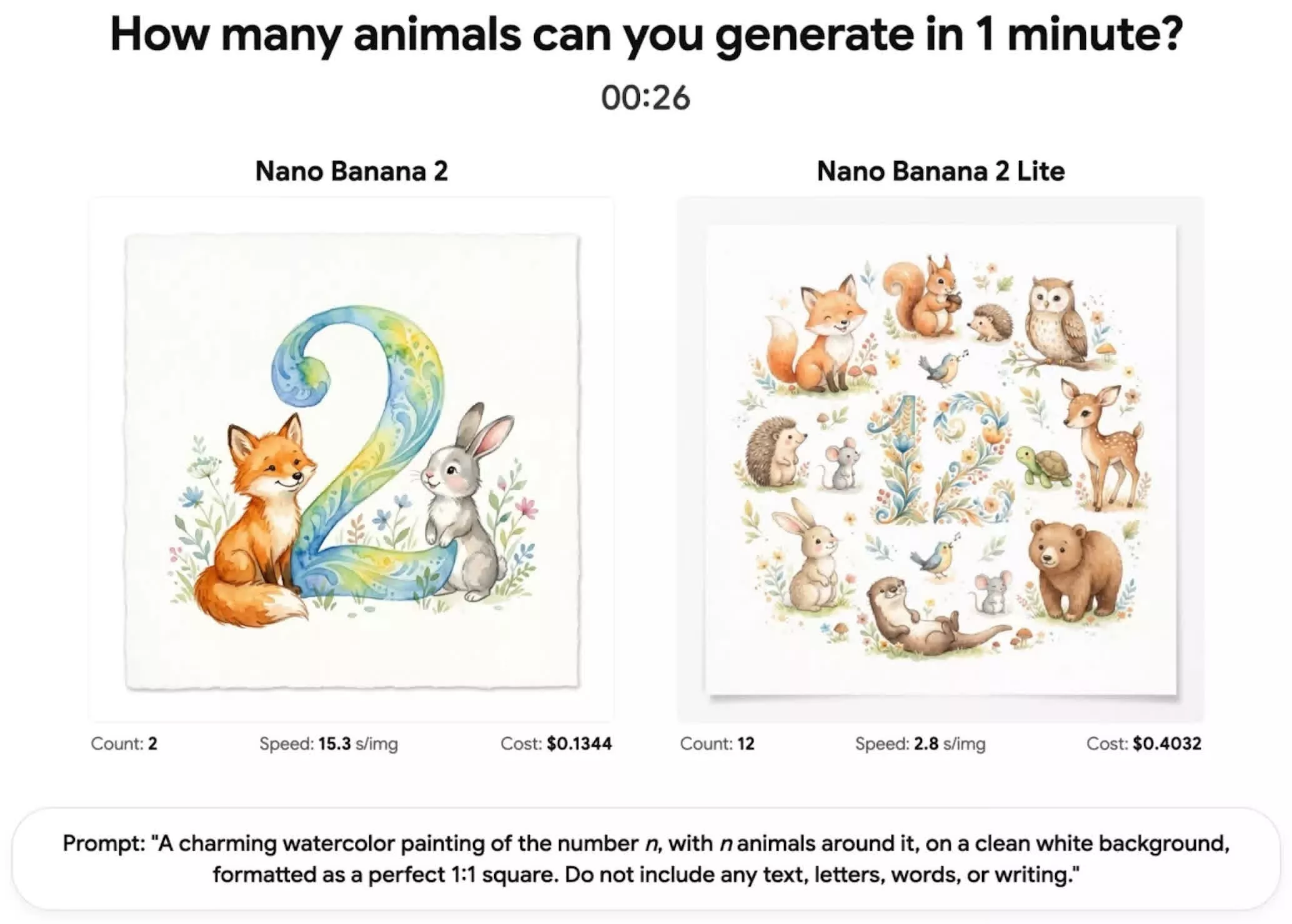
This latest version takes a different approach. Google describes Nano Banana 2 as a "generalist workhorse," while the Lite variant is tuned specifically for workflows that require speed and scalability.
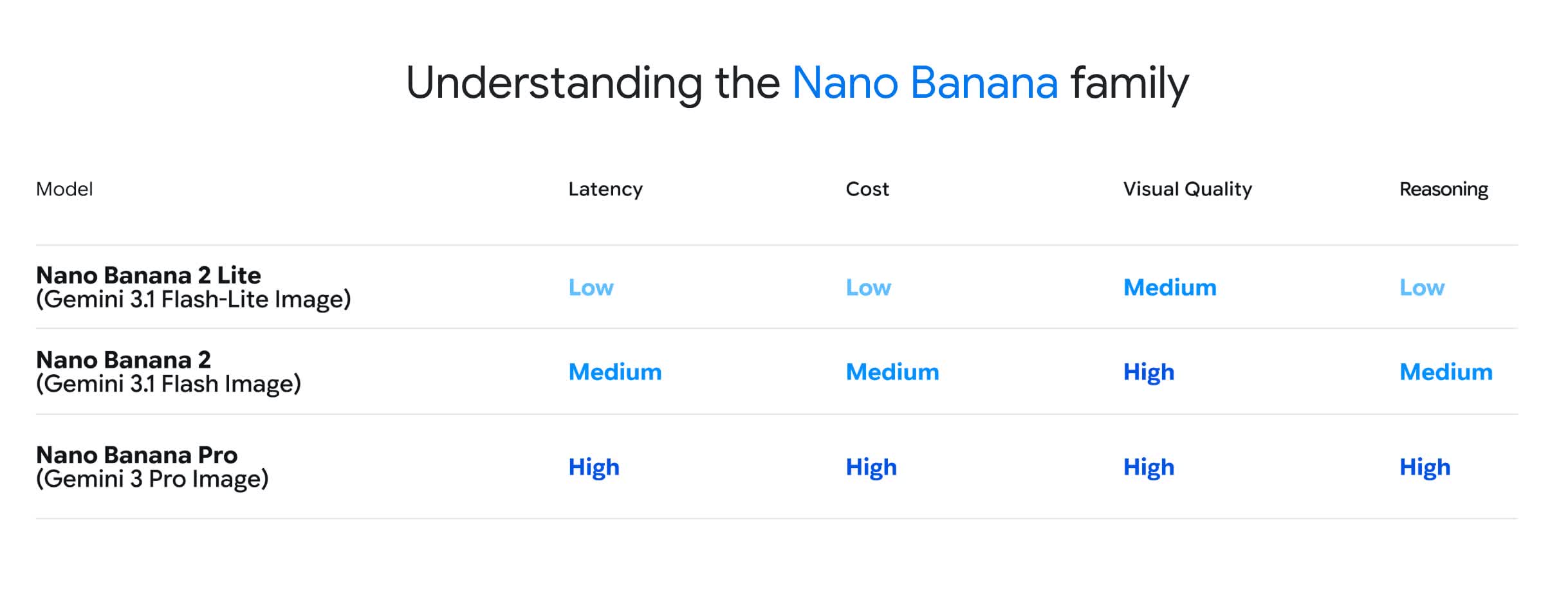
That distinction reflects a broader shift in how AI models are being deployed. Rather than relying on a single model to handle every use case, companies are increasingly offering tiers based on performance, cost, and speed. In Google's case, that lineup includes higher-end options such as Nano Banana Pro for more demanding applications, alongside lighter models optimized for throughput.
The release also comes at a time when generative media is facing growing criticism. A rising share of online video and image content is now created or assisted by AI, prompting concerns about quality and oversaturation. Even so, companies continue to invest heavily in these tools, particularly in advertising, where rapid content production and testing can offer clear advantages.
Google has largely positioned its models within that context, presenting them as tools that support content creation rather than replace it. The company has emphasized their role in helping businesses generate and refine content more efficiently, especially when producing large volumes of material.
At the same time, Google's work with the entertainment industry has drawn scrutiny. A recently announced $75 million partnership with indie studio A24 has sparked backlash from some audiences and creatives, reflecting ongoing concerns about how AI could reshape film and media production.
Nano Banana 2 Lite is now available through Google AI Studio, the Gemini API, and the Gemini Enterprise Agent Platform. It also replaces the original Nano Banana, which Google has now designated as a legacy model.