
Bottom line: The rapid build-out of artificial-intelligence infrastructure is no longer just a software story; it is increasingly a supply-chain story, and it is beginning to show up in higher costs. As tech giants pour hundreds of billions into AI infrastructure, higher hardware, power, and construction costs are starting to show up in the inflation data.
What is often framed as a race to develop smarter AI models is, in practice, a massive industrial expansion. Data centers require dense clusters of advanced chips, extensive cooling systems, fiber networks, and backup power. Columbia University economist Stijn Van Nieuwerburgh put it plainly, describing the effort to the Wall Street Journal as "strikingly physical." His estimate that AI-related infrastructure spending could reach about $8 trillion through 2032 gives a sense of the scale now underway.
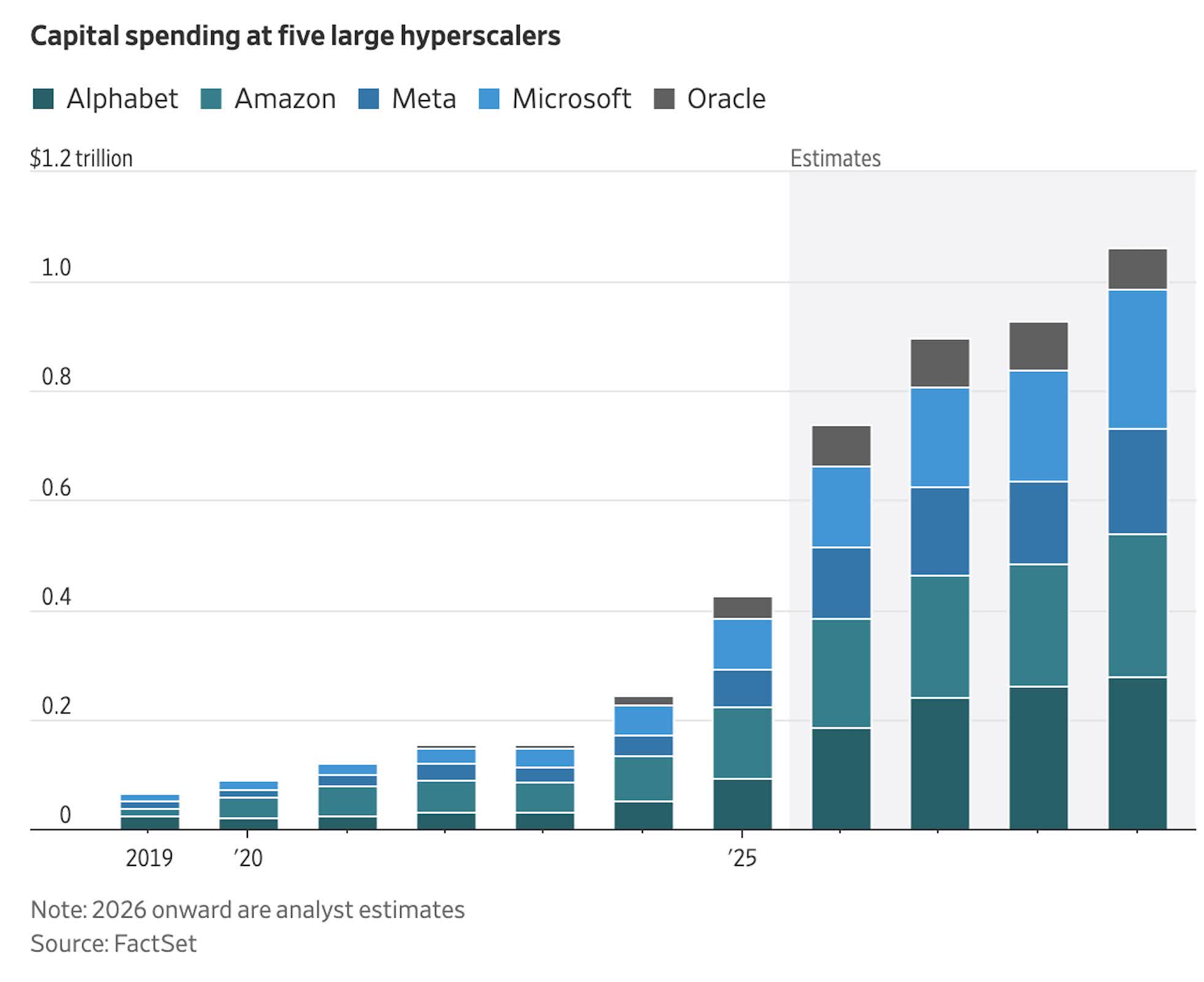
That scale is already visible in corporate spending. Capital expenditures by Alphabet, Amazon, Meta, Microsoft, and Oracle are expected to reach $741 billion this year, up sharply from last year. That level of investment is putting pressure on the components that make AI systems possible, particularly semiconductors and memory.
Those same components sit at the heart of consumer electronics, which is where the spillover becomes more visible. Video game consoles, cars, and other devices rely on the same supply chains now being stretched by AI demand. Nintendo, Microsoft, and Sony have all raised prices on their devices. Apple is moving in the same direction. Chief Executive Tim Cook said the recent jump in costs was unlike anything he had seen "in any area in over 40 years."
The pricing pressure is not just anecdotal. Government data shows consumer prices for computer software and accessories rose about 15% in May compared with a year earlier. On the wholesale side, electronic components and accessories jumped 27%. Those categories are relatively small in the broader inflation picture, but they offer a clear signal of where demand is intensifying.
Part of what makes this cycle different is its staying power. Earlier inflation shocks – tariffs or spikes in oil prices – tended to work their way through the system and fade. The AI build-out is more persistent. It is not a one-time event but an ongoing wave of investment that is still in its early stages. Fed governor Lisa Cook recently noted that only a small portion of announced data center spending has been put in place. That suggests more pressure could be coming.
OpenAI and Anthropic expect to raise money in forthcoming initial public offerings, adding further momentum to the build-out. Markets are already reacting. Semiconductor stocks have surged over the past year, reflecting expectations of sustained demand despite recent volatility.
The effects are also showing up beyond hardware. Labor tied to data center construction is getting more expensive. Wages for electrical and wiring-installation contractors rose 6.5% in April from a year earlier, noticeably higher than the 3.6% increase for private-sector workers overall.
Energy is another pressure point. Data centers consume enormous amounts of electricity. Goldman Sachs estimates they could drive nearly half of US power demand growth through 2030. That demand is expected to push consumer electricity prices up about 6% annually in the near term.
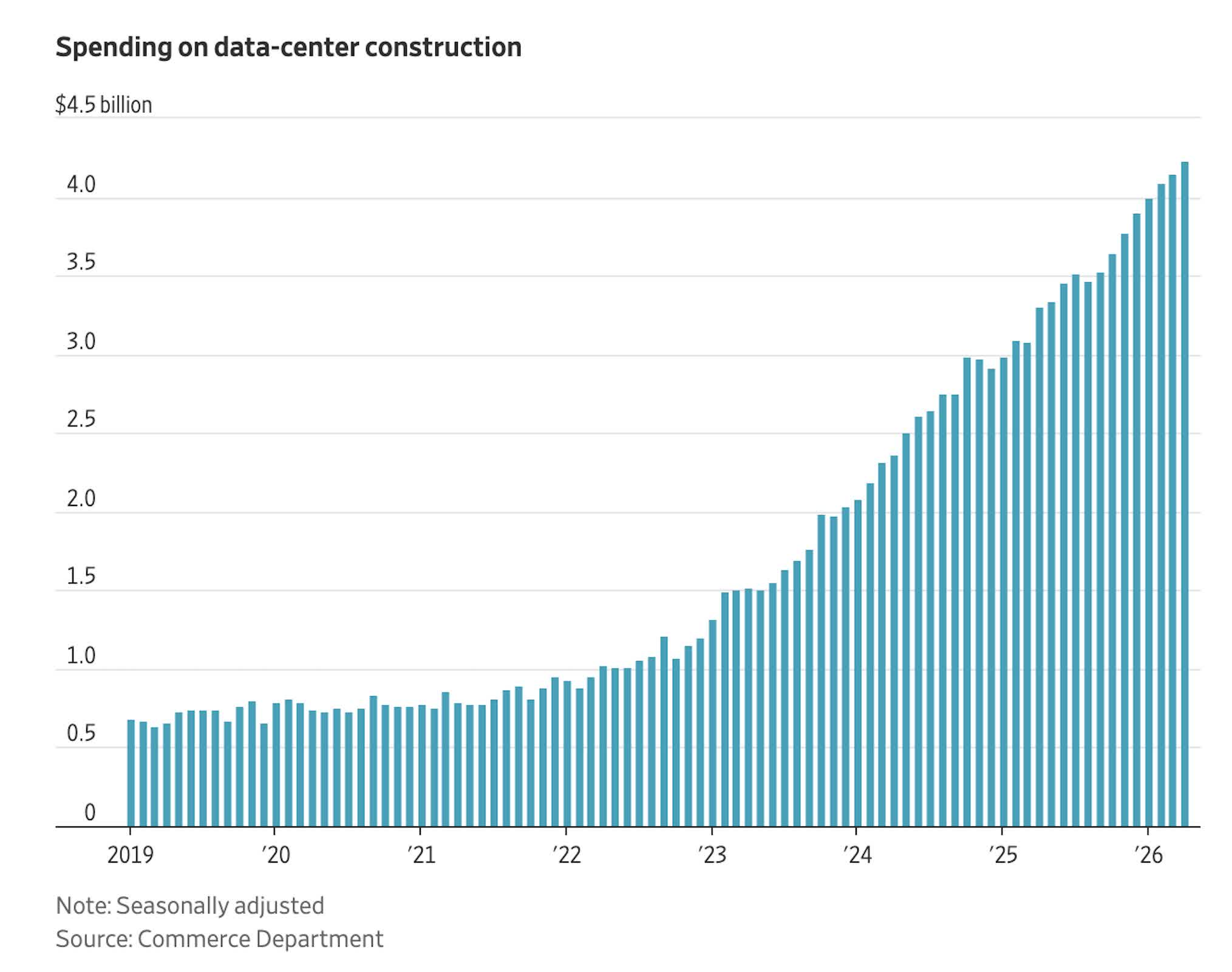
Economists generally do not expect this to lead to a sharp inflation spike like the one that followed the pandemic. The categories most affected still make up a relatively small share of household spending. The concern is more gradual: a steady layering of cost increases across multiple parts of the economy, keeping inflation from falling as quickly as expected.
That view is reflected in recent survey data. In a National Association for Business Economics survey, 81% of respondents said the AI build-out would add to inflation over the next year. Gregory Daco, chief economist at EY-Parthenon, described it as a familiar pattern.
"In the first phase of any major technological revolution, you tend to have a strain on limited resources, and that tends to put upward pressure on prices," Daco said.
Over time, the dynamic could shift. Past technological advances eventually lowered costs by improving productivity. Some policymakers expect AI to follow that path. Federal Reserve Chairman Kevin Warsh has argued that AI could prove to be a significant disinflationary force by raising productivity and improving U.S. competitiveness.
However, the immediate effect is more straightforward. Building the infrastructure that powers AI is expensive, resource-intensive, and happening at a pace that supply chains are still struggling to match. Until that balance improves, the cost of the AI boom is likely to keep showing up in places consumers can see.
Image credit: Wall Street Journal