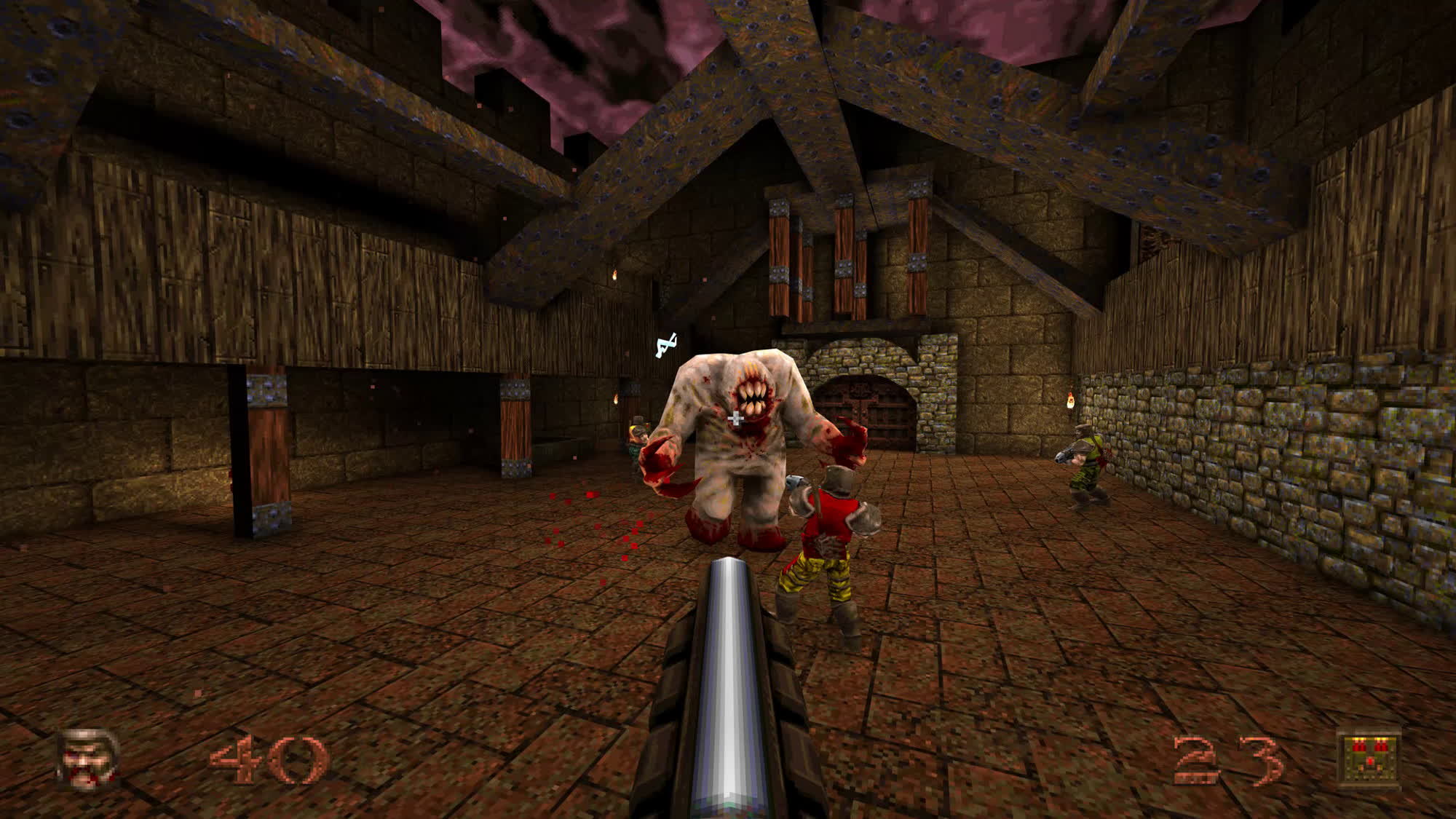
Quaked: Quake is now 30 years old, and developers who worked on the game are sharing interesting behind-the-scenes details about the project. According to Call of Cthulhu creator Sandy Petersen, the world's first fully 3D shooter was so demanding that it drained too much energy from the team and ultimately contributed to internal burnout.
id Software and GT Interactive released Quake in 1996, marking a significant evolution in the first-person shooter genre just three years after Doom. Sandy Petersen, one of the studio's original designers from the Doom era, said that developing the first "true" 3D FPS took a heavy toll on the team.
Petersen said in a recent X thread that making Quake essentially "ruined" id Software. He added that the game deserves all the praise it is receiving for its 30th anniversary, calling it an impressive achievement in art, programming, and design. The result was a fast-paced action game that is still regarded as influential three decades later.
However, he also described the cost of creating such an unprecedented title as "grim." According to Petersen, id Software worked so intensely on Quake that the team was "spiritually" broken by the end of development. Within a couple of years after its release, several key figures, including John Romero, American McGee, and Petersen himself, had left id Software to pursue independent careers in the gaming industry.
– Sandy Petersen 🪔 (@SandyofCthulhu) June 24, 2026
The Texas-based studio was never the same after these high-profile departures. Petersen apparently dislikes id's whole production that came after Quake, except for the multiplayer-focused, mod-friendly Quake III experience. Quake gutted id Software, yet Petersen admits it was likely worth it. However, he regrets the other great games that the studio could have made if the "dream team" would have been together a bit longer.
Id co-founder and god-tier developer John Carmack later replied to Petersen's thread, stating that he was partially responsible for what happened to the company after Quake. The game was too ambitious from a technical standpoint, Carmack said. The team could have created some great multiplayer and FPS experience within a hypothetical "Doom++" engine instead, providing the designers with a stabler technology base while a fully 3D environment could have been part of a subsequent title.
– John Carmack (@ID_AA_Carmack) June 24, 2026
"I pushed everyone too hard," Carmack admits, because he "didn't appreciate how maturing companies need more slack, and that running people at startup intensity constantly will wear them out. Quake was also where I really had to accept my personal limits. I was working pretty much as hard as humanly possible, and I was still slipping past my goal points."
To put it simply, creating the world's first 3D FPS made the man who built Doom's engine with a 28-hour coding marathon taste his own limits as a programmer. He also concedes that mistakes were made in the studio's original corporate stock arrangement, while the traditional Silicon Valley approach (vesting stock) would have been better.
In the end, Petersen is not blaming Carmack, noting that the programmer tended to "relax" by frantically coding at his desk. He added that the entire id "dream team" can be proud of what Quake became, and that its success was driven by the developers themselves rather than poor management from detached executives.
"Let's hope the cautionary tale warns other small devs," Petersen said.