A hot potato: A new report claims that China's military has spent years trying to obtain, and in some cases succeeded in buying, Nvidia AI chips, including models restricted by US export controls. The findings are another black eye for Washington's attempts to stop American hardware from helping Beijing's military modernization, and to Nvidia's repeated argument that China does not need its products.
According to The New York Times, business-intelligence firm Wirescreen reviewed public Chinese procurement documents and found repeated efforts by units tied to the People's Liberation Army to buy Nvidia hardware.
The review covered around 3,800 records related to high-end chips and computing, with about 500 instances in which Chinese military units sought Nvidia products between 2019 and 2025.
The chips reportedly included the A100, A800, H100, and H800, sometimes named directly and sometimes identifiable through listed specifications. Records included nearly every branch of the Chinese military, including groups working on nuclear explosive simulations, war games, cyber operations, and weapons research. One cybersecurity unit sought A100 servers for use with Hashcat.
The findings do not prove every attempted purchase succeeded, but John Costello, the Wirescreen analyst who wrote the report, said the data showed "directly and irrefutably" that US technology was equipping the Chinese military.
Washington first restricted Nvidia's most powerful AI accelerators to China in 2022 over fears they could aid military development. The rules later expanded to include the China-focused A800 and H800, but that hasn't stopped demand.
As we reported last year, China has seen a surge in businesses repairing advanced Nvidia AI chips despite them not officially being available in the country.
Beijing has pushed domestic companies away from Nvidia's H20, which is designed to comply with US export restrictions for the Chinese market, and toward local alternatives.
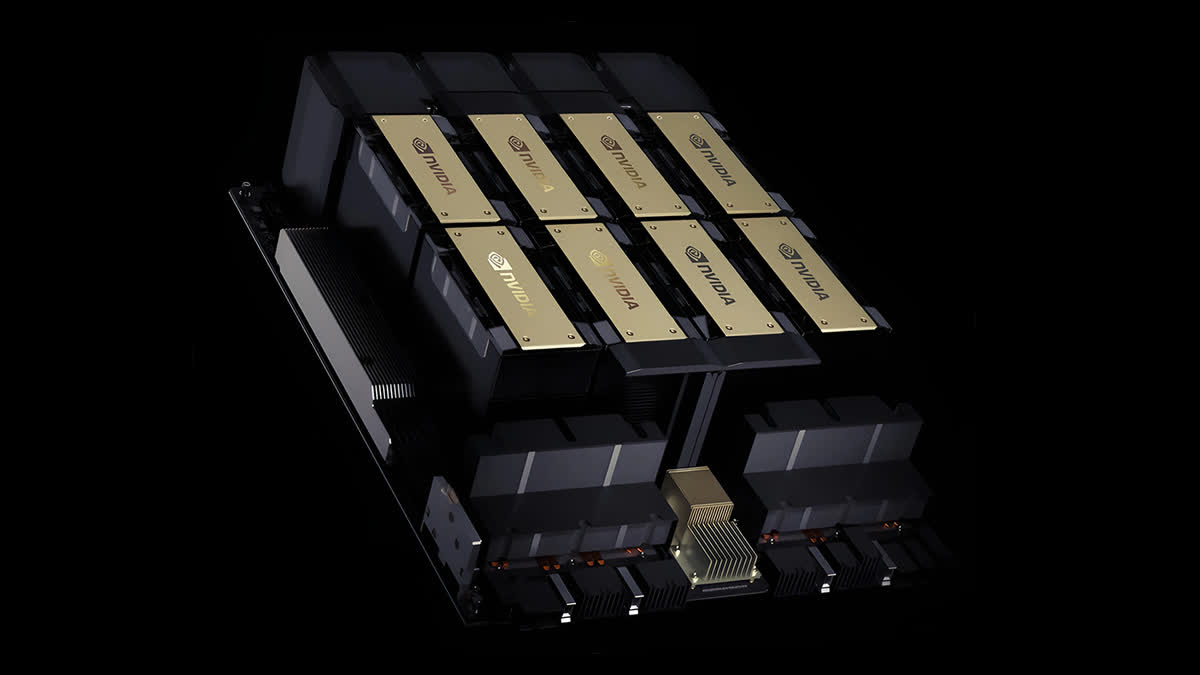
A separate Bloomberg review found that at least seven Chinese universities supporting the armed forces and defense industry have sought access to Nvidia's H200, the most powerful AI chip the US has allowed for sale to China. Beihang University and Northwestern Polytechnical University, both members of China's "Seven Sons of National Defense" and both blacklisted by the US Commerce Department, were among those looking to rent H200 computing power.
The report also identified more than 25 Chinese universities and labs that collaborate with the military or defense industry and are either using or seeking older Nvidia chips. Several are blacklisted by Washington over work involving missiles, nuclear technology, or other military-linked research.
The quantities involved are often small compared with the clusters used by commercial AI firms. In many cases, the records point to a single server with eight GPUs or rented compute rather than vast data centers. But analysts warn that even lab-scale access can help adapt open-weight AI models for military research, cyber operations, or autonomous weapons work.
Nvidia has pushed back, arguing that China has ample domestic alternatives and that a few dozen second-hand GPUs would not power advanced military AI systems.