
The takeaway: Although fingerprint authentication has known security limitations, modern laptops, tablets, and smartphones continue to rely on it for device unlocking and passkey authentication. As phone cameras become increasingly powerful, security experts are warning that lifting fingerprints from ordinary photos is becoming more feasible.
Reports circulating in China this week reignited concerns around the issue after experts claimed that photos showing fingers facing directly toward a camera from within roughly five feet could potentially reveal enough detail to recreate fingerprints. In theory, attackers could use the resulting images to spoof biometric scanners tied to phones, laptops, payment systems, or online accounts.
Financial expert Li Chang warned that photo editing software and AI tools can sharpen fingerprint ridges hidden in everyday selfies. Jing Jiwu, a professor at the University of Chinese Academy of Sciences, added that while lighting, motion blur, and focus still complicate the process, high-resolution images or multiple photos can significantly improve the odds of extracting usable fingerprint data.
The discussion quickly went viral across Chinese social media platforms, largely because the "peace" or "V" hand gesture remains a staple of selfies throughout much of Asia.
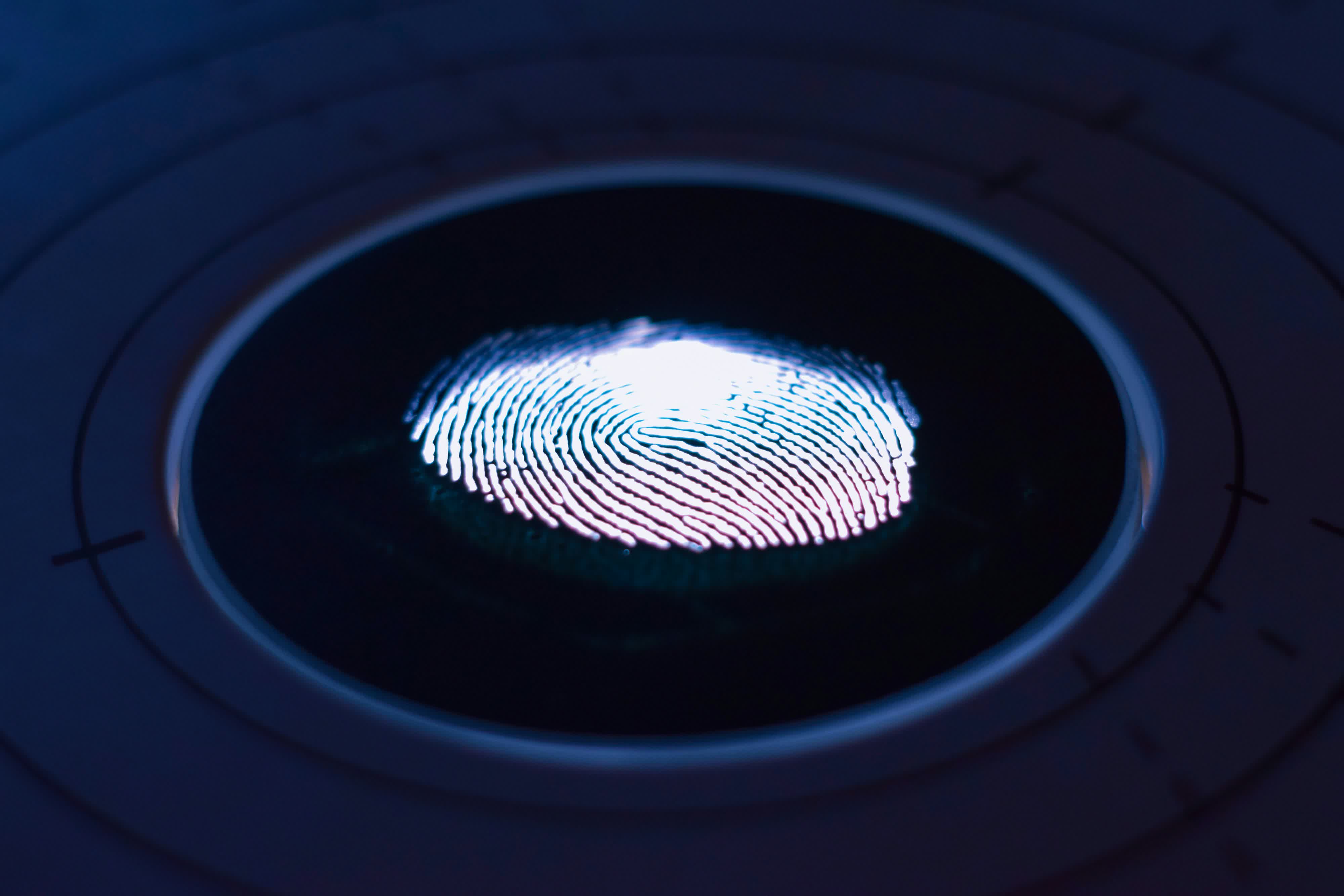
The underlying concept is not new. Security researchers have been demonstrating fingerprint reconstruction attacks for more than a decade, but advances in smartphone camera hardware are steadily lowering the barrier.
German biometrics researcher and Chaos Computer Club member Jan Krissler famously bypassed Apple's Touch ID system shortly after it debuted in 2013. A year later, he demonstrated that it was possible to recreate the fingerprints of Germany's defense minister using publicly available photographs of her hands.
At the time, however, the process remained impractical for most attackers. Reproducing fingerprints typically required multiple high-resolution images, controlled conditions, and specialized processing techniques. More recent demonstrations suggest the attack surface is gradually widening as modern smartphone cameras deliver sharper images with increasingly sophisticated computational photography.

In 2021, researchers at Kraken Security Labs demonstrated a method that reportedly required only a fingerprint photograph, Photoshop, a laser printer, and wood glue to create a working spoof fingerprint. Researchers have also hacked fingerprint scanners from the software end, and police have made arrests by matching photos of suspects' hands with fingerprint databases.
Despite those concerns, fingerprint authentication remains widely used across products laptops, iPads, and countless Android smartphones. The reason is simple: convenience. Biometrics dramatically reduce friction compared to passwords while still offering meaningful protection against casual theft or unauthorized access.