
Cutting corners: American AI companies are racing to build as many data centers as they can, but limits in domestic manufacturing and energy supply are slowing progress. As a result, only about half of recent projects are meeting completion targets, and it remains unclear how many more will stay on schedule this year.
Analysts at Sightline Climate estimate that between 30% and 50% of AI data centers planned for deployment in the US this year will be delayed or canceled. The main constraints are difficulty sourcing key electrical equipment and securing enough power to operate new facilities.
Across 140 construction projects, data centers representing at least 16 gigawatts of capacity are slated to come online before the end of 2026. However, only around 5 GW are currently under construction, and typical build times range from 12 to 18 months. Another 16 GW remains in the "announced" stage with no clear signs of progress.
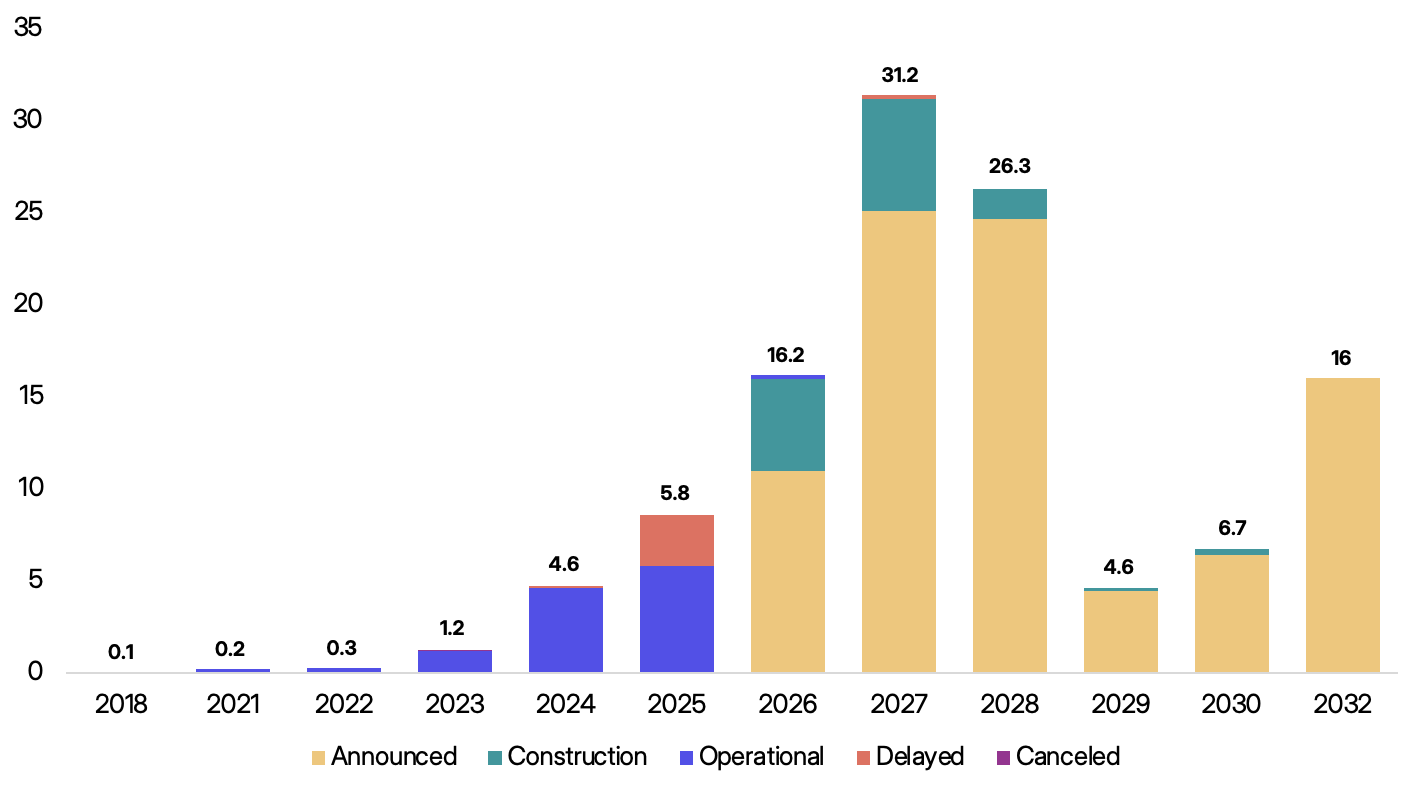
Sightline's outlook also reflects last year's trends, when manufacturers delayed 26% of announced capacity and pushed back commercial operations for another 10%. Looking ahead, projects scheduled for 2027 exceed 25 GW, but less than 10 GW is currently being built.
Insufficient power grids remain a central bottleneck. The energy demands of AI workloads have drawn increasing scrutiny, particularly in communities near proposed sites where residents have seen their energy bills increase.
A recent Pew Research survey found that Americans are wary of AI data centers due to environmental and energy concerns, while still expressing cautious optimism about potential job creation. Many of the planned facilities are expected to rely on a mix of local grid power and independent sources, including nuclear and renewable energy.
Hardware supply is another constraint. AI data centers have already shaken the foundations of the consumer technology market by diverting production capacity of memory, storage, and CPUs, raising prices for those components and for devices that depend on them, such as PCs and game consoles. However, Bloomberg reports that more fundamental electrical components, such as batteries and transformers, are also a crucial obstacle.
Despite efforts by the Trump administration to reshore manufacturing, largely through steep tariffs on China and other exporters, US production capacity still falls short of the AI sector's needs. For now, that leaves American AI companies continuing to rely on Chinese components to fill the gap.