In brief: There are around 700 million people actively using ChatGPT each week, sending around 29,000 messages per second – so what are these people actually using the chatbot for? OpenAI has just released an extensive report that looks into the question. The biggest takeaway is that ChatGPT is now primarily used for non-work purposes, and female users appear to outnumber male users.
The National Bureau of Economic Research (NBER) working paper by OpenAI's research team and Harvard economist David Deming analyzed 1.5 million conversations to track how ChatGPT's use has evolved in the three years since its launch.
Like all generative AIs, ChatGPT arrived with the promise of revolutionizing the way we work. In June 2024, 53% of usage by non-enterprise accounts was non-work related; in June 2025, that figure had risen to 73%, with conversations focused on practical guidance, seeking information, and writing.
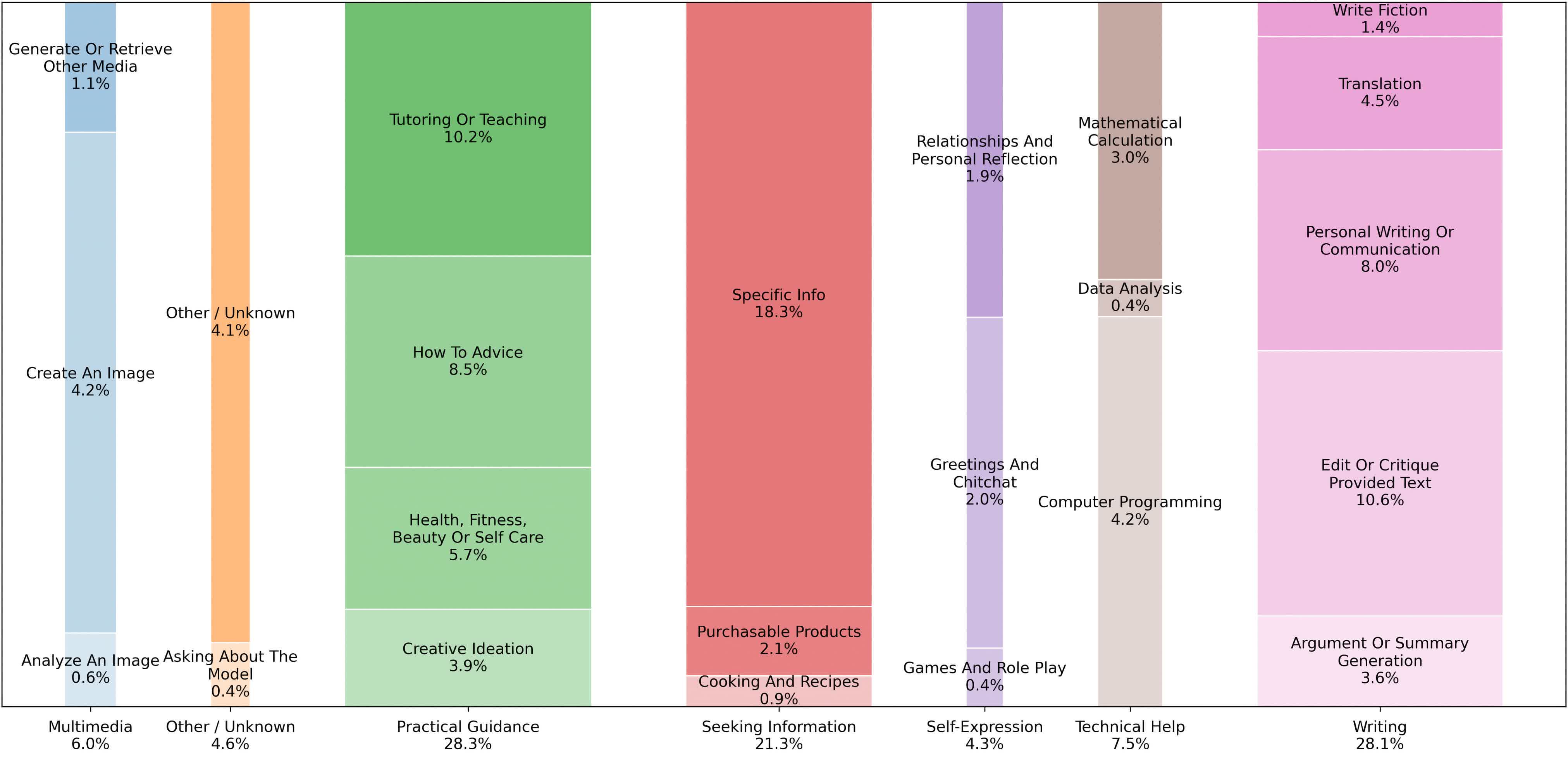
Most people use the chatbot for "Practical Guidance." This category, which made up 28.8% of the sampled conversations, encompasses tutoring or teaching, "how to" advice, health, fitness, beauty, or self-care, and creative ideation.
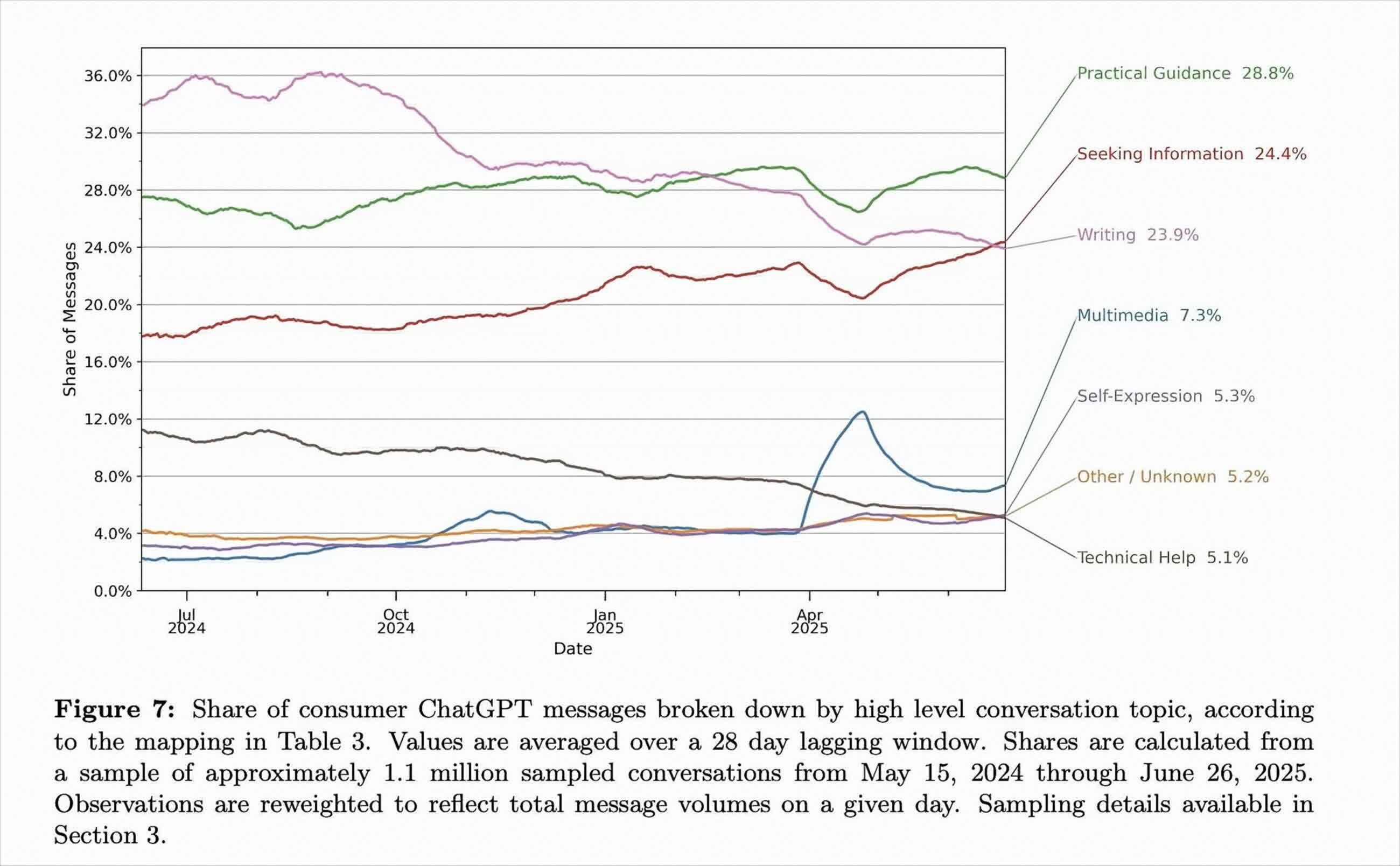
The second most popular category was Seeking Information, which has grown from 14% to 24%. Most of the section is made up of people trying to find specific info. There are also those looking for purchasable products and cooking/recipes. The findings highlight how more people are choosing ChatGPT as an internet search engine over traditional methods like Google.
Writing had been the most popular use for ChatGPT in July 2024, but it has since fallen to third. The largest use case in this section was for editing or critiquing provided text (10.6%), more than the 8% who use it for personal writing or communication such as emails. A lot of people use it for translation purposes, argument or summary generation, and fiction writing.
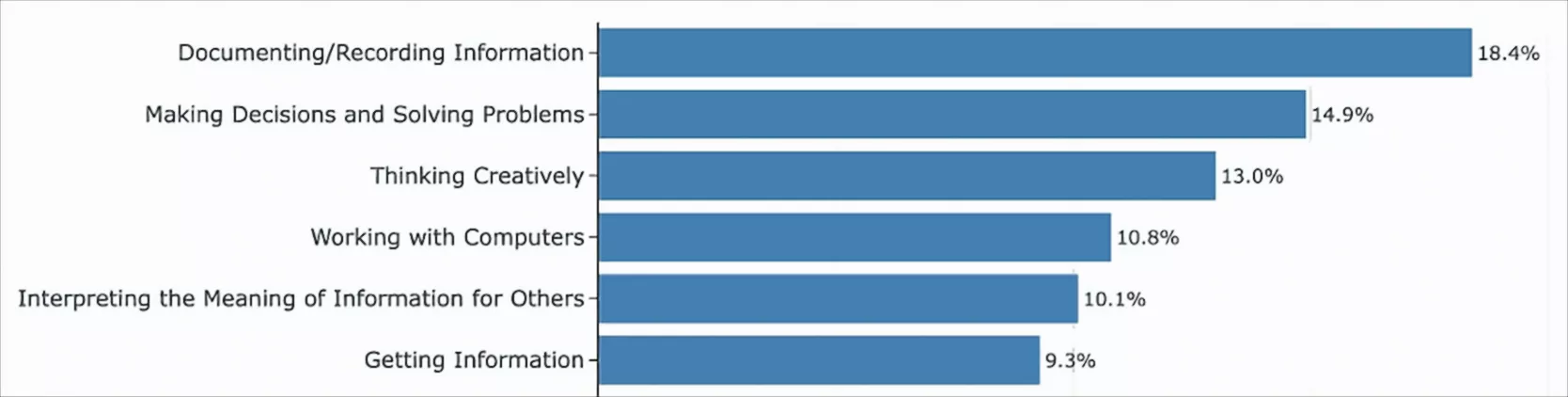
When it comes to how ChatGPT is utilized in the work environment, most people use it for documenting and recording information. This is followed by making decisions and solving problems, thinking creatively, and working with computers. Getting information is the least common use case at work, which could be due to the risk of hallucinations. OpenAI wrote that the results mean people are "using ChatGPT as an advisor or research assistant, not just a technology that performs job tasks directly."
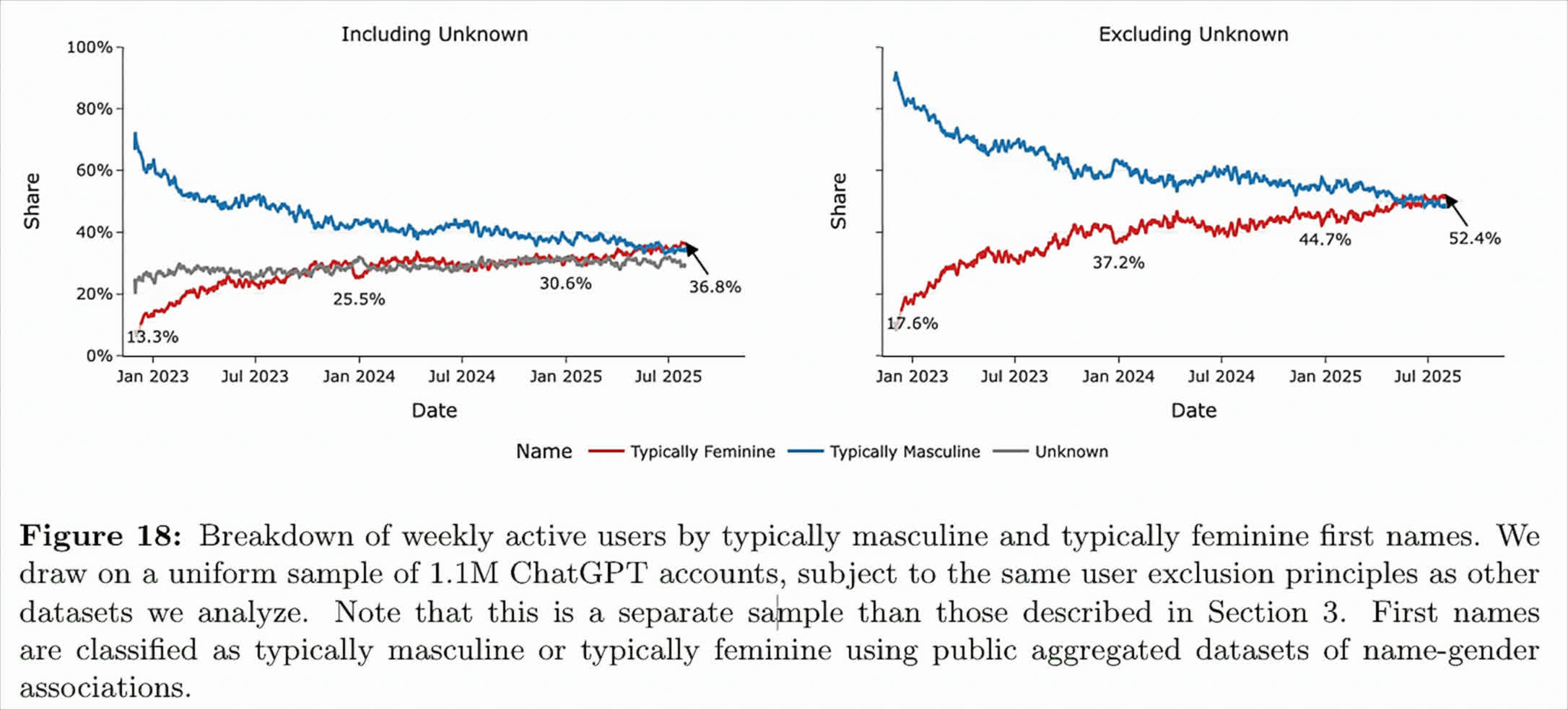
As for the demographics that are using ChatGPT, it appears that female consumer users now outnumber men. In January 2024, only 37% of users had names that are typically considered feminine. In July this year, that figure had increased to 52%.
ChatGPT is certainly most popular among younger people, with almost half (46%) of users self-reporting as being between 18 and 25. This group is more likely to ask for advice or about hobbies, while older users opt for more work-related queries. Moreover, people with college degrees or higher, as well as those in highly-paid or technical jobs, are more likely to use the tool for work.
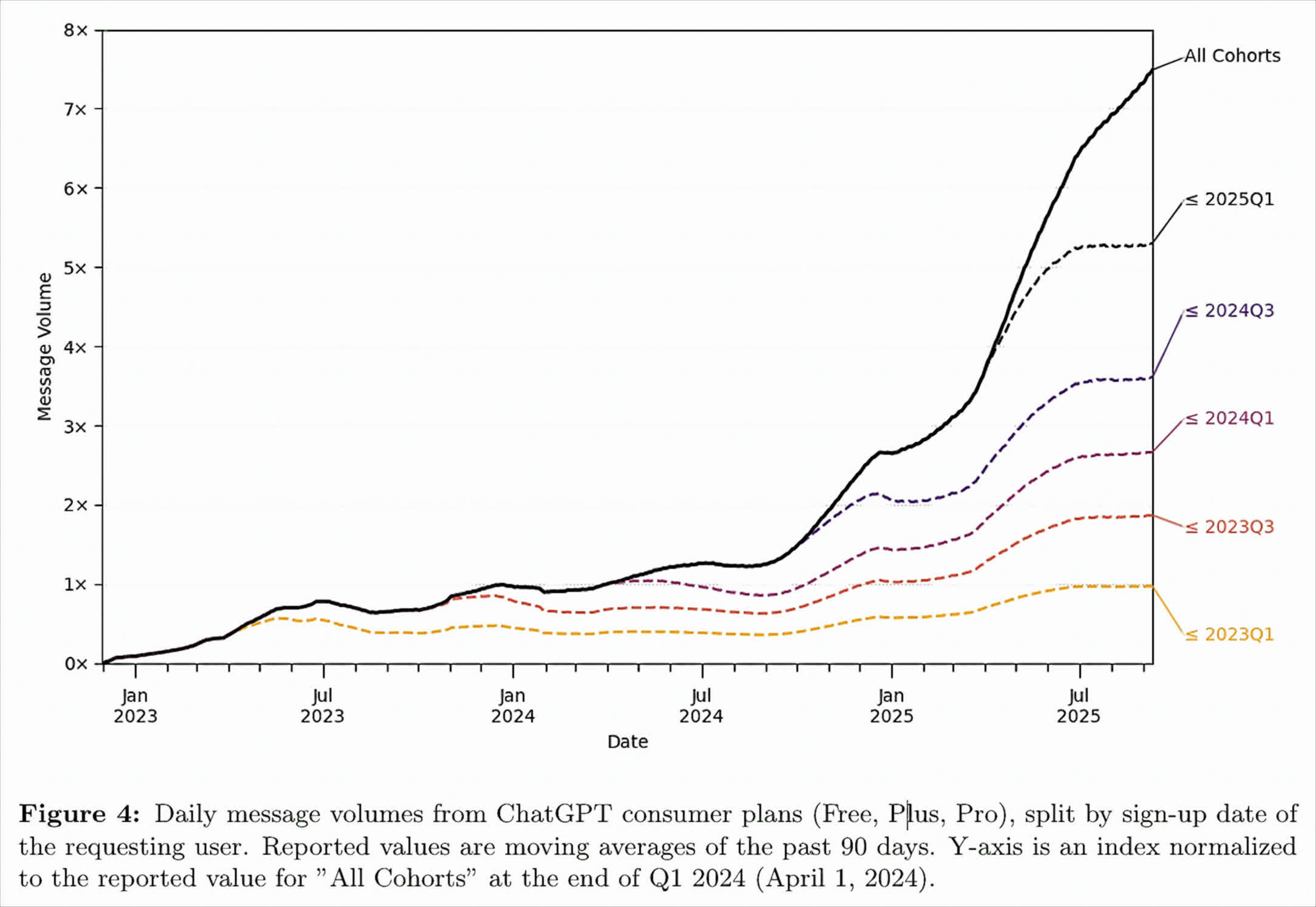
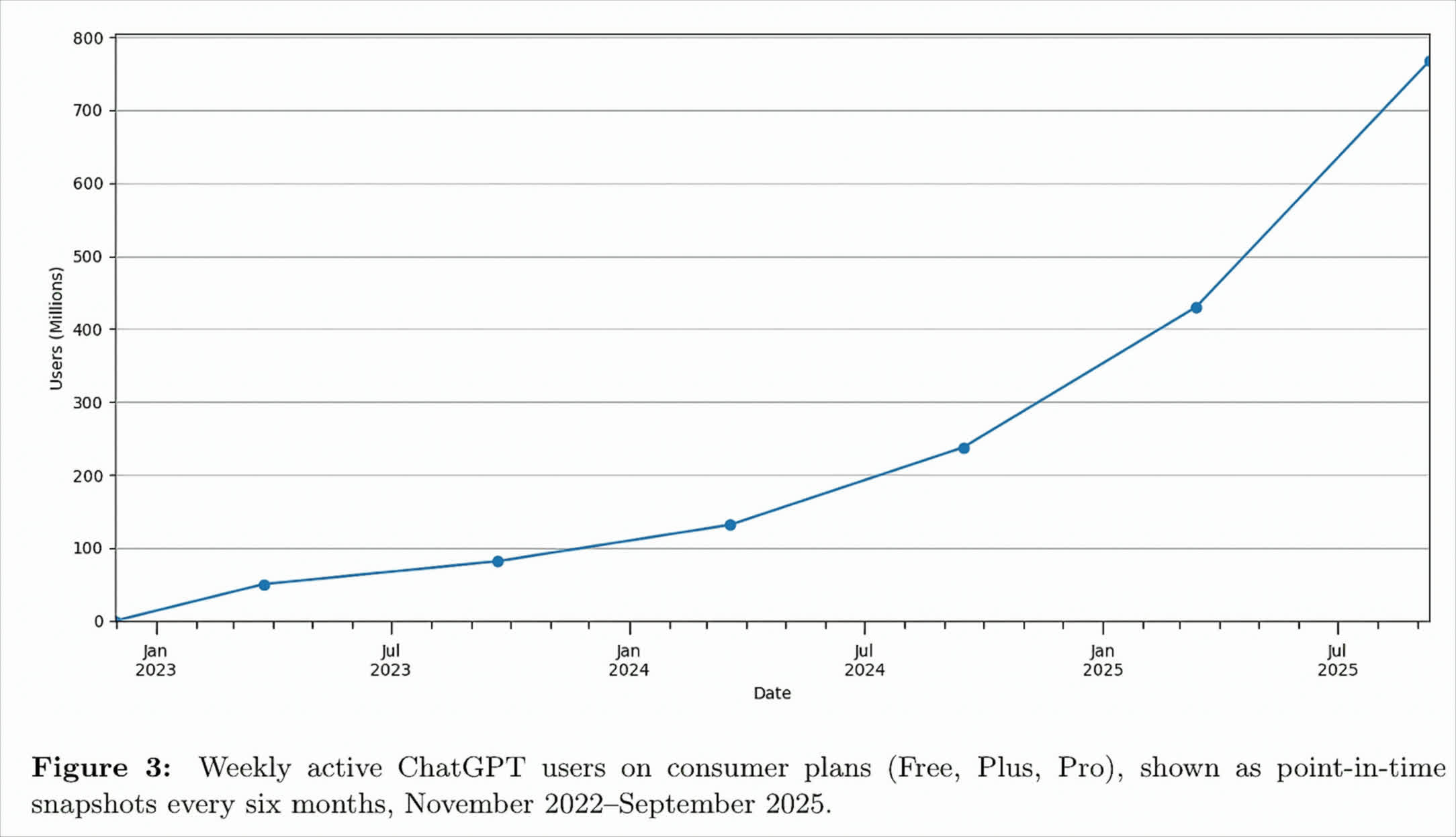
While almost 10% of the world's adult population now use ChatGPT, the number of weekly active users on its consumer plans is still growing at a rapid pace. This is increasing the number of messages the AI is processing, from around 451 million in June 2024 to over 2.6 billion in June 2025.
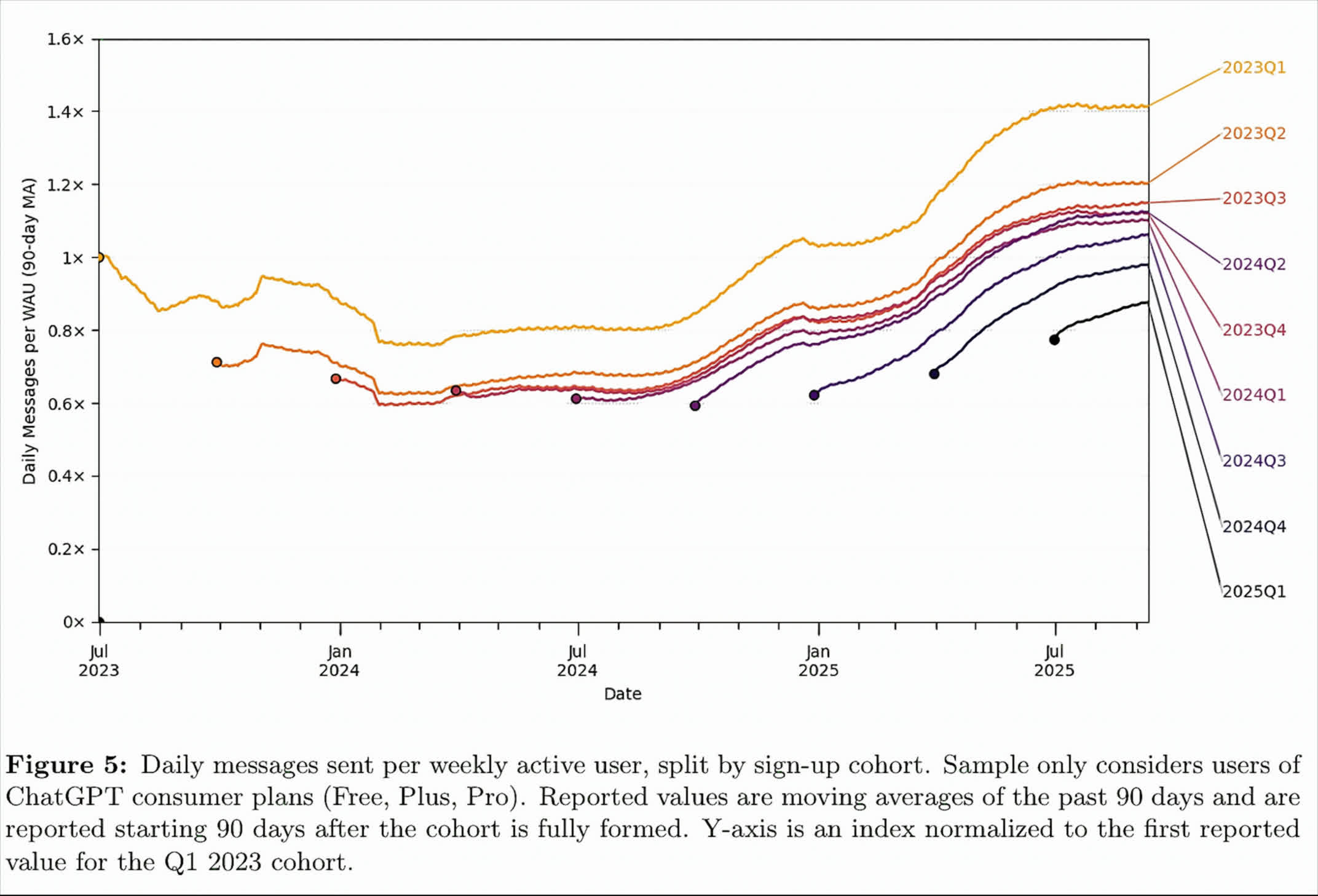
However, much of the recent growth is coming from new signups. Based on per-user message rates, long-term account holders often go through lengthy periods where their number of daily messages are unchanged, only increasing following the launch of a new feature or upgrade.