
Ripple effect: Ethical security researcher Jeremiah Fowler recently uncovered a massive unsecured database containing around two billion potentially compromised account credentials. A single database was apparently hosting several collections of account credentials from multiple security incidents, and anyone could download the data before the host decided to block access.
Fowler said that the database he discovered was neither protected by a password nor encrypted in any way. Around 2 billion credentials were just sitting there, waiting for someone to grab the data and use it to launch further attacks against users. The dataset included email addresses, logins and other user IDs, passwords, and more.
The researcher probed the online database by reviewing the neatly organized data, finding additional content types such as application credentials, browser passwords, cookies, session tokens, and other "identifiers." Fowler said that this was the largest collection of compromised accounts he had ever found. The dataset was more than 13 times bigger than an exposure he previously reported and included a lot more device-specific data for potential attackers to exploit.
The database was also noteworthy for how the plaintext data was organized in thousands of different folders, with some documents grouped by country-code top-level domain. Around 400,000 documents appeared to come from advanced malware threats, as they were stored in separate folders focused on individual victims.
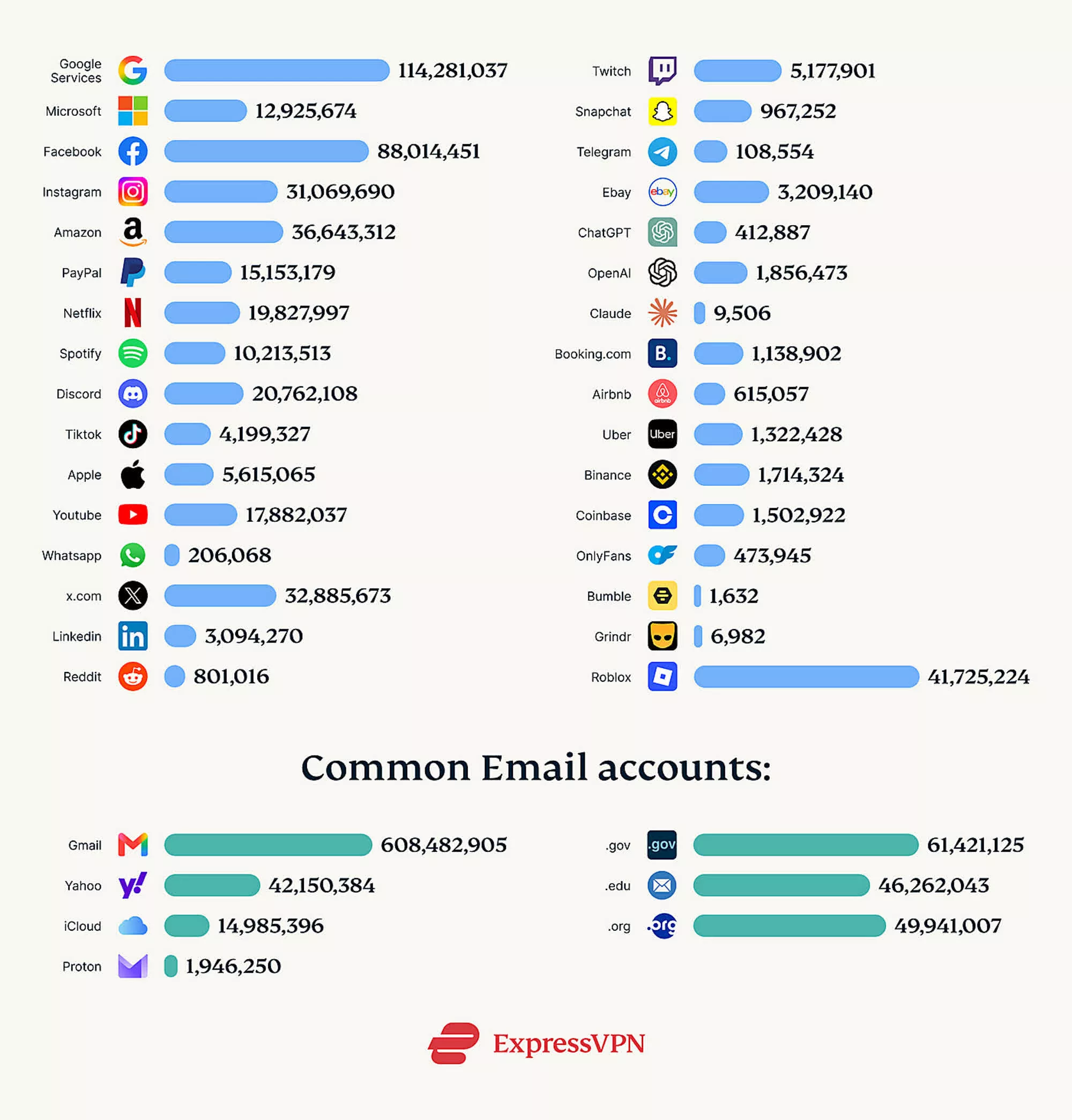
Based on the data he personally reviewed, Fowler provided an estimation of the services and domains that were most affected by the breach. The researcher remarked that the compromised accounts might have appeared in multiple documents, which means the database may include several duplicate accounts. Furthermore, the users likely own multiple accounts on different online services.
Fowler provided no definitive explanation for the origin of the dataset. The account collection might have come from multiple malware operations and later been stored in a single archive to be sold through underground marketplaces. The database could even be part of a large, legitimate security operation by other researchers or law enforcement agencies, with experts trying to identify and notify victims or monitor suspected criminal marketplaces.
The researcher did not provide any specific information about where the data archive was stored or which company was hosting it. He only said that he reported the breach to the hosting provider, which took a few days to finally restrict public access. While he did not download any data, Fowler had plenty of time to run queries and make a few estimations.
Massive databases containing billions of potentially compromised accounts are nothing new, and users are contributing to the ever-growing infostealing threat by not following proper opsec when they access online resources. Fowler warned that users should avoid installing unknown browser extensions, downloading unsolicited email attachments, or clicking links in suspicious messages. As the mega-database he discovered clearly demonstrates, sometimes resetting passwords is not enough to stay in the clear. In a worst-case scenario, worried users should consider factory resetting their devices before adopting secure authentication solutions such as password managers or multi-factor authentication.