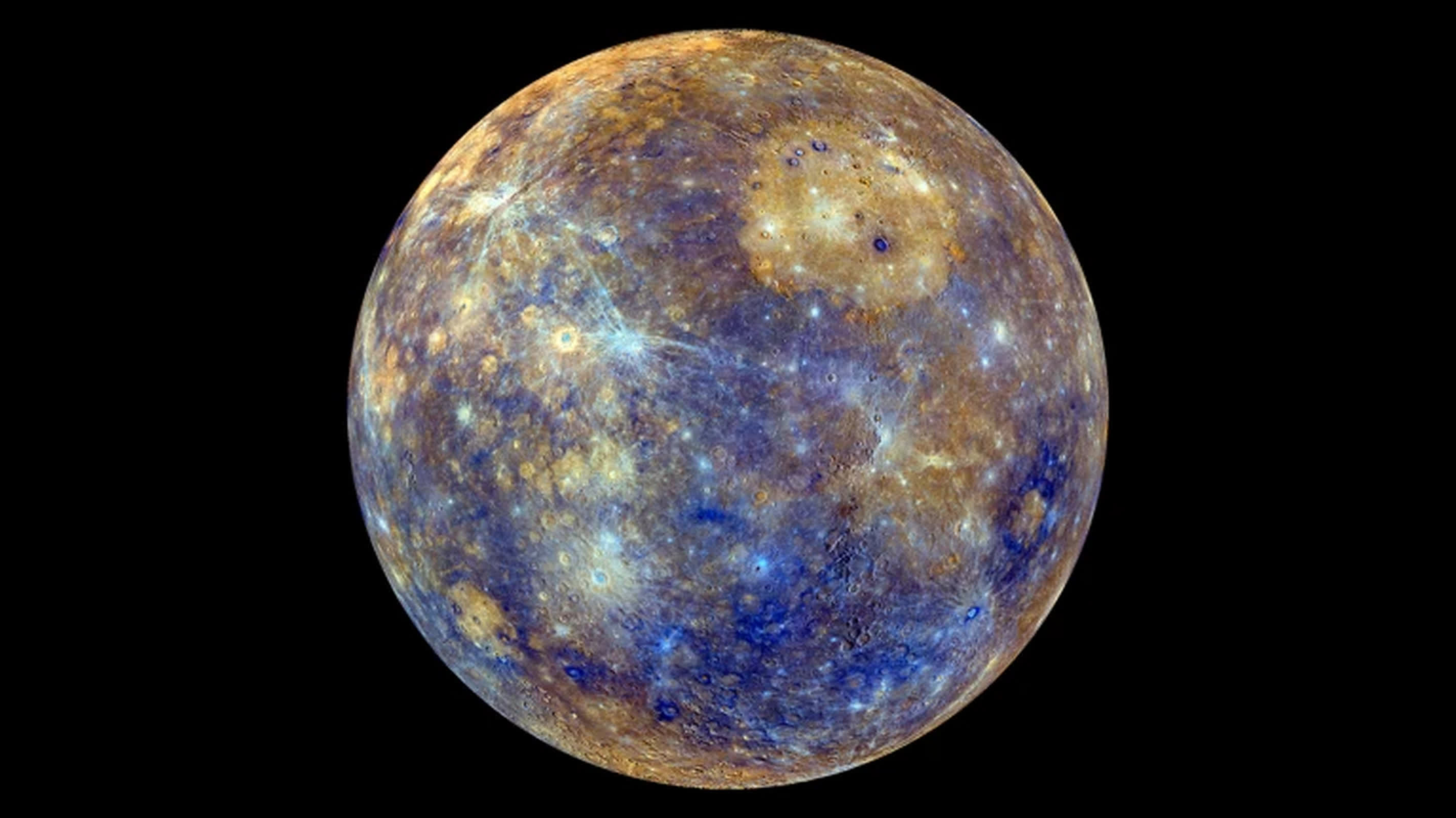
The big picture: BepiColombo has entered orbit around Mercury after an eight-year flight that used solar-powered electric engines and repeated planetary flybys to slow the spacecraft down. The European Space Agency said BepiColombo entered Mercury's orbit with both probes still attached. The probes will separate and take up different orbits, putting one close to the surface and sending the other much farther out to measure how Mercury's magnetic field interacts with the solar wind.
Getting to Mercury meant shedding speed, not just covering distance. After its launch in October 2018, BepiColombo had to move closer to the Sun without picking up so much speed that it overshot the planet. "Energetically, it takes more energy to go to Mercury than to go to the outer Solar System," Emma Bunce, a University of Leicester plasma physicist and one of the mission's lead scientists, told Nature.
To limit the amount of propellant it needed to carry, BepiColombo relied mainly on solar-powered electric propulsion rather than conventional thrusters. The electric propulsion system did not work entirely as planned, delaying the mission by 11 months.
The spacecraft also used gravity assists from Earth, the Moon, Venus, and Mercury over nine circuits around the Sun. Mercury itself helped slow the spacecraft before it entered orbit: BepiColombo flew past the planet six times, capturing its first close-up images of Mercury during the initial flyby in 2021.
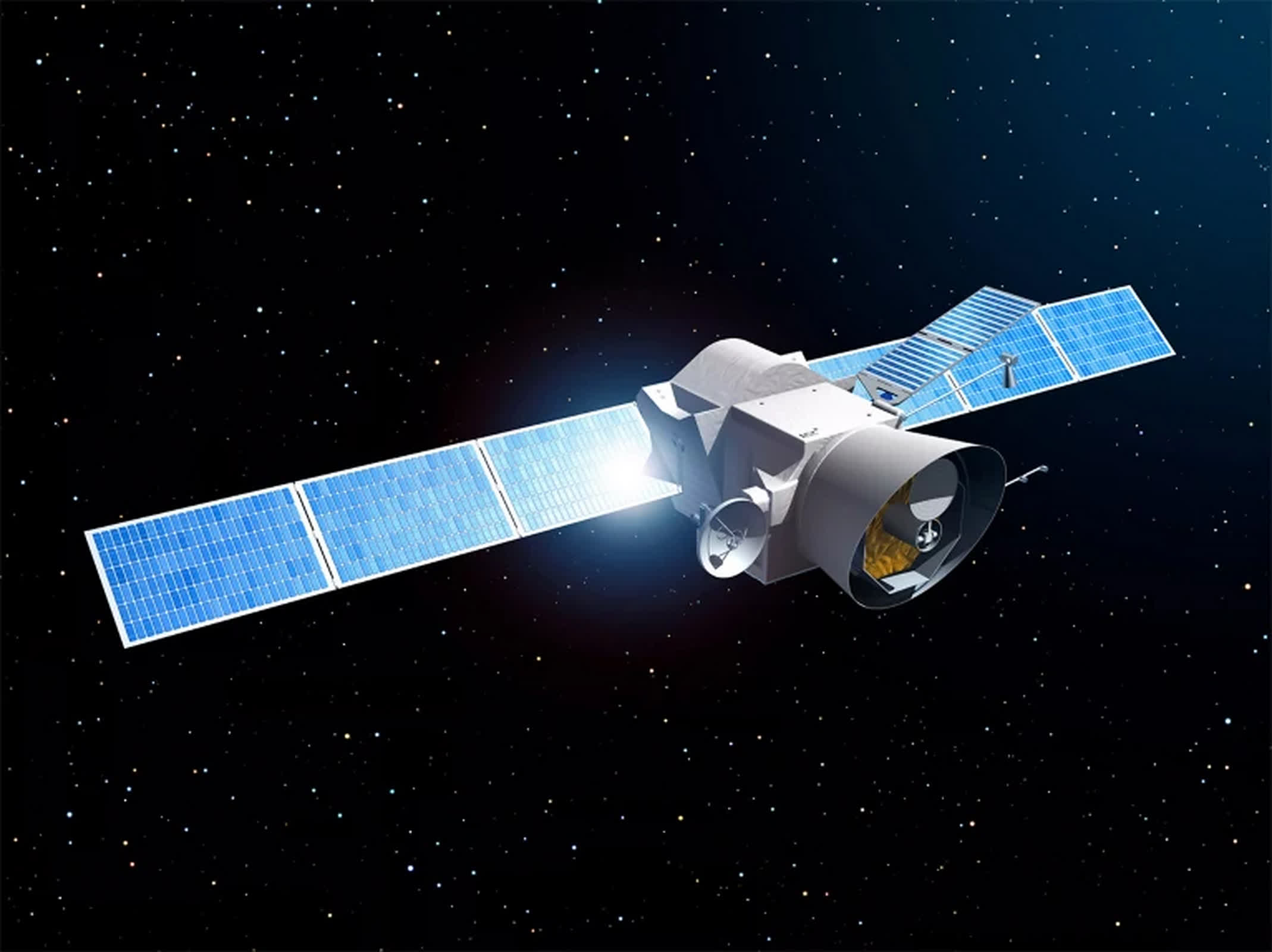
BepiColombo is only the second mission to orbit Mercury, after NASA's MESSENGER, which circled the planet from 2011 to 2015. This time, the two probes will stay together until early December, when they are scheduled to reach the orbit assigned to Mio, the spacecraft built by the Japan Aerospace Exploration Agency.
Mio will follow an ellipse that takes it from 500 kilometers (311 miles) above the surface to 11,000 kilometers (6,835 miles) out, letting it sample the magnetic field and its interaction with the solar wind across a wide range of altitudes.
ESA's Mercury Planetary Orbiter will then gradually descend, with its final orbit scheduled for March 2027. It will fly between 400 and 1,500 kilometers (248 and 932 miles) above the planet, keeping it close enough for its instruments to continuously study the surface. Among those instruments is the Mercury Imaging X-ray Spectrometer, or MIXS, which Bunce says is the first X-ray imaging device sent on an interplanetary mission.
The team did not have to wait until the spacecraft entered Mercury's orbit to test MIXS. During the cruise, mission scientists pointed it at the Crab Nebula, the remnant of a supernova observed from Earth in 1054. The instrument's next assignment is much closer: imaging Mercury's surface in X-rays while Mio makes its own set of measurements thousands of kilometers farther out during each orbit.