In a nutshell: Google researchers have demonstrated that the company's experimental quantum computer can outperform the best possible classical strategy in a logic puzzle known as the magic square game. The machine achieves this by exploiting quantum contextuality, a property in which the outcome of a measurement is not predetermined but instead depends on the context of other measurements performed alongside it.
Published in the journal Science, the research gives physicists a working hardware demonstration of a phenomenon they consider central to what quantum computers may eventually be capable of.
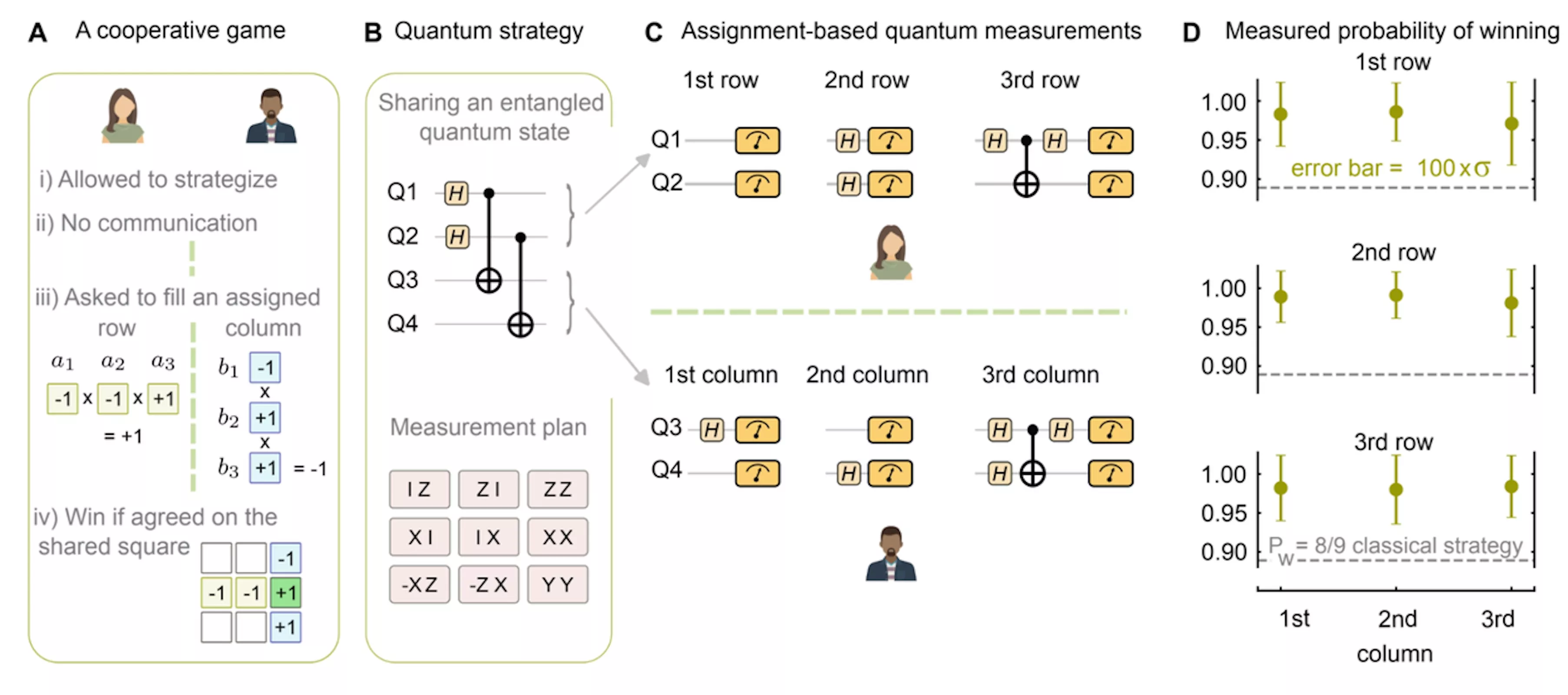
The game makes the gap between the two types of computing easy to measure. Two teammates must fill a three-by-three grid with numbers that satisfy a set of mathematical conditions, much like a variation of Sudoku. They are not allowed to communicate with each other. Under classical rules, even the best strategy can only achieve a limited number of wins. Google's machine did better.
That advantage comes from the way qubits encode information. In a conventional computer, a bit holds either a 0 or a 1 before anyone checks it. Reading it simply reveals a value that was already there. Qubits work differently. The outcome of a measurement depends on what other compatible measurements are performed alongside it. In the magic square game, the teammates can use this dependence to coordinate their answers more often than classical strategies allow, even though they never communicate. Better-coordinated answers mean more wins.
Shashwat Kumar, a Google researcher and one of the paper's authors, explains the concept using a coin toss. A coin caught and covered by a hand has already landed on heads or tails, and lifting the hand simply reveals the result. In a contextual quantum system, however, he says, measuring something else at the same time as the coin's face, such as its size, would change whether it came up heads or tails.
"The outcomes of quantum measurements are not predetermined," Kumar told The New York Times. "They are not ready to be read from a list. They come into existence while you are making the measurements, and they are shaped by other measurements around them."
The experiment was conducted on Google's quantum computer in Santa Barbara, California. The machine is built using superconducting qubits, which are metal circuits cooled to temperatures approaching absolute zero.
Michel Devoret, a Google researcher who received a Nobel Prize for his work in quantum mechanics, sees contextuality as the field's main source of advantage. "You can describe quantum contextuality as the superpower of quantum mechanics," he said.
The game itself has no practical application, and the research team acknowledges that. It is a toy problem designed to demonstrate what the hardware can do rather than solve a real-world challenge.
Google, along with numerous other companies, academic laboratories, and government institutions, has spent decades developing quantum computers in the hope of eventually accelerating drug discovery, designing new materials, and advancing artificial intelligence. None of those goals is achieved by this experiment. The researchers are making a narrower claim: a machine capable of solving a puzzle like the magic square game could pave the way for more meaningful calculations.
Mark Howard, a physicist at the University of Galway in Ireland who was not involved in the study, said the significance lies in the fact that quantum computers behave in ways classical computers cannot. If scientists can harness that behavior, they could perform calculations that would be impossible for even the most powerful traditional supercomputers.
"The dream is that contextuality is the fuel that makes a quantum computer superpowered," Howard said.
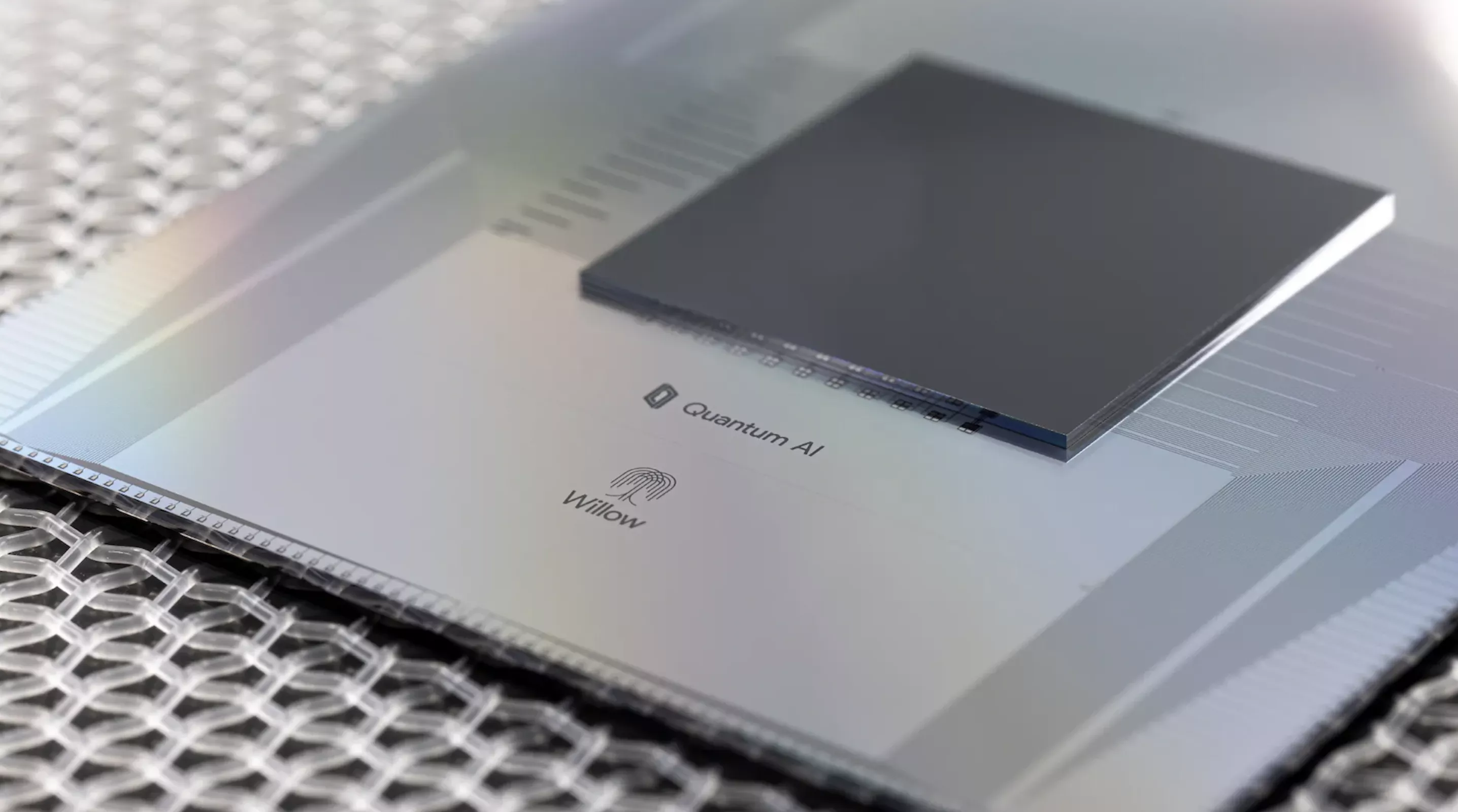
For now, Google's team is putting more weight on where the effect happened than on the puzzle it solved: a processor the company is still working to improve.
"All of that weirdness can fit on a chip," said Rodrigo Cortiñas, a Google researcher who worked on the study. "That is what we are building."