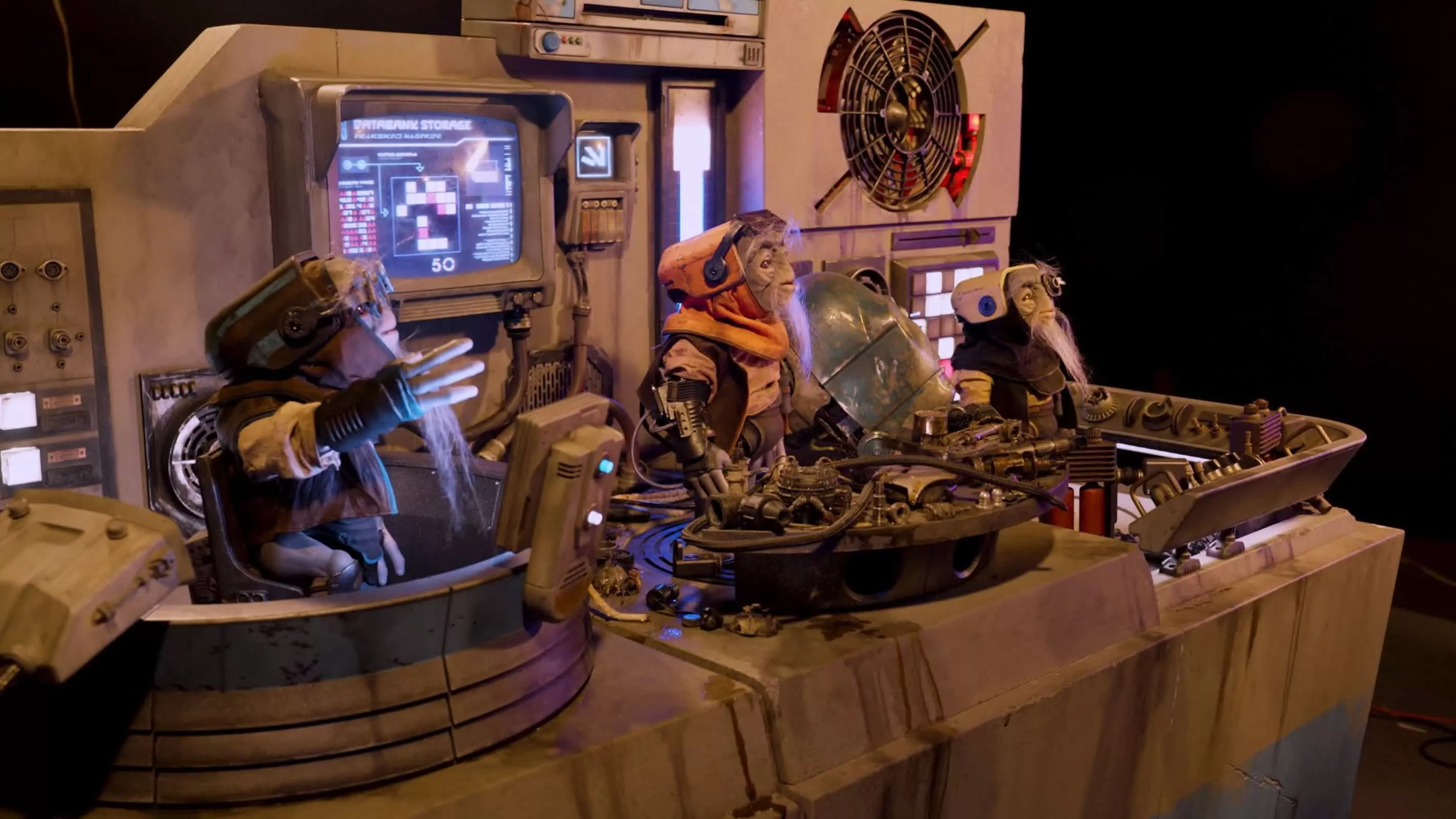
First look: Walt Disney Imagineering R&D has built three small Star Wars robots that watch and listen to visitors and choose their own responses without a hidden puppeteer. The Audio-Animatronics prototypes are modeled on the Anzellan aliens from this year's film The Mandalorian and Grogu, and they send camera and microphone data to several AI models running on Amazon Web Services. Those models decide in the moment what each character says and how it moves, but every line and gesture they can pick from was written ahead of time by Disney's Imagineers.
The characters are named Vilo Vele, Kado Bre'a and Jibu Bre'a. Their first public appearance will be at AWS re:Invent in Las Vegas later this month, where conference attendees can interact with them. Disney has not committed to a park debut. However, the characters and the technology behind them could eventually show up in Star Wars: Galaxy's Edge and other attractions.
The project changes how Disney's animatronics have worked for decades. Since the first Audio-Animatronics figures sang in Disneyland's Enchanted Tiki Room, the company's figures have mostly performed choreographed shows that run the same sequence every time. Even the most lifelike recent figures either follow predefined routines or rely on an operator out of view. The Olaf robot Disney introduced recently is an example of the second approach, since a handler drives it with a Steam Deck.
The Anzellans have no handler. Each figure carries hidden cameras and microphones that capture what guests do and say. That input goes to AWS cloud servers, where the processing is divided between models of different sizes.
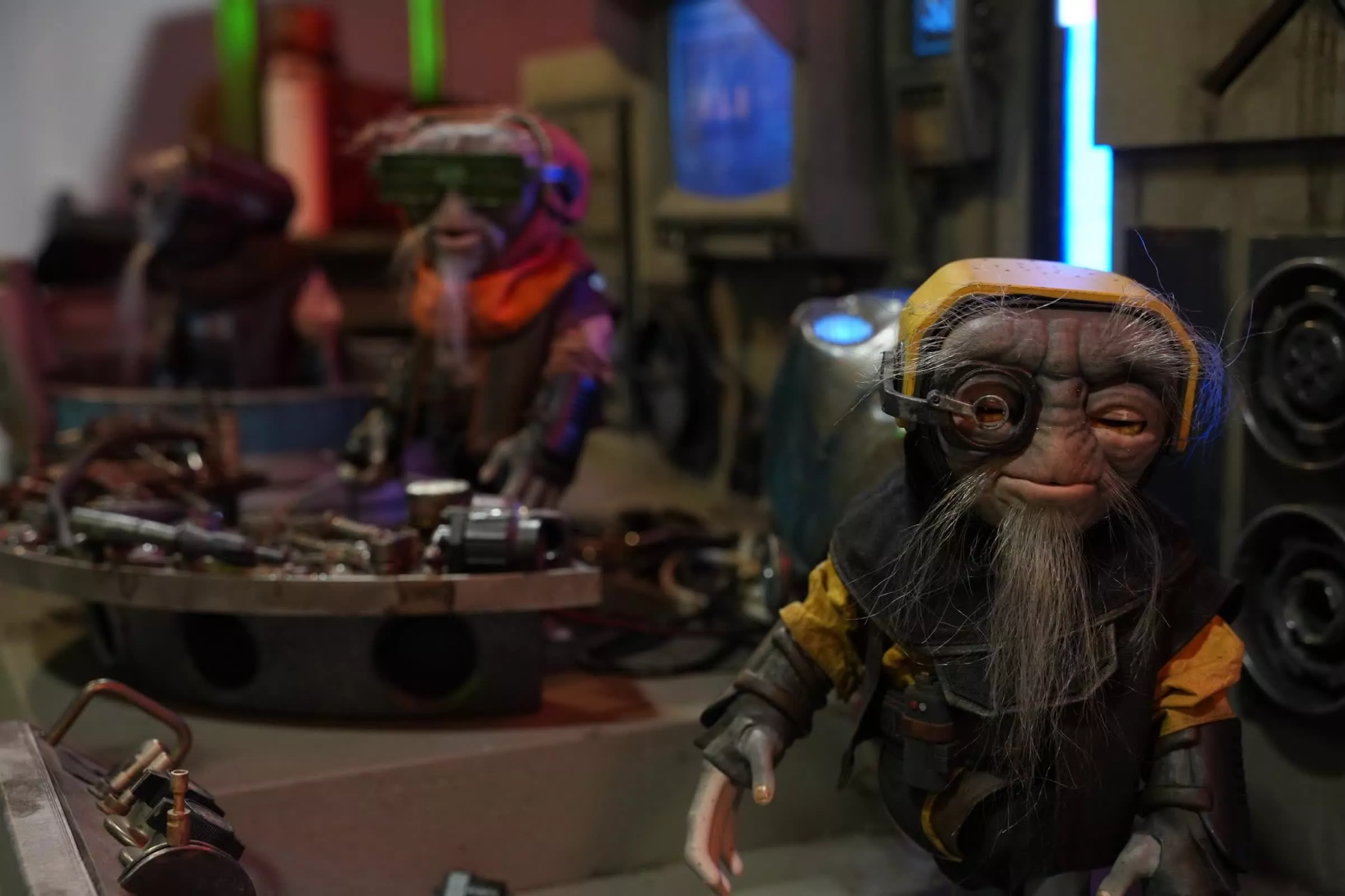
A fast-decision model handles split-second reactions, such as making a character lock eyes with a guest who has just walked up, so the figure appears to be paying attention. Larger models work more slowly and plan longer exchanges by weighing the wider context of the interaction.
That split addresses the hardest problem for any interactive character: timing. If a guest waves and the robot reacts a second late, the illusion falls apart. Disney says each part of the system has been tuned for latency so the characters respond fast enough to feel natural.
Running the heavier reasoning in the cloud while a lightweight model covers immediate reactions lets the figures seem responsive while still drawing on more compute for decisions that can wait.
The characters also respond to each other, not just to guests. In one scenario Disney describes, a visitor approaches and all three figures turn at once. One speaks in a mix of English and the Anzellan language, another blinks and tilts its head, and the third studies the guest before saying, "we have something special for you."
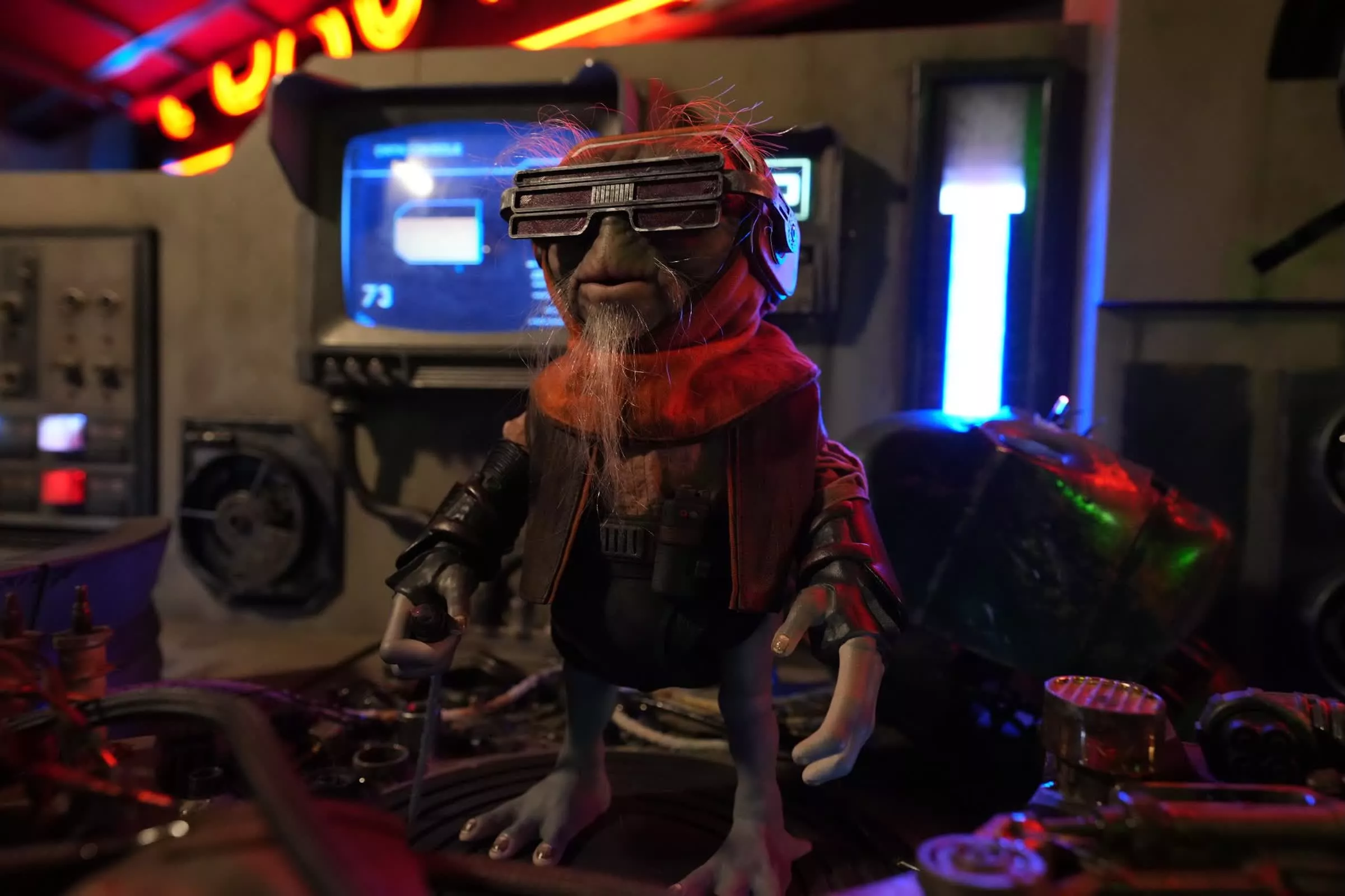
What the system does not do is just as important as what it does. The AI never generates new speech or motion. Instead, it selects from prerecorded audio clips, which are played back alongside dynamic animations. Imagineers wrote every line of dialogue and designed every movement, including personality quirks that make each Anzellan distinct. The models decide which piece of material to use and when, but they cannot step outside the script.
That design keeps the characters on-brand and predictable for the people who built them, which matters for a company protective of its intellectual property. Disney summed up the goal this way: "The result is a set of characters that surprise the guest, without surprising its creators or artists." The approach also avoids the risks of open-ended generative AI in a family theme park, where an unscripted line from a Star Wars character could become a public relations problem.
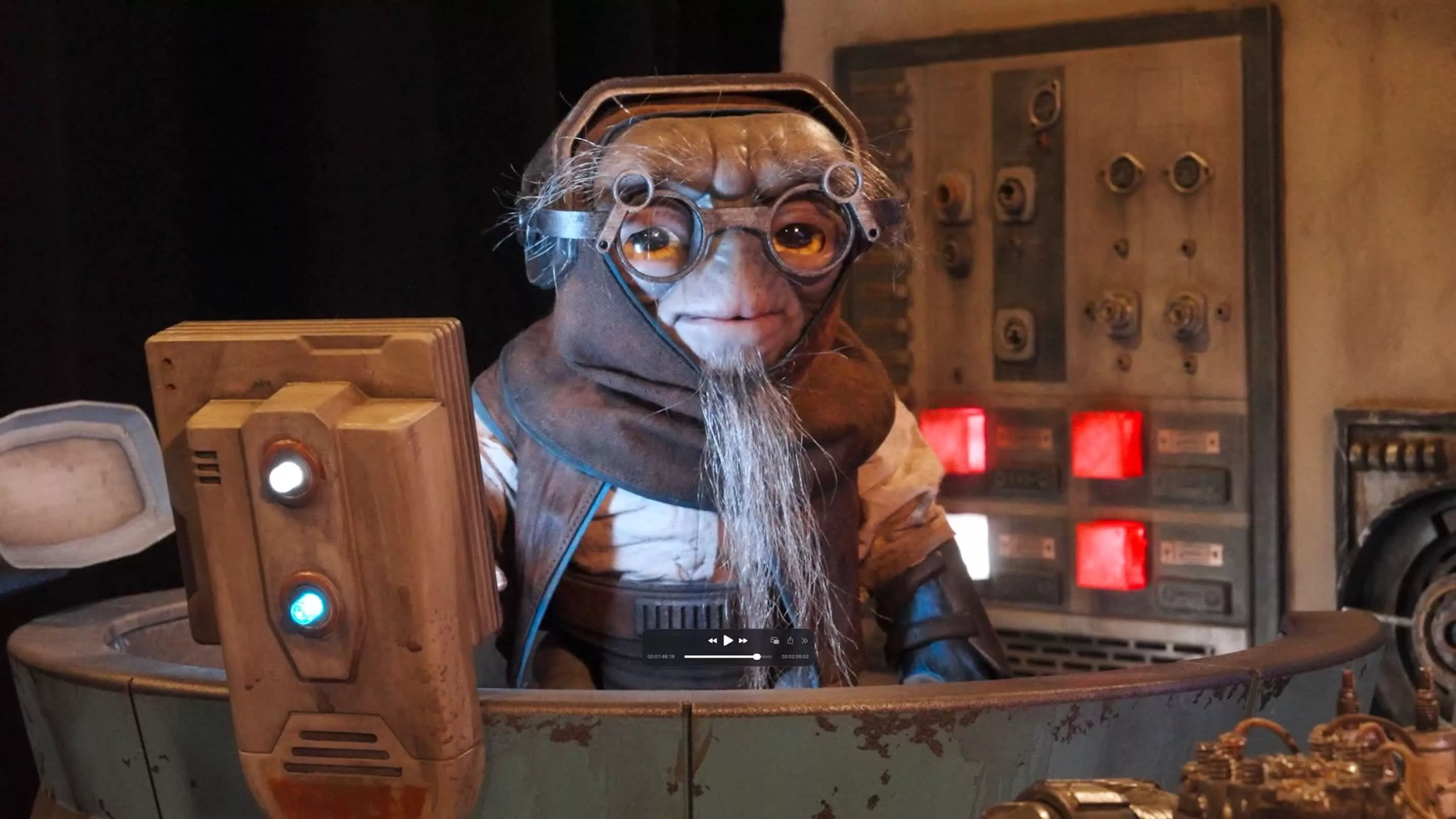
The prototypes build on an existing business relationship. AWS already serves as a public cloud infrastructure provider for Disney+, and the Anzellan project takes that partnership from streaming into physical, guest-facing entertainment. AWS supplies the cloud and AI capabilities that handle each character's sensing and decision-making, while Disney controls the creative content the system draws on.
The re:Invent demonstration will be the first chance to see how well the system performs with real crowds. A conference floor is noisy and unpredictable, and it will test whether the fast-decision layer can keep reactions feeling immediate when many people are competing for the characters' attention. If it works, Disney will have a template for park characters that behave differently with each visitor while performing only material its artists have approved.