The big picture: A small group of companies is designing data centers that would float on the open ocean or sit on the seabed, powering AI servers with electricity generated from waves, tides, wind, and sunlight while dissipating their heat into the surrounding water. The concept is a computing facility that requires no connection to the electrical grid, no municipal water supply, and no nearby residents to convince of its benefits. The biggest challenge is engineering hardware that can withstand saltwater, storms, and marine life while harvesting enough energy from the ocean to keep processors running.
The push for these facilities comes as battles over land-based data centers intensify. Local opposition often centers on how much power and water data centers consume and where they are built. Developers are betting that locating facilities miles offshore, with their own power and cooling systems, will take most of those arguments off the table.
The past several months have brought a series of announcements. In May, Portland-based Panthalassa raised $140 million from investors, including Peter Thiel, to build 278-foot steel structures that would drift untethered in the Pacific and power AI computing with wave energy. The company plans to test its next-generation system before beginning commercial deployment in 2027.

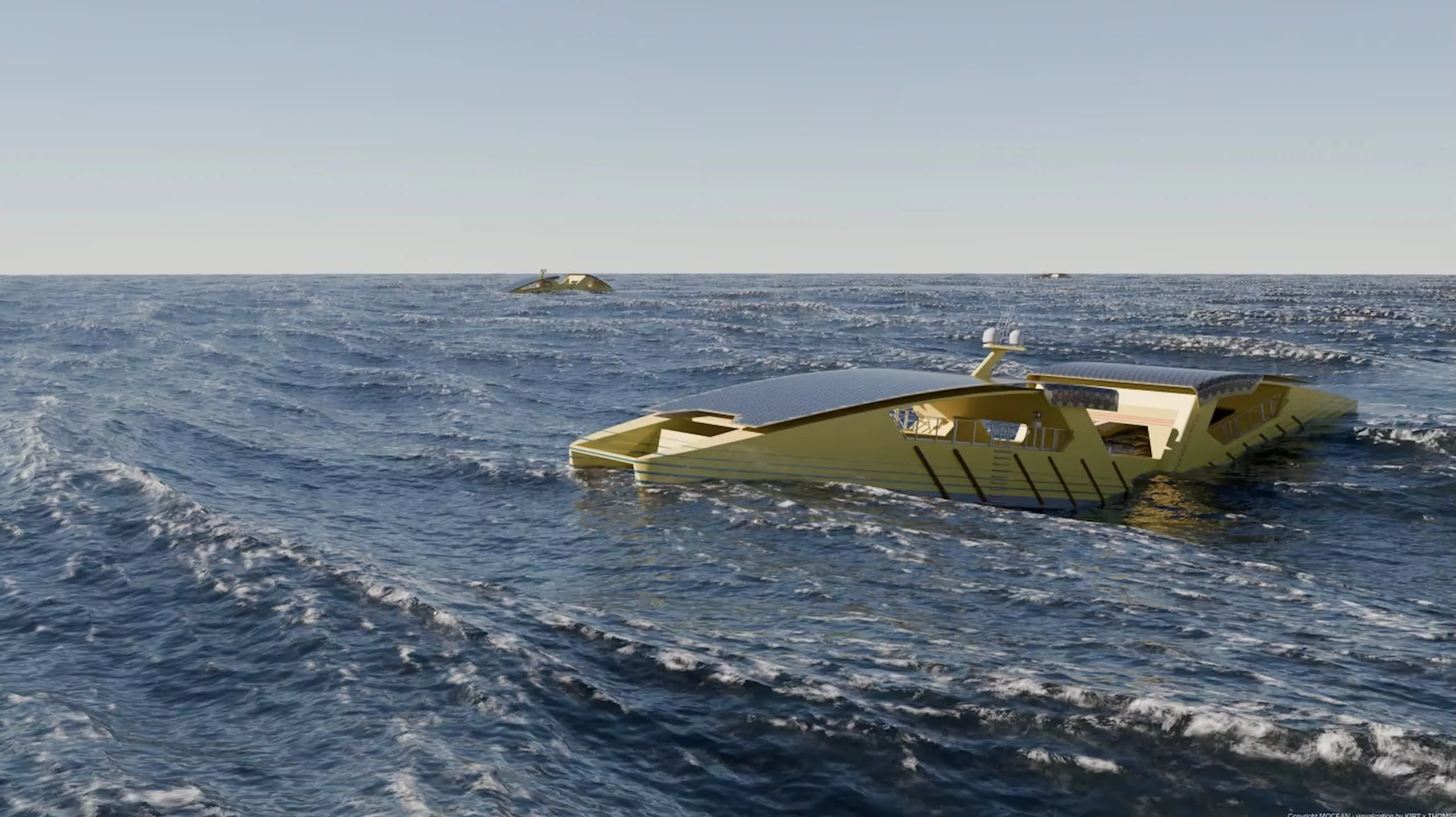
In July, Scottish developer Mocean Energy said it would install AI servers on floats powered by waves and sunlight far offshore, cooled by seawater and connected to land by satellite. In October, New Jersey-based Ocean Power Technologies and Florida-based Stratum Holdings signed a nonbinding letter of intent to explore whether Ocean Power's prototype buoys, which run primarily on wave, wind and solar power, could support Stratum's AI infrastructure without a power cable to shore.
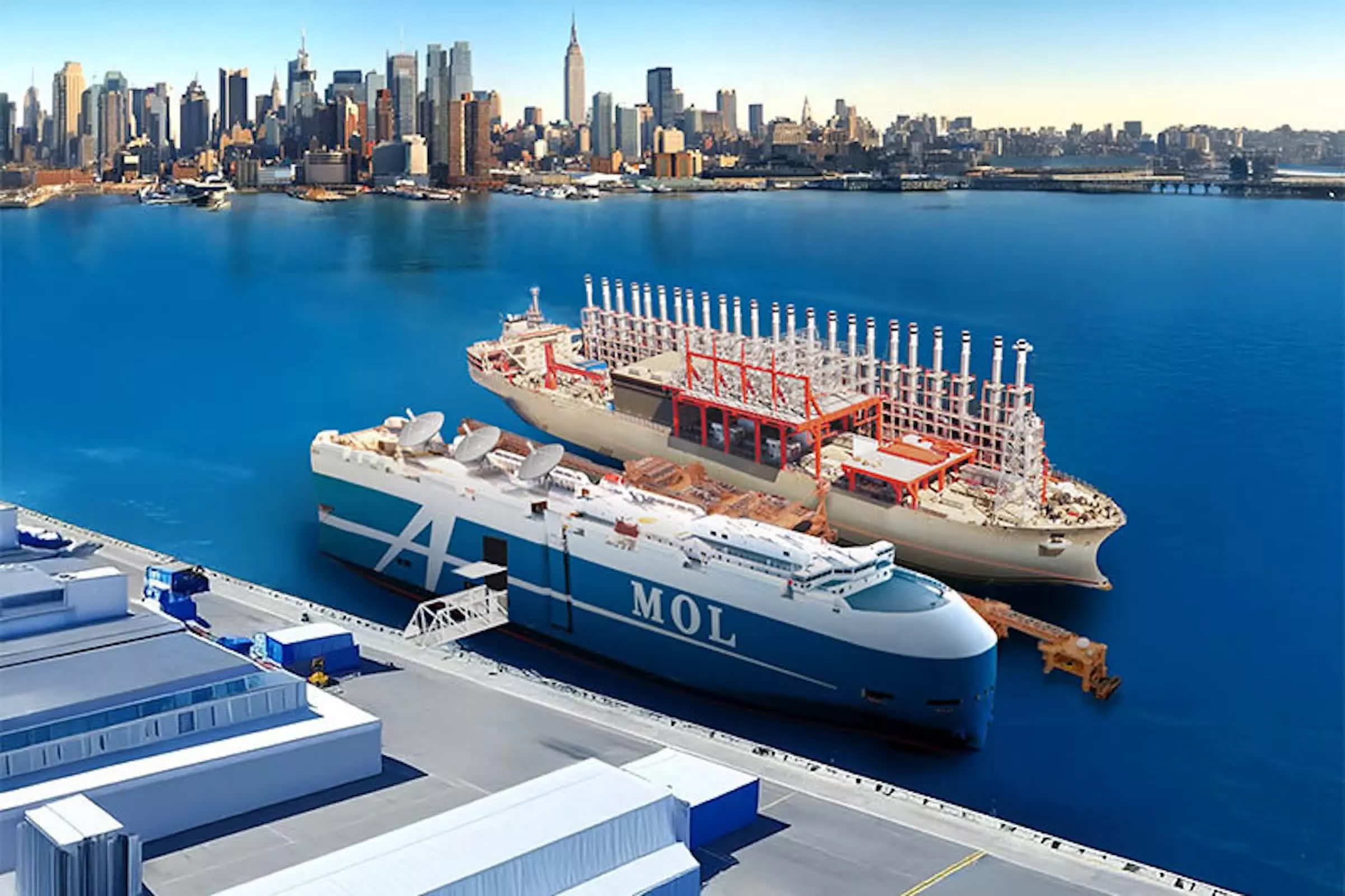
Other designs would stay closer to land. Massachusetts-based DeepGreen Holdings has applied for federal permits to study tidal-powered underwater data centers on the seabed off Eastport, Maine, and in Alaska's Cook Inlet. The facilities would harness water movement near shore as tides rise and fall. Japan's Mitsui O.S.K. Lines wants to build a new ship or convert an existing one into a data center moored in port, powered either from shore or by a separate power vessel.
Mocean offers the most detailed look at how the hardware would work. Its system grew out of a decade of work developing wave energy technology for offshore oil and gas operators. A floating body moves with the swell and directly drives a generator, minimizing the number of moving parts that can fail. During a 13-month sea trial that ended in spring 2024, the unit generated electricity in waves as high as 40 feet, though its output dropped in smaller seas.
That trial unit generated about 10 kilowatts. Mocean now wants each node to supply about 500 kilowatts of power to onboard computers by combining wave and solar energy, with batteries providing backup during calm, overcast periods. The company envisions grouping the nodes into clusters of up to 100 megawatts in high-energy wave regions such as Western Europe, the US West Coast, Chile and Western Australia.
Cameron McNatt, the company's co-founder and chief executive, has set deployment targets of one gigawatt within five years and 10 gigawatts within a decade. He says the units would be difficult to see from land. "They're really low profile, sitting close to the water," McNatt told The Wall Street Journal. "They would basically be invisible."
Power is the central engineering challenge. Bryson Robertson, who directs the Institute for Integrated Energy Systems at the University of Victoria, says the cost of laying subsea cables to shore can drain a project's budget before the technology is proven. That helps explain why most of these designs generate electricity on site. Free-drifting platforms avoid the cost of moorings, Robertson says, but storms can push them off station. The energy needed to bring them back is energy that can't be used to power the servers.
Scale is another limitation. Robertson says wave converters must be tuned to the period of local waves. Simply making a device larger won't necessarily capture more energy from the ocean; it could actually capture less. "It's like building a 500-meter-wide wind turbine, but there's never enough wind to make it spin," he says.
Then there is the water itself. Climate-technology consultant Michael Barnard says saltwater corrodes metal quickly, while barnacles, mineral deposits and microorganisms accumulate on submerged surfaces. These can clog intake filters and coat the heat exchangers used to cool the servers. "You put anything into seawater, and it starts failing immediately," Barnard says.

Barnard doubts wave machines can operate reliably enough to make the concept viable. He also notes that sending repair crews offshore adds to costs. Mocean plans to use marine-grade anti-corrosion coatings and anti-fouling paint, and to tow units back to port for scheduled maintenance.
Environmental questions add another layer of complexity. In Maine, opponents of DeepGreen's plan point out that the Bay of Fundy is habitat for some of the world's most endangered whales. Kristen Monsell, oceans program litigation director at the Center for Biological Diversity, which has sought to participate in the federal review, says moving farther offshore could bring more boat traffic, increase the risk of whale strikes, and create noise that disrupts how whales feed and find mates.
She also raised concerns about water pollution and heat discharged into the surrounding environment. Louis Wolfson, DeepGreen's managing member, says the company's multiyear preliminary study is intended to examine those issues. He says the company is considering only turbines that stay within safe acoustic limits for marine mammals and fish. It will also consult tribal leaders, fishermen, and town officials before applying for a license. DeepGreen is still evaluating equipment partners and has not put anything in the water.
Wave energy has a long history of failed ventures, many undone by harsh conditions and high costs. Robertson says deep-pocketed technology companies could give the field the financial backing it needs to keep trying. "It's nice to see industries start to spend money in the wave-energy space," he says. "No technology works the first time."