
Connecting the dots: The AI boom has been widely blamed for GPU prices spinning out of control over the past year. Following Jensen Huang's resignation from Nvidia, new information suggests that this was the goal of the former CEO's business strategy, which has long drawn accusations of circular financing.
A recent Wall Street Journal profile of Nvidia interim CEO Colette Kress has shed more light on how Nvidia controversially financed its own customers to drive the AI boom. According to the report, the company pushed for more deals in mid-to-late 2026 to keep its GPU prices high amid an oversupply of TSMC wafers.
Since at least last year, Nvidia has been accused of prolonging the AI boom by supporting the companies that buy its chips. Founder and former CEO Jensen Huang, along with then-CFO Kress, even went so far as to defend the company against comparisons to Enron, which used similar tactics to illegally obscure its debt before its 2001 collapse.
Also Read – GPU Prices Are Spiraling Out of Control: Q4 2026 Update
Behind the scenes, Kress expressed concern about the scale of the deals Nvidia had inked with cloud providers and major AI companies like OpenAI. Nvidia pushed ahead anyway, but by summer 2026, the company was wondering whether it had pushed too far amid an "avalanche" of semiconductors it had ordered from TSMC.
It was around this time that Huang berated Kress, calling her "a deer in headlights," according to someone familiar with the matter. Nvidia began to slow down, downsize, and pause some of its financing deals, including one with OpenAI that originally included a $250 billion backstop for the world's largest data center.
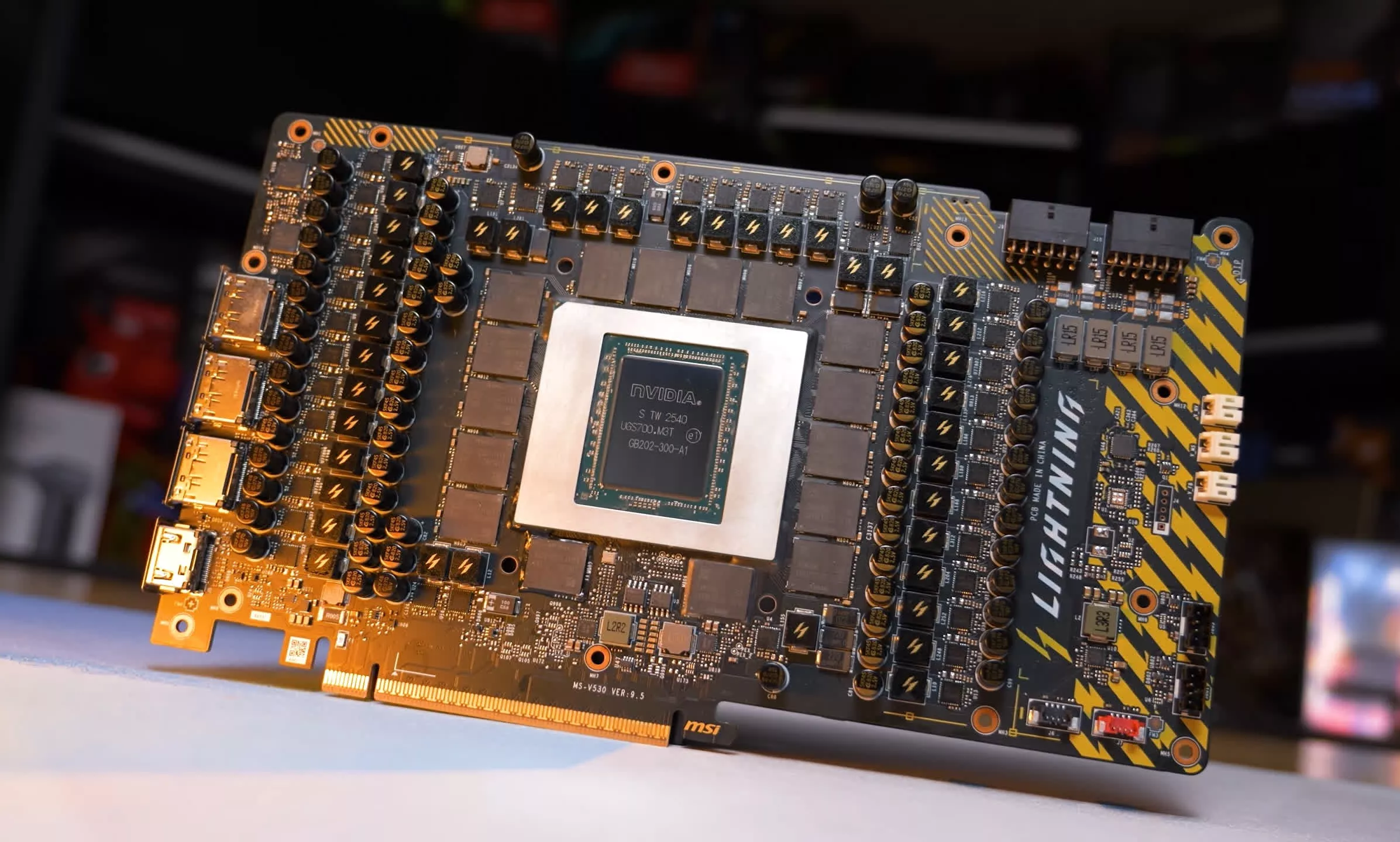
AI data centers have siphoned off DRAM and NAND manufacturing capacity traditionally used for RAM and storage in consumer devices, inflating prices. Nvidia's GeForce GPUs have been hit especially hard, with prices often exceeding 160% of their original MSRP. The company's flagship RTX 5090 has become unobtainable because Nvidia has directed its VRAM and semiconductors toward data center GPUs.
Related: Without Jensen Huang, is it game over for GeForce?

As its financial support deals wound down, Huang became worried about the company's stock market valuation, with its average monthly stock multiple falling far behind those of other large tech companies. At a Berlin conference, the former CEO told major clients a story about a busy Japanese soup vendor who refused to give him a second serving after he had waited in a long line, saying the vendor had too many customers and not enough soup. Huang used the story to highlight the value of maintaining a diverse customer base and keeping prices high, suggesting that Nvidia's circular financing strategy inflated GPU prices by creating the perception of high demand.
The story emerged after Huang's resignation following the revelation of multiple extramarital affairs. One was with Alice Huang (no relation), whose company, Megaspeed, was suspected by US intelligence of diverting Nvidia chips to China in violation of export regulations. While some allege that she is a spy for Beijing, President Trump and the Justice Department said that hasn't been determined.