
The big picture: Most cameras that keep watch over Earth's orbit only work when sunlight bounces off whatever they're tracking. So when a satellite slips into the planet's shadow, it effectively vanishes for a while. Anduril now says its first satellite can follow spacecraft through those dark stretches. That could let the US military catch a rival quietly changing course at night.
Anduril-216 rode a SpaceX rideshare to orbit back in July. It's roughly the size of an oven and flies about 590 km (366 miles) up, so it spends around a third of every lap in darkness.
Oddly enough, those dark passes are when it does its best work. Its long-wave infrared sensor picks up the heat other spacecraft give off rather than the sunlight bouncing off them – Anduril says the imaging tech was adapted from its autonomous weapons.
Speaking to Ars Technica, orbital systems chief Adam Thurn said the sensor finally lets the company see adversaries maneuvering during eclipse periods, "where in the past we've been fairly blind." Engineering head Gokul Subramanian went a step further, saying the US currently can't keep track of satellites through those stretches at all. The sensor is only rarely blinded by the Sun, too.
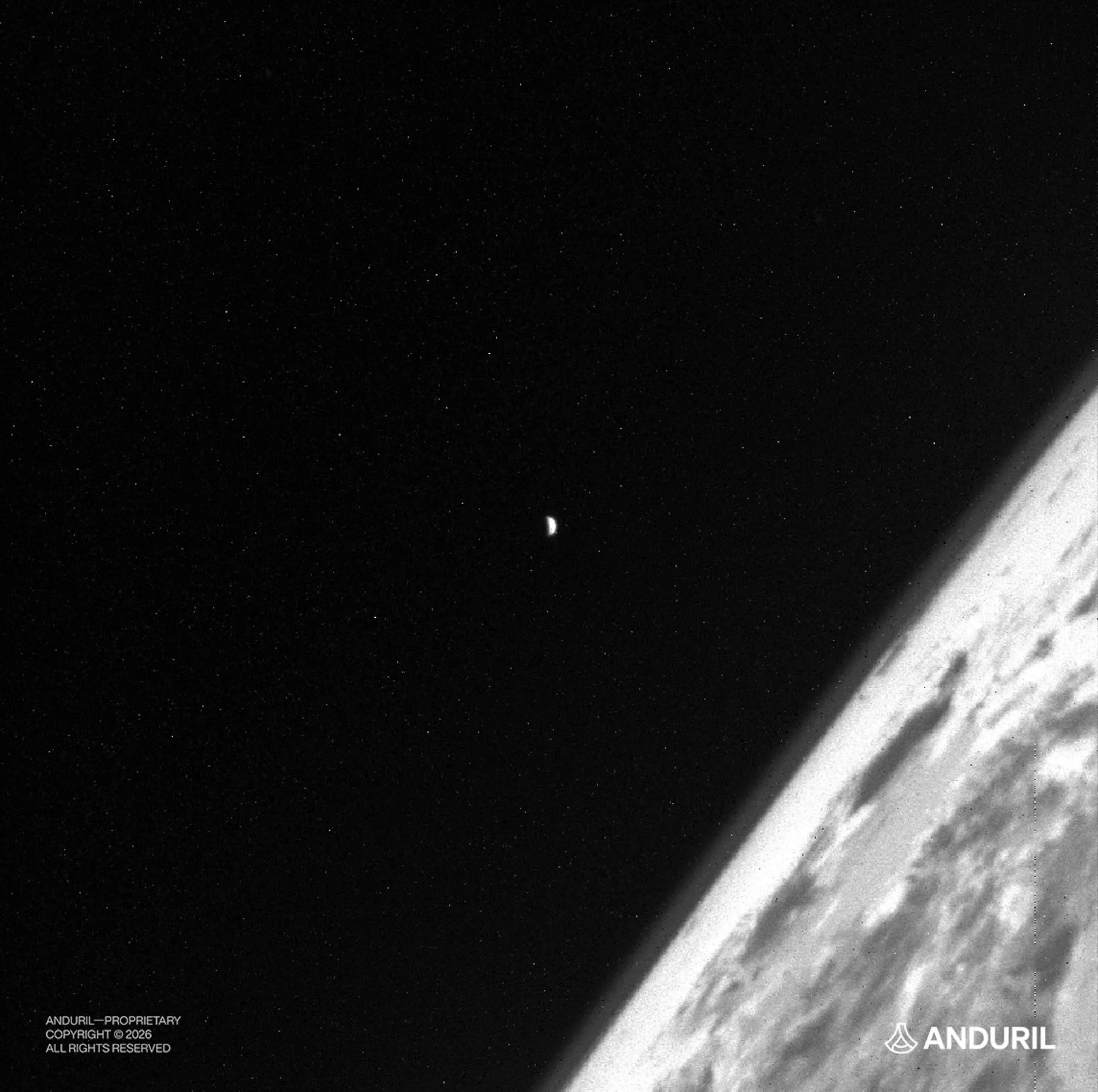
That blind spot matters because the Space Force tracks satellites both to warn operators about collisions and to catch threatening moves. China, for one, has already been spotted practicing coordinated "dogfighting" maneuvers in low Earth orbit. A stretch where optical sensors can't see could make for handy cover.
Alongside the infrared sensor, Anduril-216 carries two third-party visible-light cameras and an onboard computer that blends both feeds. That computer works out tracking solutions by itself, without waiting on analysts on the ground. According to Via Satellite, it's also beefy enough to run frontier AI models.
So far, though, the only picture the company has shared is an infrared shot of the Moon hanging over Earth's horizon. Thurn says the sensor can also capture detailed, resolved images of other satellites if it gets close enough. Still, Anduril hasn't shown an actual target maneuvering in the dark yet.
Weirdly, the company isn't really in this to sell satellites. Subramanian says it would rather sell the tracking data to the US military. It doesn't even plan to build its own satellite production line. Anduril-216's body actually came from startup Apex Space, and Anduril just supplied what's bolted onto it.
That data business already has some backup on the ground. In March, Anduril bought ExoAnalytic, a firm that runs around 400 telescopes tracking spacecraft in higher orbits. The same infrared imager is also slated to fly to geostationary orbit aboard an Impulse Space spacecraft for a planned close-inspection demo. Further out, the company says the sensor could eventually work in the space around the Moon.