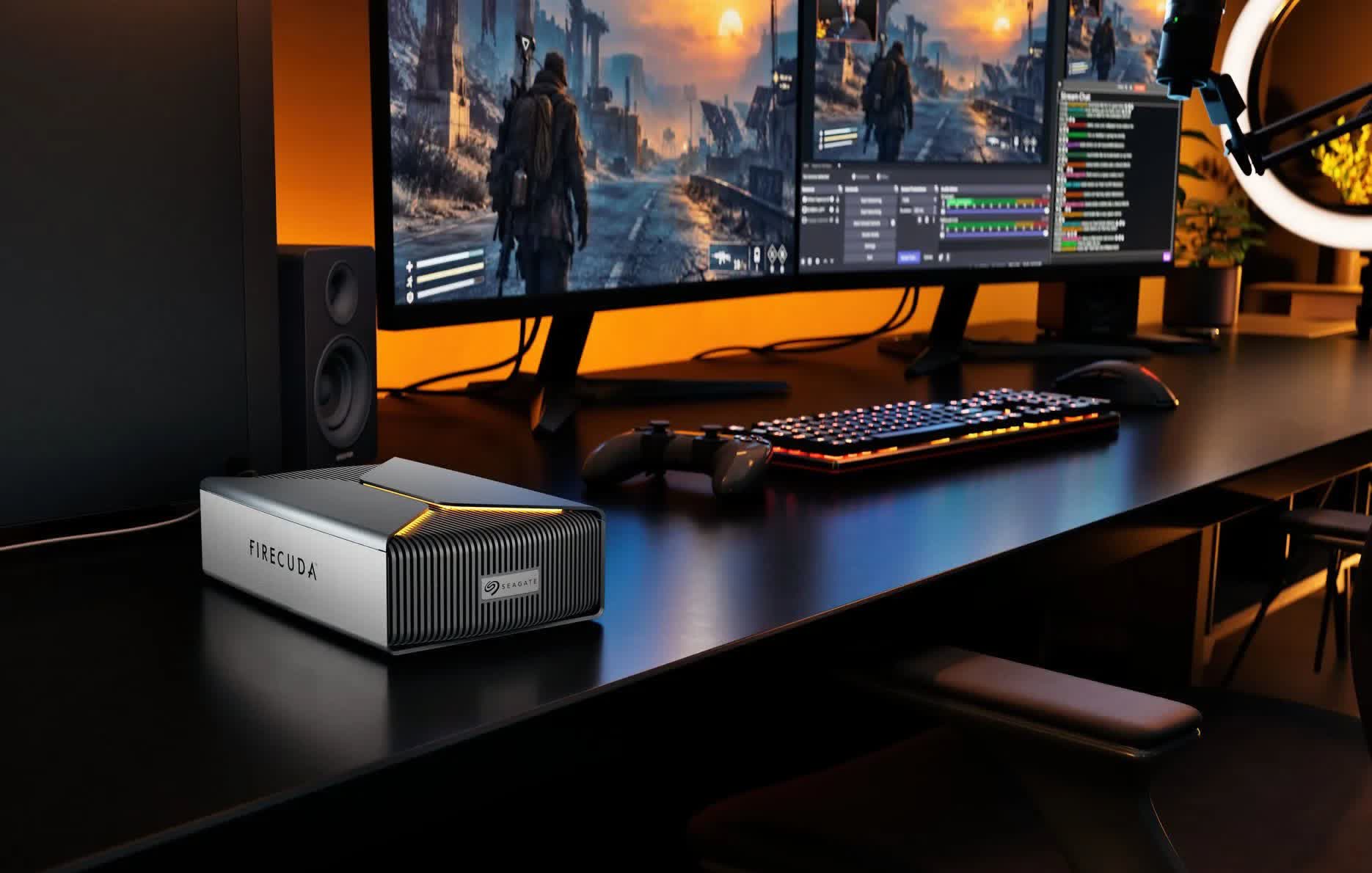
Editor's take: Hybrid drives were all the rage among storage makers a little over a decade ago. Seagate thinks today's chaotic hardware landscape is ripe for further exploitation, which is why the company is now offering an extra-pricey new device designed to resurrect the whole hybrid drive concept.
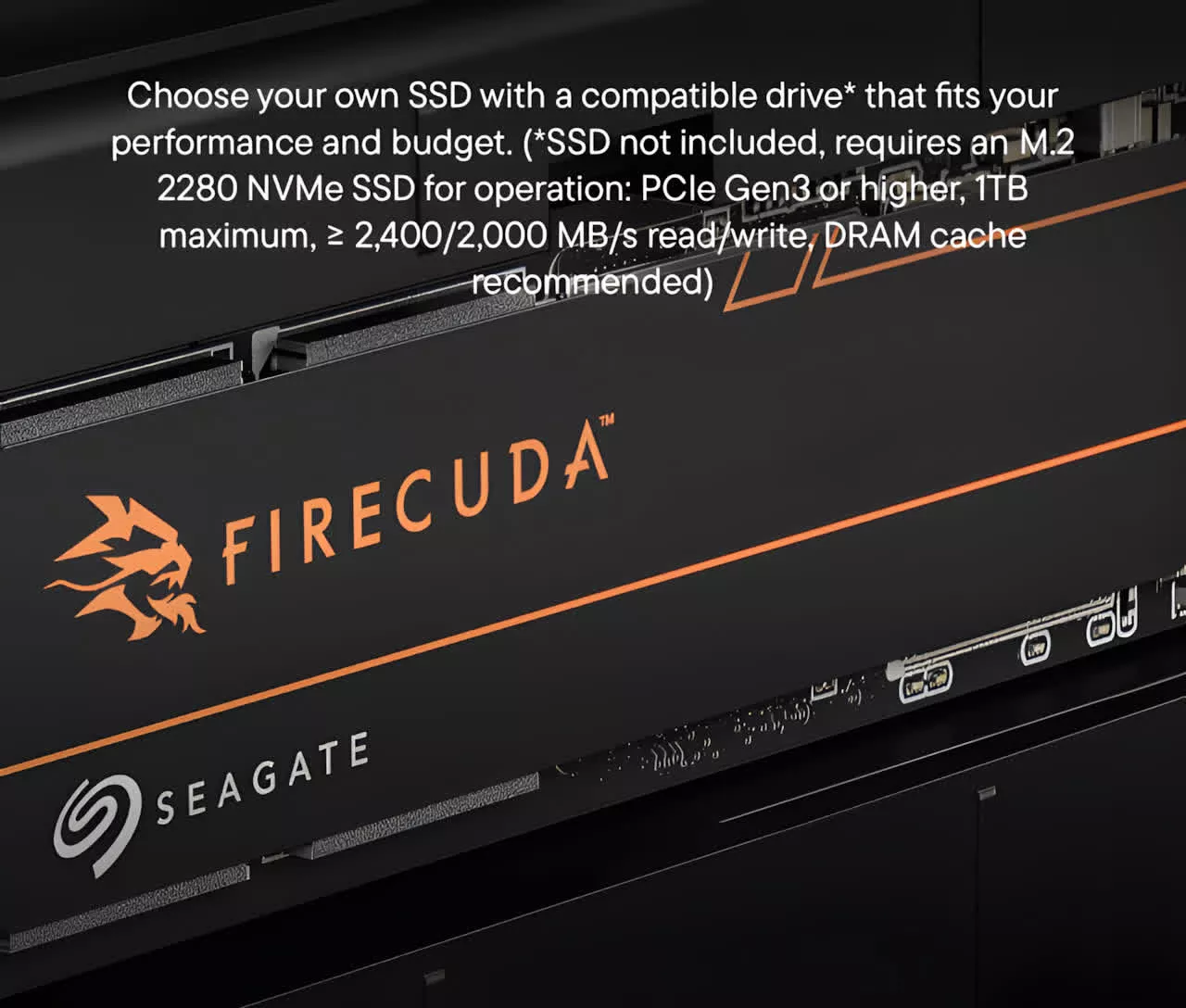
Seagate has introduced the FireCuda Forge, an external "desktop" HDD designed to approach NVMe-class data rates by embedding a smaller SSD in the same enclosure. Just like classic hybrid drives, FireCuda Forge can store frequently used data on a much faster solid-state cache. Unlike those older designs, however, the SSD isn't included: the user has to supply it.
FireCuda Forge is currently available in 8TB and 20TB capacities, priced at $699 and $899 respectively. The external HDD hosts a "non-populated" slot for a user-provided M.2 SSD, with Seagate capping the usable cache at 1TB, which further increases the expense required to enjoy the improved data rates the device is allegedly designed to achieve.
FireCuda Forge includes Alkemi, a whole new I/O management technology Seagate developed to bring this hybrid drive concept to fruition. The storage giant explained that Alkemi uses an FPGA chip and an embedded Linux OS to manage the solid-state cache. The system constantly monitors file access workloads so that it can decide which data to prioritize and copy onto the faster SSD.
Alkemi is allegedly capable of adapting to each user's needs, employing optimized caching policies to achieve higher cache hit rates. FireCuda Forge is primarily pitched as a gaming storage drive, with Seagate testing several gaming sessions representing 4.3 million I/O requests. Overall, Alkemi reached a cache hit rate of 90%.
The new hybrid drive behaves like a single storage unit, which means the host operating system just "sees" one drive. That makes data management simpler, but it also introduces a potential reliability risk if something goes wrong in either the SSD cache or the HDD portion of the drive.
On paper, a fully populated FireCuda Forge should deliver high-bandwidth throughput for gaming and recording workloads, with speeds up to 2,500MB/s read and 2,000MB/s write over USB4. The external drive is compatible with M.2 2280, PCIe Gen3 or newer SSDs, while official OS support includes Windows 11 and macOS 26.
FireCuda Forge's high price tag will likely hurt the device's popularity, and prices aren't likely to improve anytime soon. Just like the other few surviving HDD manufacturers, Seagate is now enjoying a massive revenue increase thanks to growing demand from AI data centers.