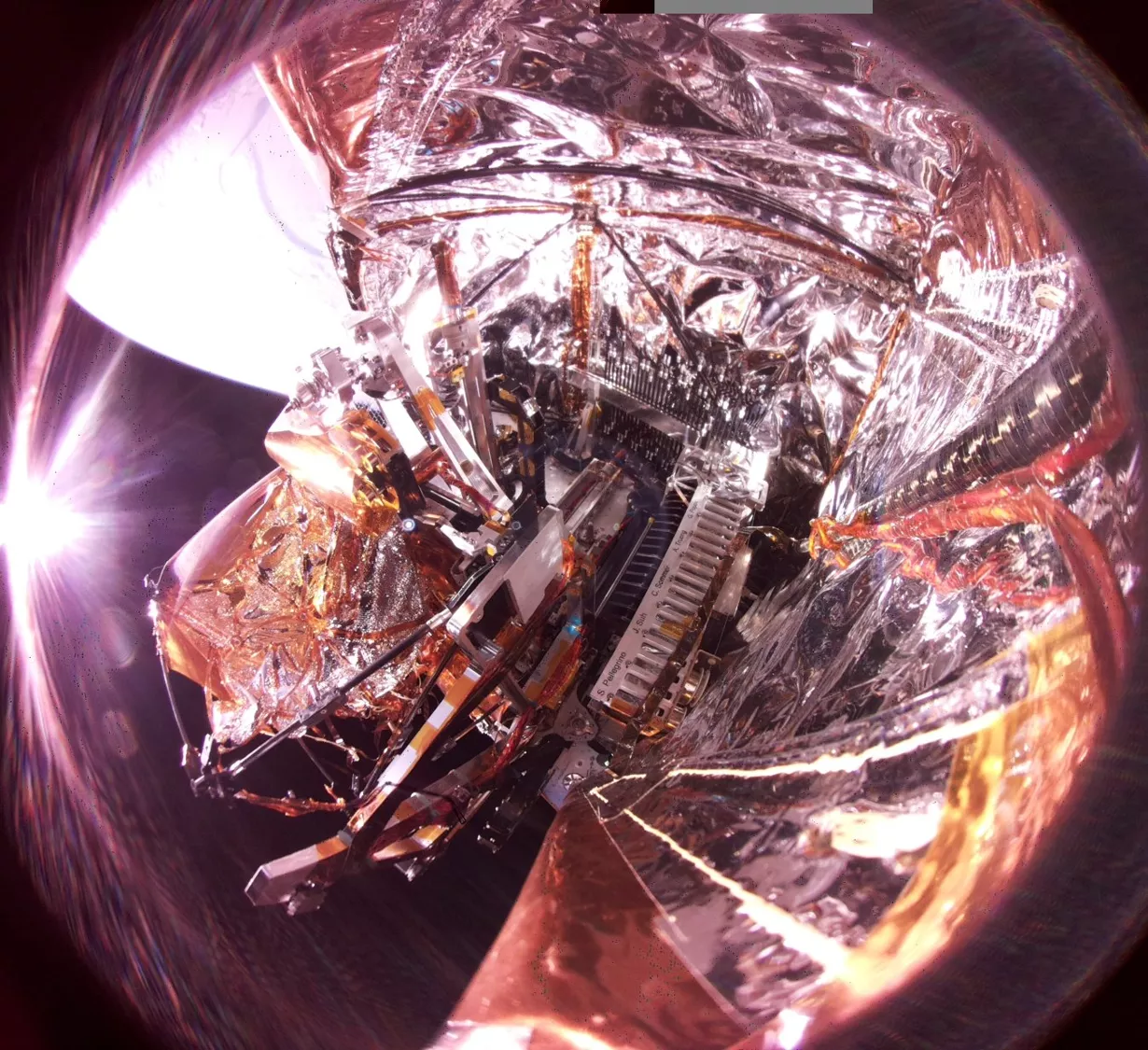
The big picture: These days, anything large that's heading to orbit either gets folded up to fit inside a rocket or is assembled by astronauts once it arrives. A small robot from Caltech has now tried a third route. Up in low Earth orbit, it pieced together part of an antenna frame from loose struts and joints. Its creators say that makes it the first structure ever built autonomously in space.
The machine, called ASTRA, takes up roughly a cubic meter and packs a gantry arm, motorized parts dispensers and 11 cameras. Engineers also squeezed two finished sections of the frame inside before launch, so its first job in orbit was simply pushing those out.
After that, the fairly basic arm got to work, sliding along three straight axes to pull composite tubes and aluminum joints from the dispensers. That's how the third section came together, piece by piece. Once a section is done, the robot attaches a netlike reflective film to it, since that film is what eventually turns the frame into an antenna.
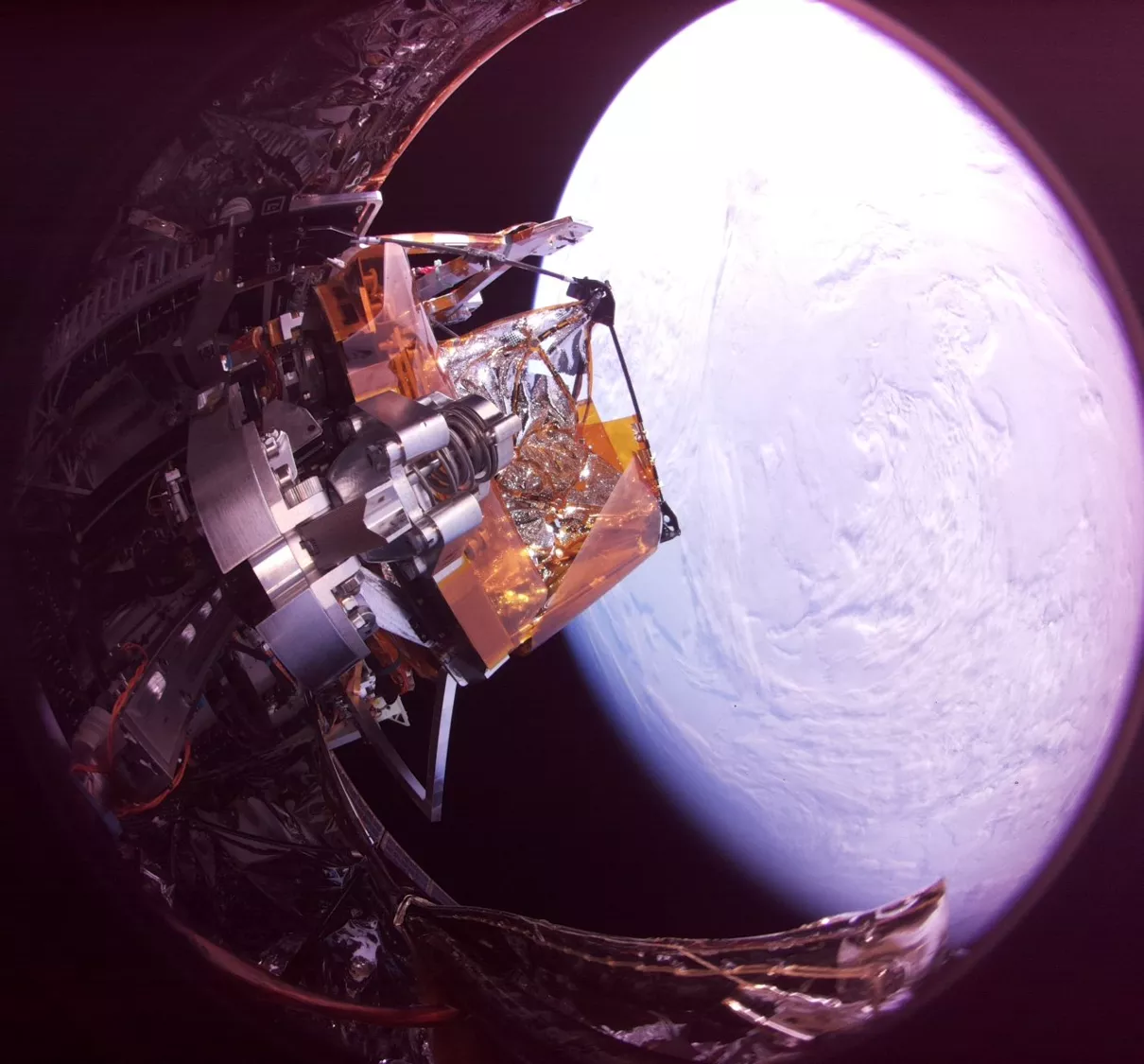
The finished antenna is supposed to span 1.4 meters (4.5 feet), which takes 11 of those sections. But only three are in place so far, and the mission wraps up in December. So the team doesn't expect to finish the full frame.
The word "autonomous" also comes with a bit of an asterisk here. While the robot handled the physical assembly, three team members on the ground sent it commands and checked progress through photos sent down from orbit. Whenever something went wrong, they first recreated the problem on an identical flight spare in a Caltech lab and uploaded a fix once it worked.
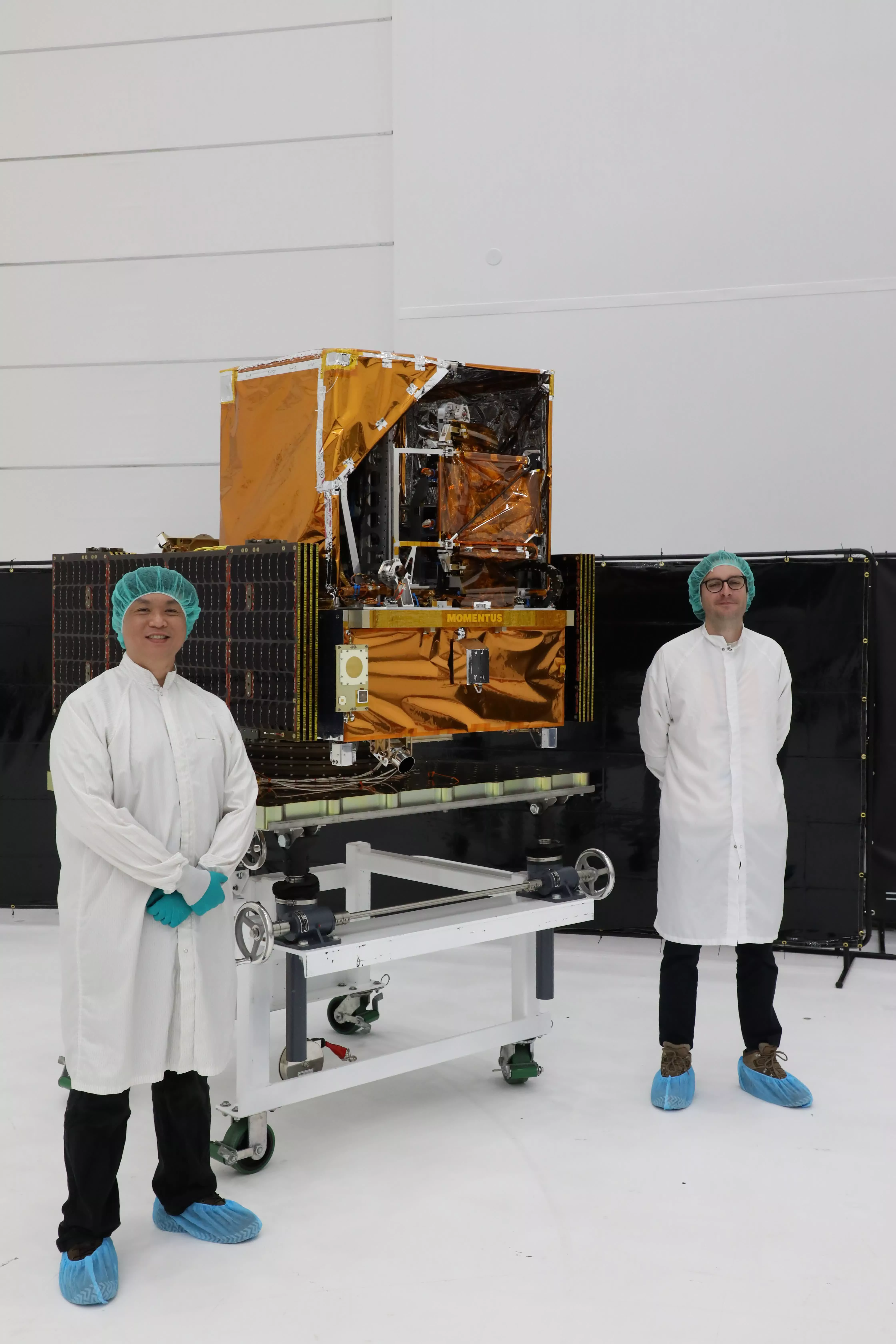
Getting even one section built matters because rocket nose cones only have so much room. Webb's 21-foot mirror, for one, had to be folded to fit inside the rocket that launched it. Getting around that limit is the reason DARPA paid for this flight. The agency moved its NOM4D program into orbital testing last year, hoping to eventually launch raw parts and build structures hundreds of feet, or even miles, wide.
NASA tried something similar with OSAM-1, a mission that would have used a robotic arm to assemble an antenna in orbit. The agency scrapped it in 2024 after it had already eaten up $1.5 billion and fallen behind schedule. DARPA, meanwhile, says the ASTRA team went from an idea to working hardware in orbit in about 15 months.