Cutting corners: Plenty of people keep a big chunk of their lives stored in Gmail and Google Photos, from flight bookings and receipts to years of family pictures. For years, Google has said none of that content would be used to pick the ads they see. That promise now comes with an exception – and it applies to anyone who lets the company's AI dig through those apps.
The change sits in Google's updated privacy policy, which took effect on October 16 and was first spotted by Android Authority. The policy has long said, "We don't show you personalized ads based on your content from Drive, Gmail, or Photos." That line is still there, but it now ends with a qualifier: "unless you choose to make data from these services available to other Google services that support personalized ads."
A separate new passage says Search may process the data people let it access to personalize content, including ads.
The exception mostly concerns Personal Intelligence, an opt-in feature that lets Gemini and AI Mode in Search pull context from apps like Gmail and Photos. It launched for paying subscribers in January before reaching all US users in March. So if someone asks AI Mode for things to do on an upcoming trip, it can check their hotel confirmation in Gmail and old vacation pictures before answering.
While the search giant says ads won't be based directly on someone's Gmail inbox or Photos library, its support page explains that AI Mode may draw on summaries, excerpts, and inferences from connected apps, and that this same information may be used to show ads. Advertisers still can't access those apps, though, and sensitive categories like health, religion, and sexual orientation remain off-limits for ad targeting.
The company has also started testing ads in AI Mode for people with Personal Intelligence switched on. Back in March, it said that experience would stay ad-free for now, though it expected ads to work similarly for connected users down the line.
Gmail ads once worked quite differently. Google scanned free accounts to target them – a practice that drew lawsuits and steady criticism from privacy advocates. The company only stopped scanning inboxes for ad personalization in 2017, and Gmail kept showing ads targeted with other data like search and YouTube activity.
The new wording appears to be the first time since then that Google's own policy has allowed inbox content to play a part in ads, even if only indirectly.
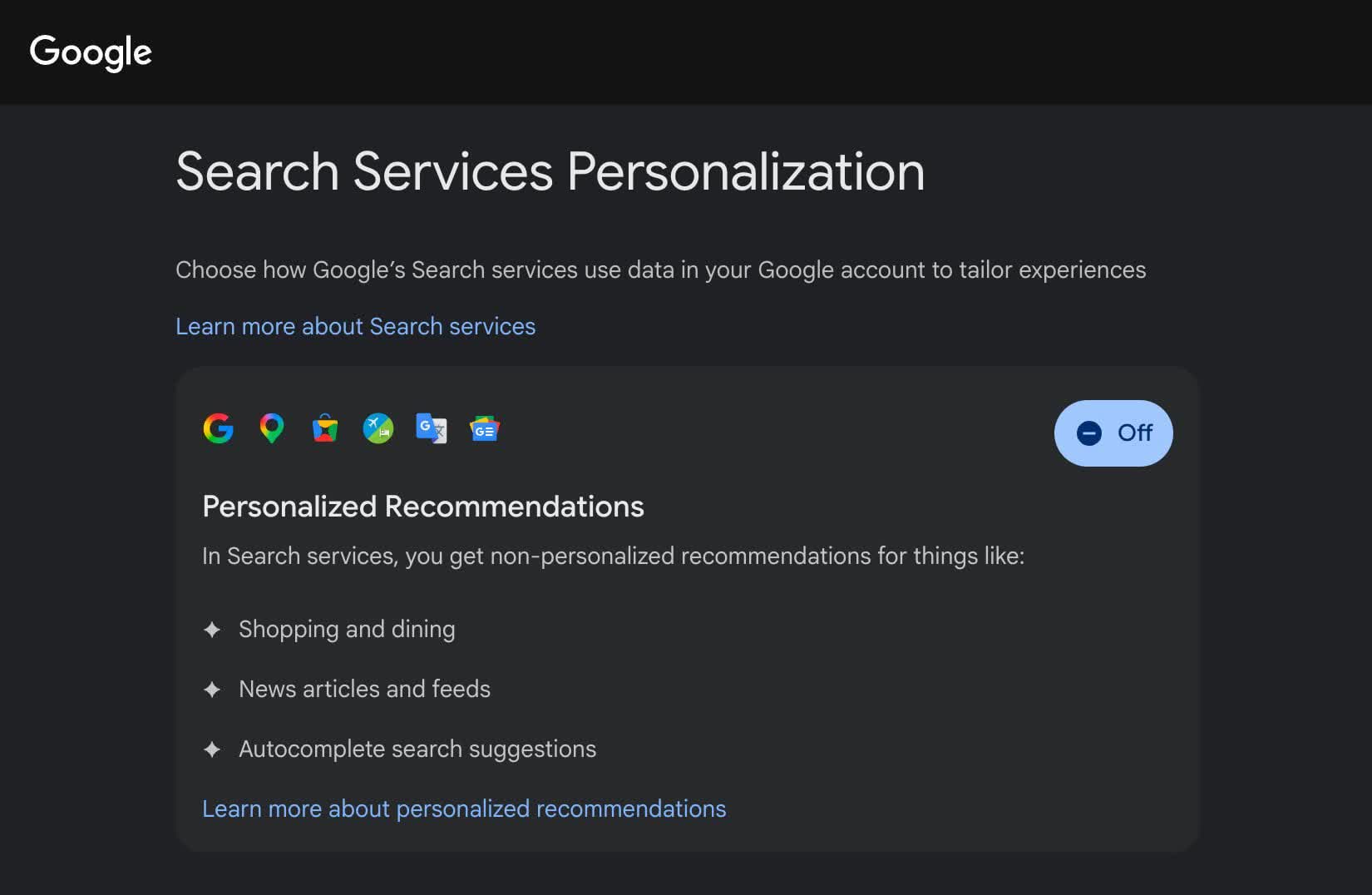
Thankfully, there's still a way out. If you'd rather keep your inbox out of it, you can disconnect Gmail and Google Photos under Connected Content Apps, which can be found in your Google Account's Search Services Personalization settings.
Another option is turning off ad personalization in My Ad Center, though it doesn't necessarily stop connected apps from feeding the AI features.