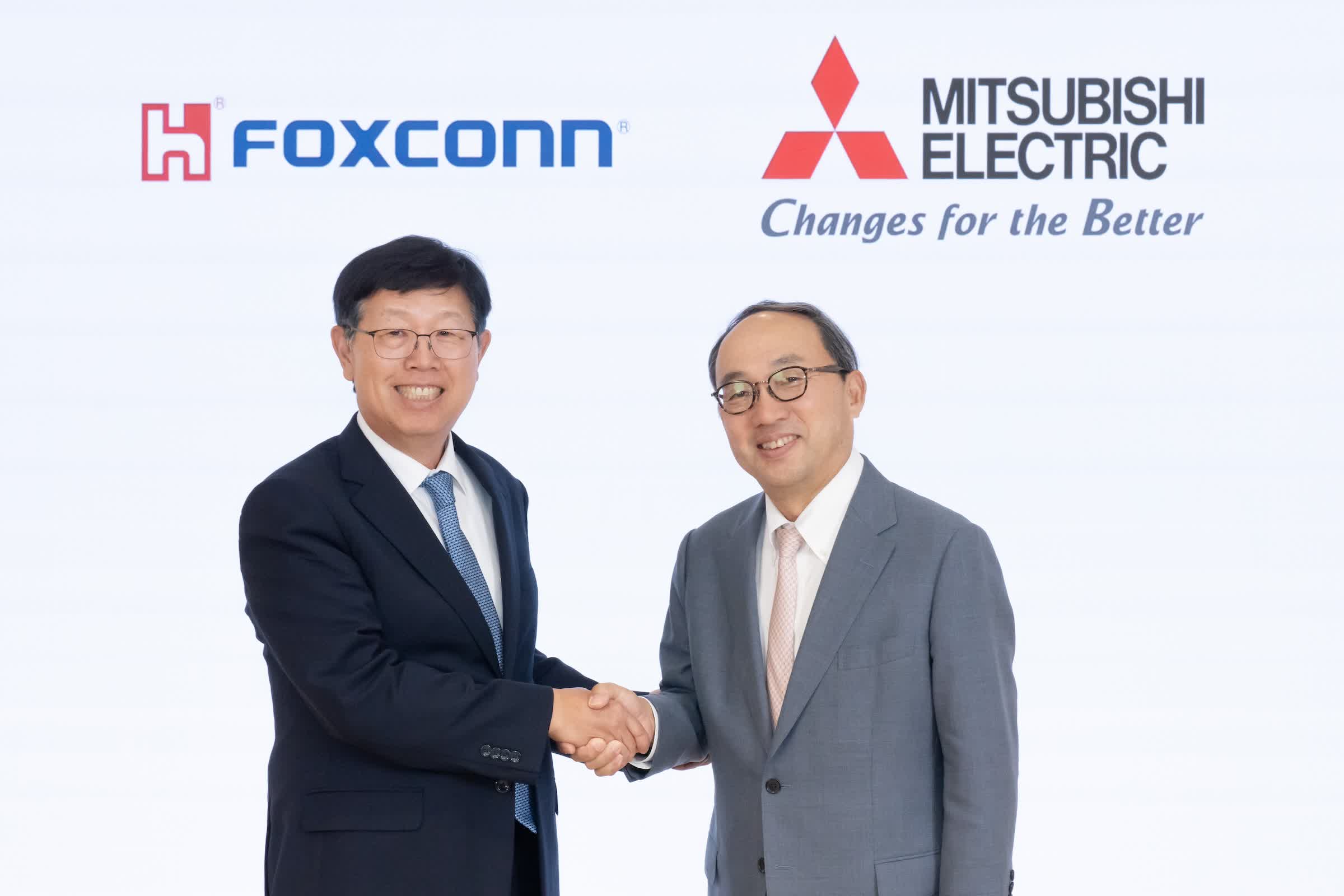
What just happened? Foxconn has agreed to pay $727 million for a 50% stake in Mitsubishi Electric's automotive equipment business, gaining access to vehicle-control technology and software expertise for its push to develop electric vehicles for other manufacturers. The deal gives Foxconn a broader engineering base, but much of the business it is buying still serves conventional vehicles. Its success will depend on turning that expertise into products automakers want to buy.
The companies plan to combine Mitsubishi Electric's powertrain, autonomous-driving and in-car computing technology with Foxconn's manufacturing operations. They want to build EV platforms in Japan, sell them first to Japanese automakers and then seek customers overseas.
"What attracted us most was the electronic-control technology – and the substantial software resources behind them," Jun Seki, Foxconn's chief strategy officer for EVs, said at a news conference in Tokyo.
Mitsubishi Electric Mobility's products include alternators, starters, ignition coils, radar sensors and electric powertrain equipment. Its established automaker relationships also give Foxconn a route to potential customers.
But Foxconn is not buying into all of Mitsubishi Electric's EV technology. The Japanese company's power-semiconductor business is outside the agreement. That includes silicon-carbide and insulated-gate bipolar transistor power modules used in EV inverters.
The automotive deal instead covers the equipment business that Mitsubishi Electric spun off into Mitsubishi Electric Mobility in April 2024. Before closing, Mitsubishi Electric will move its remaining automotive operations, including those held by overseas subsidiaries, into that company.
Foxconn's investment arm, Lin Yin International Investment, will acquire half of the combined business. The partners expect the deal to close in October 2027, following antitrust reviews and other required approvals.
Mitsubishi Electric has been reshaping its portfolio, exiting car multimedia and fuel injectors and transferring its lighting business to Stanley Electric.
An earlier electric-powertrain partnership changed course. In May 2024, Mitsubishi Electric Mobility and Aisin agreed to establish a joint venture for traction motors, inverters and control software. Five months later, they dropped the joint-venture plan and opted for a business alliance.
The purchase gives Foxconn another way into the car industry after several years of prototypes, partnerships and setbacks.
Foxconn had planned to build Fisker's Pear EV at its Lordstown, Ohio, factory, but the vehicle never reached production. Fisker went bankrupt in 2024, and Foxconn sold the factory last year.
Foxconn has made progress elsewhere. Mitsubishi Motors, which is separate from Mitsubishi Electric, is putting its badge on the Foxtron-developed ASX VR-e for Australia and New Zealand. Foxconn also has a bus joint venture with Mitsubishi Fuso and is a partner in Saudi Arabia's Ceer EV brand.
The Mitsubishi Electric agreement adds an established automotive supplier to Foxconn's network, alongside its existing vehicle-development and manufacturing partnerships.