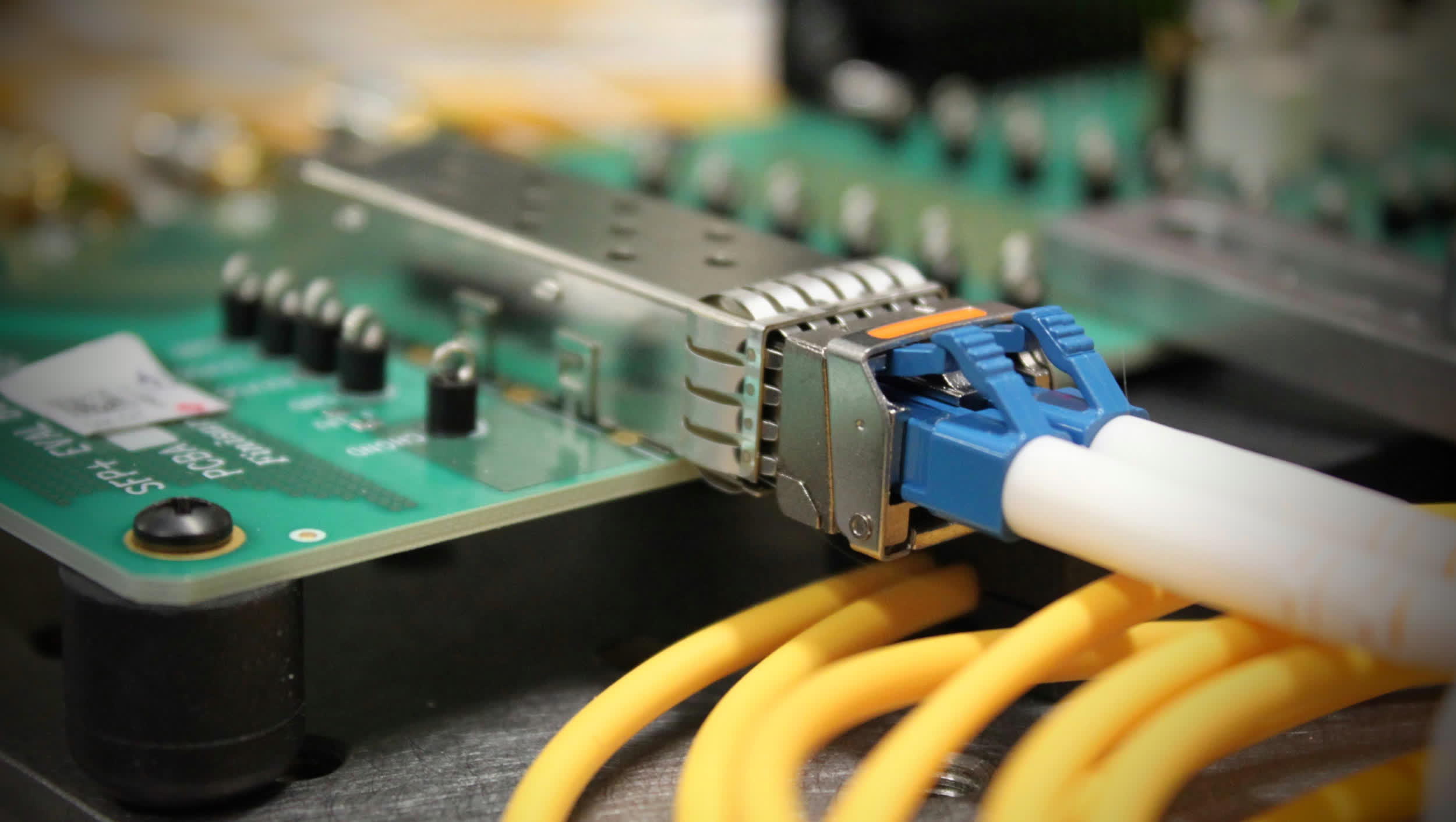
In Layman's Terms: New data center projects are emerging everywhere, with no end in sight. Traditional data center interconnects are becoming increasingly inefficient, which is why Nvidia and Cisco have developed a new standard designed to move all those terabytes of data as quickly and efficiently as possible.
GPU maker Nvidia and networking specialist Cisco have unveiled a new network interface called Ultra-Dense Small Form Factor Pluggable (USFP). The new optical transceiver is designed to significantly increase bandwidth in data centers, helping accommodate the enormous data demands of modern AI models and training workloads.
The USFP module is the first interface to support 400Gb/s per lane, Cisco said. Ultimately, the module is expected to support total data transfer rates of up to 12.8Tb/s. USFP's total bandwidth capacity is four times that of optical interfaces offering 200Gb/s per lane, while also delivering a 1.3x improvement in power efficiency.
Cisco said USFP is designed to give data center customers access to next-generation optical networking technology that can accommodate the growth of their AI projects. The new interface is intended to scale efficiently using an established deployment model, although several development steps remain before it reaches the full 12.8Tb/s capacity envisioned by its designers.
The first USFP-based optical transceivers are expected to feature 16 full-duplex lanes in an octal small form factor footprint. These pluggable interfaces will support both switches and SuperNIC network adapters. The latter are specialized accelerator cards designed by Nvidia and its partners to move data directly between GPUs using the RDMA over Converged Ethernet (RoCE) network protocol. Put simply, RoCE enables remote direct memory access over Ethernet networks.
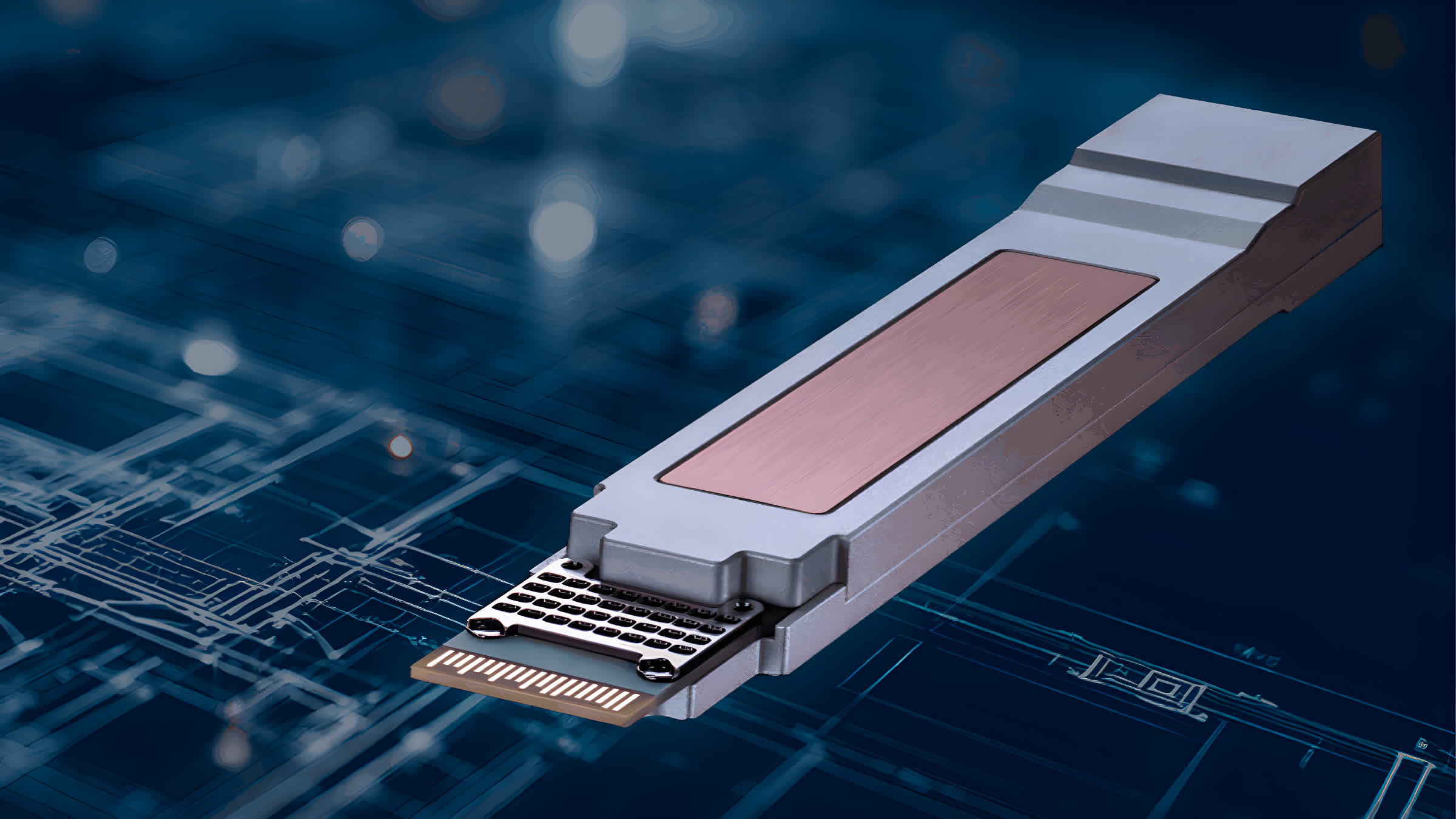
The next phase will expand the number of lanes to 32 or more, potentially allowing AI networking systems to connect additional 1.6Tb/s endpoints without adding more network tiers. Cisco expects the complete USFP module to eventually achieve an overall bandwidth capacity of 12.8Tb/s.
The company also highlights USFP's two-step insertion design, which is intended to improve signal integrity and reduce contact wear. The interface is designed to support power dissipation of up to 100 watts without requiring a dedicated cooling circuit inside the transceiver.
After developing USFP technology, Nvidia and Cisco began working with TE Connectivity and Amphenol to create the remaining components of the new networking infrastructure. Third-party companies are making cages, connectors, and modules for the USFP interface, and more partners are expected to join the effort.
New data center projects are adopting various networking solutions to handle their massive AI workloads. Cisco acknowledged that pluggable modules such as USFP will form part of a broader ecosystem that includes near-packaged, co-packaged, and other emerging optical architectures. These silicon photonics technologies could continue to deliver significant benefits to the data center market even if the AI bubble eventually bursts.