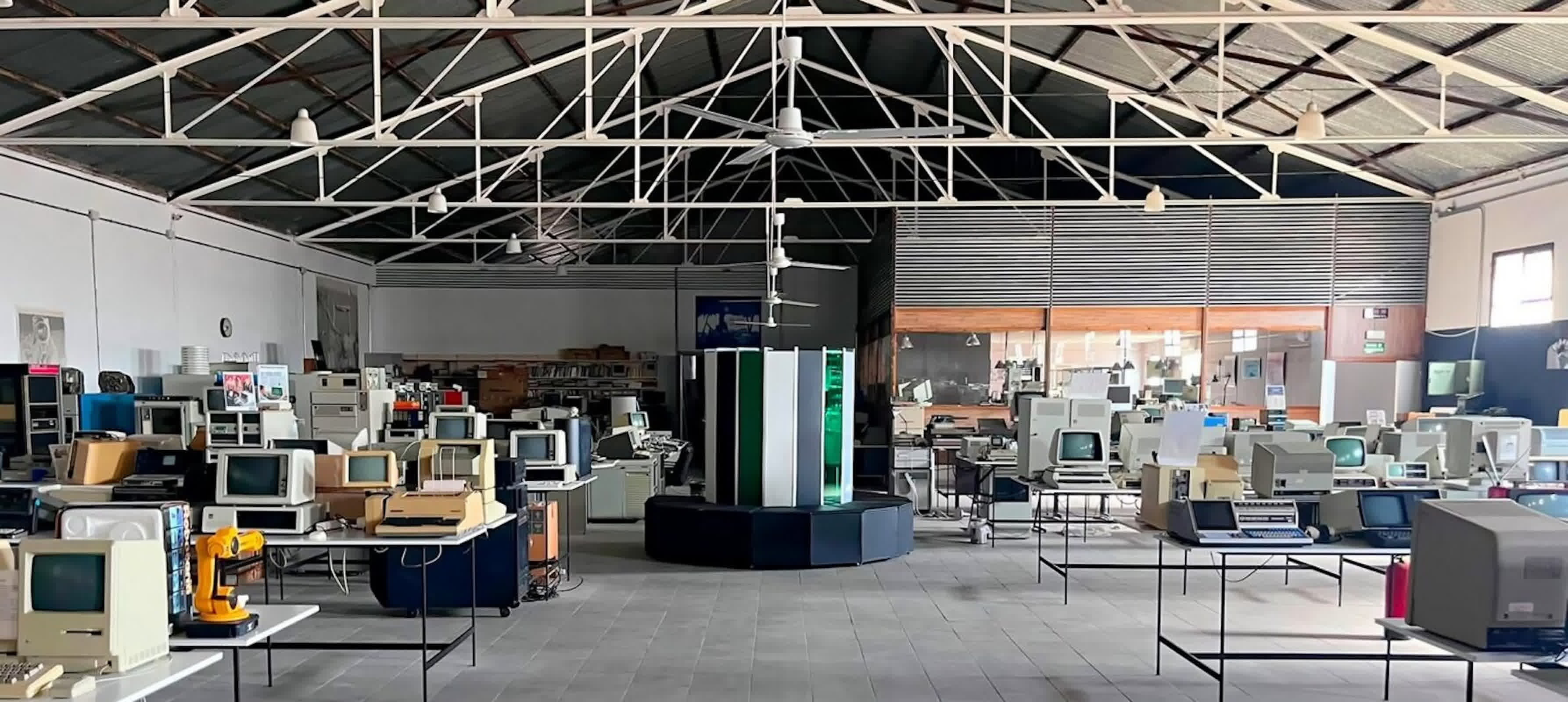
In a nutshell: A Spanish computing museum has built a working cluster of 30 Mac minis inside a full-size replica of the Cray-1 supercomputer. Most of the Macs are from 2012, but together they have reached a reported 1.3 teraflops in matrix-multiplication tests. Visitors can watch calculations run on a single core before seeing the workload distributed across the cluster.
The Museo de Historia de la Computación spent 18 months developing the exhibit. The replica preserves the appearance of the 1976 machine without trying to reproduce its internal hardware. Built to mark the 50th anniversaries of the Cray-1 and Apple's founding, the model is now on permanent display at the museum alongside two unused authentic Cray CX1 systems.
The cluster contains five quad-core Intel Core i7 machines and 25 dual-core Core i5 models. All but two units, which date to 2014, were made in 2012. That configuration provides 70 cores, although only 64 were active in the most recent tests after one node went offline.
The museum previously reported 1.5 teraflops with all 70 cores running. Both results came from a custom Python matrix-multiplication script, so the figures reflect performance on that test rather than across a range of applications.
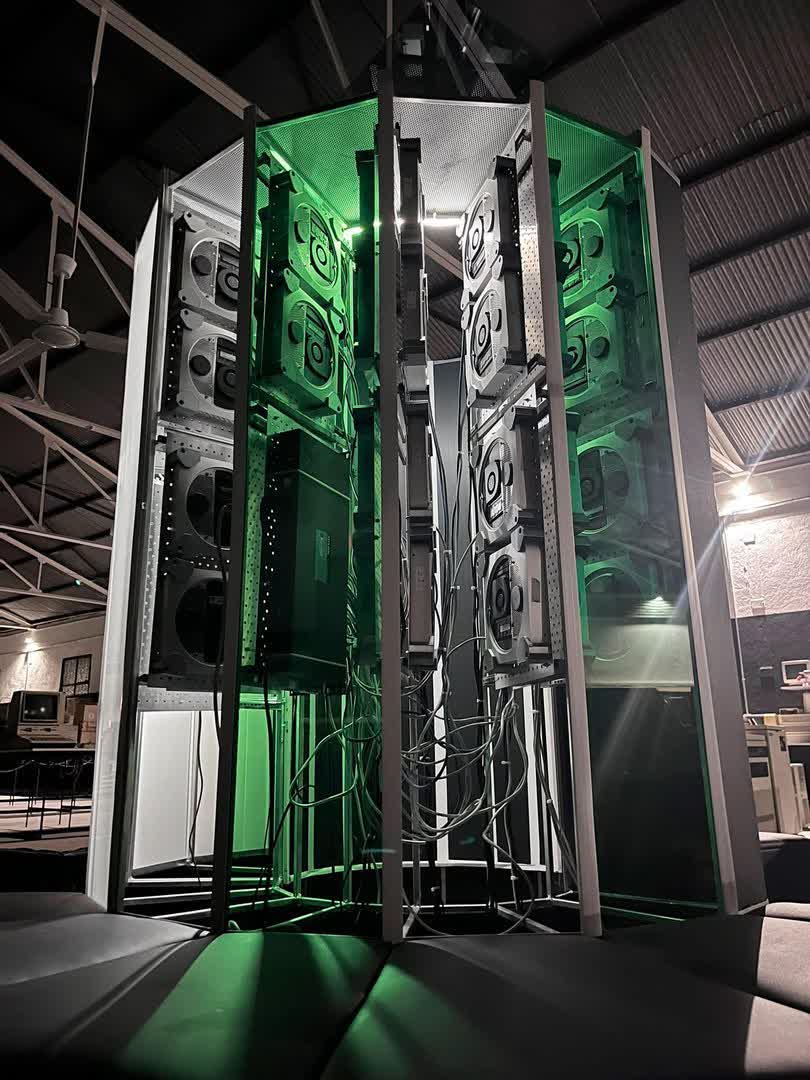
A master Mac mini in the exhibit's control terminal coordinates the other machines. The team chose macOS Mojave 10.14 instead of Linux, using the Message Passing Interface (MPI) to handle communication between nodes.
This is a different approach from the original Cray-1's vector processing, which applied an instruction to multiple data elements. The replica distributes calculations among independent processors. The original machine had a theoretical peak performance of approximately 160 megaflops, far below the results reported for the Mac cluster.
It's worth remembering that one figure is a theoretical peak, while the others come from the museum's custom test. Nevertheless, the exhibit gives visitors a way to see the difference between a purpose-built supercomputer and a cluster assembled from consumer machines.
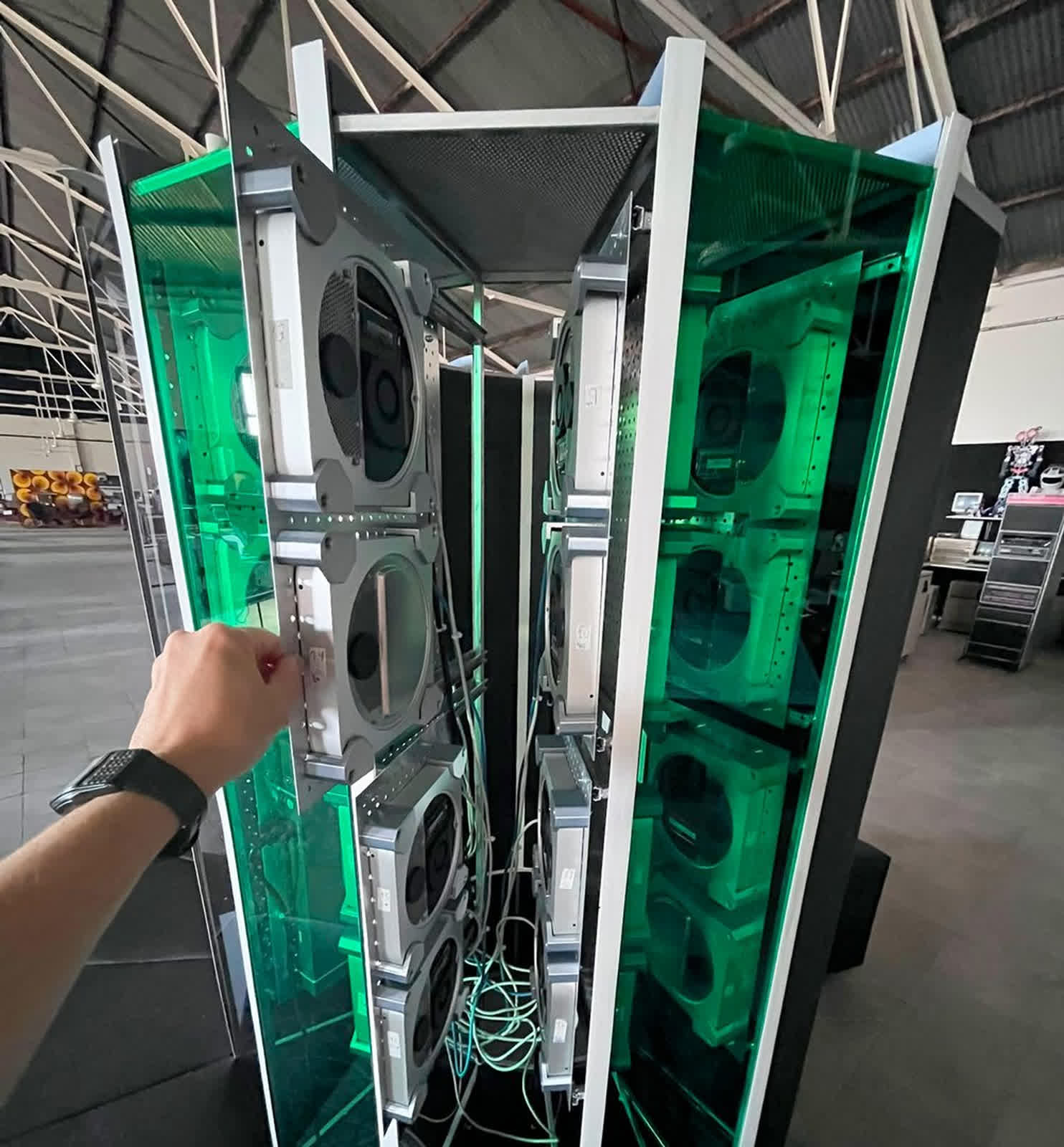
The team mounted the Macs vertically on aluminum trays inside a steel rack chassis. That arrangement allows warm air to rise through the tower and escape through grilles at the top, cooling the enclosure by natural convection without additional mechanical fans.
The museum says the cluster is quiet enough that visitors must stand close to hear it. Its two gigabit Ethernet switches, installed at the base, reportedly produce the most noticeable noise, at 30 – 33 decibels. The developers plan to replace them with silent models.
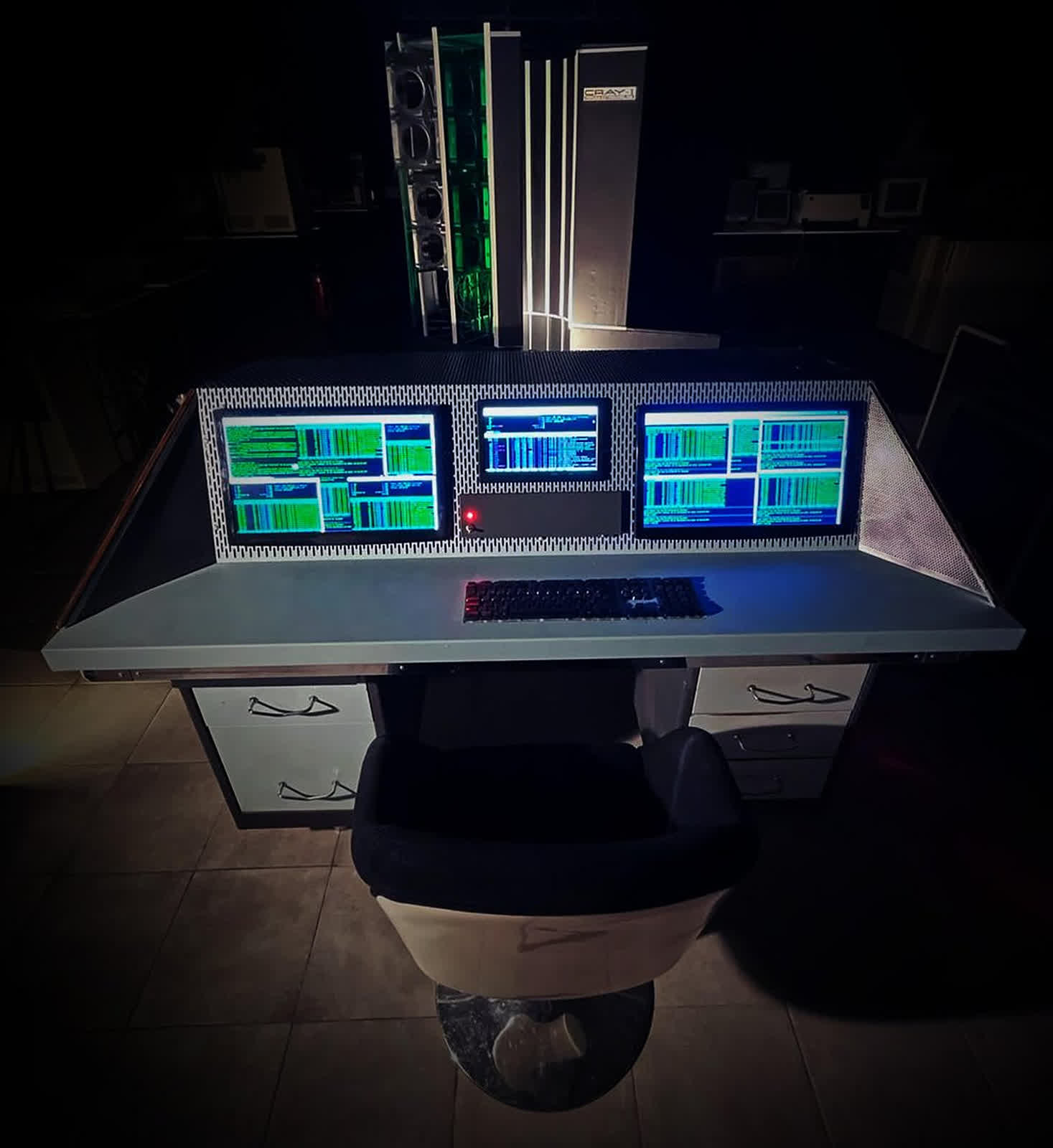
The control terminal borrows design elements from the DEC VT05 and Processor Technology Sol-20. An analog control panel adds to its 1970s appearance, while the Mac mini inside controls the cluster.
The developers originally intended to install CRT monitors. They switched to flat Samsung displays to avoid the connection problems involved in pairing older monitors with newer computers.
Further additions are planned. These include original lamps from an IBM System/3, 3.5-inch and 5.25-inch floppy drives mounted beneath the desk, and a 3D-printed keyboard shell based on the HP 250 design.
The team also wants to expand the computing hardware. Half of the replica's tower is still empty, and a proposed crowdfunding campaign would pay for 70 – 80 M4 Mac minis. The goal is to build a cluster powerful enough to make the TOP500 list.