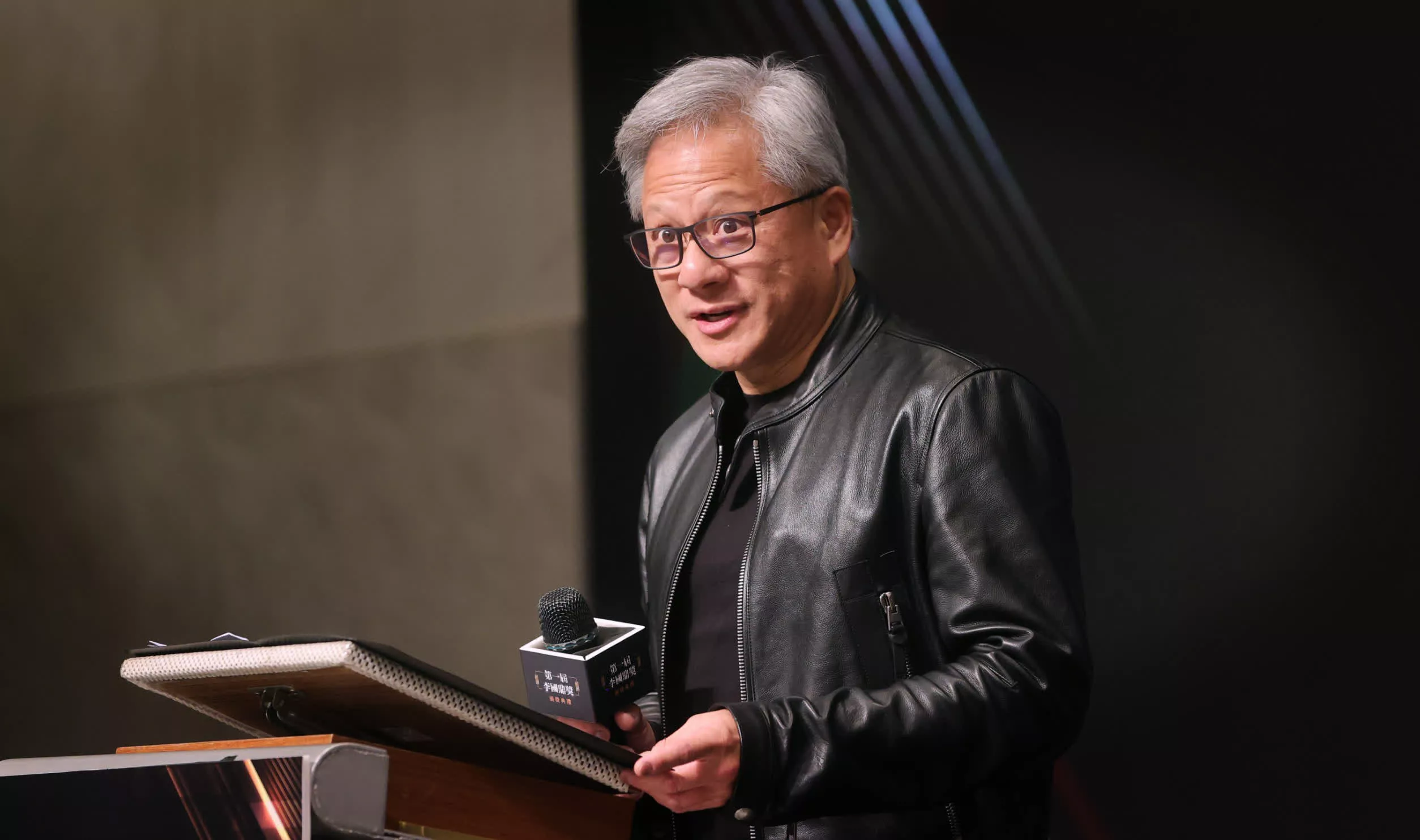
What just happened? Jensen Huang has received the National Medal of Science for turning the GPU from a graphics chip into a computing platform used in AI and scientific research. President Donald Trump presented the award to Nvidia's founder and CEO at a technology summit at the US Institute of Peace in Washington, D.C.
AMD CEO Lisa Su, Google co-founder Sergey Brin and Elon Musk also received the National Medal of Science at the event. Dell founder Michael Dell and Microsoft CEO Satya Nadella received the National Medal of Technology and Innovation, a separate federal honor.
Huang's citation highlighted massively parallel computation and the breakthroughs it made possible. The recognition reflects a change in how GPUs are used: hardware originally developed to put images on a screen became an architecture for general-purpose computing, extending its reach into AI and scientific workloads.
Under Huang, Nvidia developed the technology beyond its gaming origins. That shift gave researchers a computing platform suited to work beyond graphics and helped advance AI and scientific computation.
Massively parallel computation is the link between those uses. The citation credits Huang's contributions to massively parallel computing with enabling significant breakthroughs. The award recognizes both the underlying computing architecture and the applications it enabled.
The other recipients represent several parts of the technology industry that supplies AI computing systems. Nvidia and AMD develop chips, while Google, Microsoft and Dell span cloud services and computer hardware.
The summit also included investment announcements from industry leaders. Eleven technology companies pledged a combined $2.4 billion in AI tools and computing credits to support the government's Genesis Mission, an initiative aimed at accelerating scientific discoveries through AI. Nvidia made the largest commitment, pledging $1 billion over five years to support scientific research.
The National Medal of Science is the US government's highest scientific honor, awarded since 1963. For Huang, it follows the IEEE Medal of Honor, which he received in 2026, and the Queen Elizabeth Prize for Engineering, which he shared with Nvidia chief scientist Bill Dally in 2025.