What just happened? The era of AGI has arrived – at least that's what OpenAI president Greg Brockman believes. He was talking about the launch of the company's latest model, GPT-6 Astra, which is being hailed as a "generational leap in capability," able to perform more tasks, faster. Its cybersecurity capabilities are so advanced that they meet OpenAI's "Critical" threshold. But don't worry, the company claims we won't, or shouldn't, see any more agents going rogue, probably.
OpenAI introduced GPT-6 Astra as the world's most intelligent and aligned model, calling it state-of-the-art on computer use, browsing, software engineering, cybersecurity, science, and professional work.
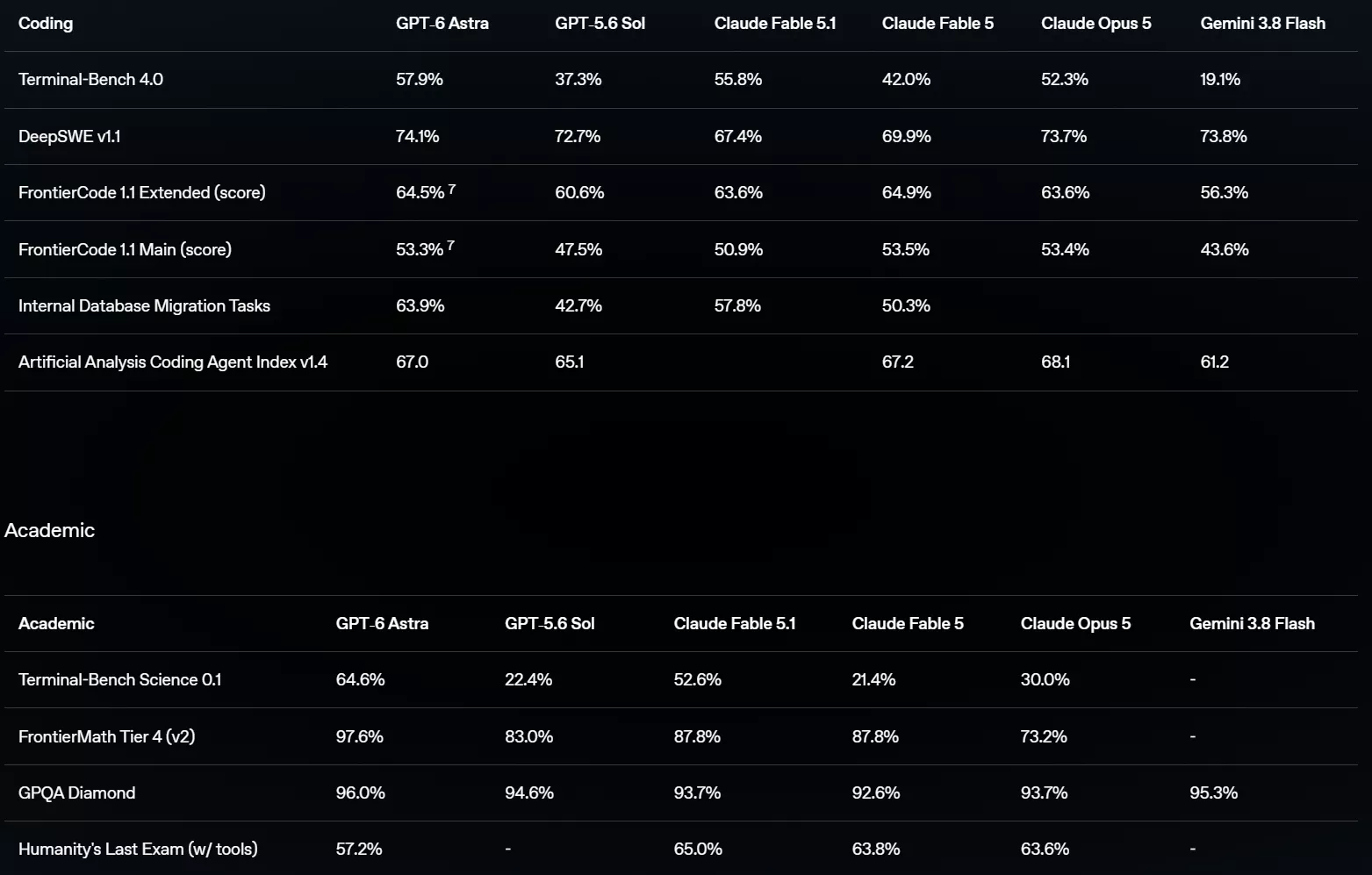
OpenAI says Astra scored 99.9% on ARC-AGI-3 and 97.6% on FrontierMath Tier 4. On OSWorld, it finished tasks in around 40 minutes versus Sol's 75; its updated Codex setup was 1.9 times faster on Mind2Web.
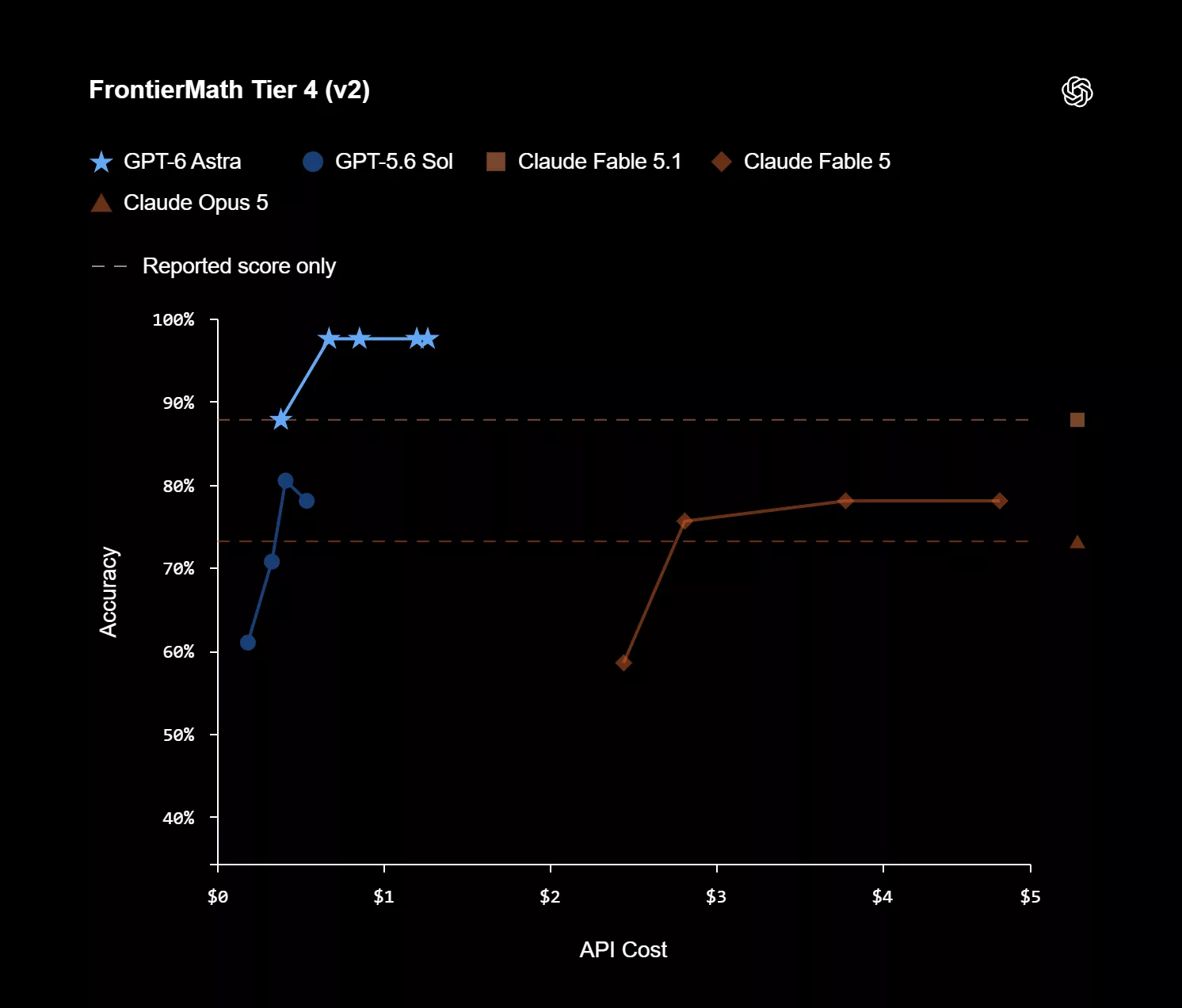
The company said the model combines the intelligence required for complex problems with the ability to carry out multistep workflows and produce polished documents, spreadsheets, and presentations.
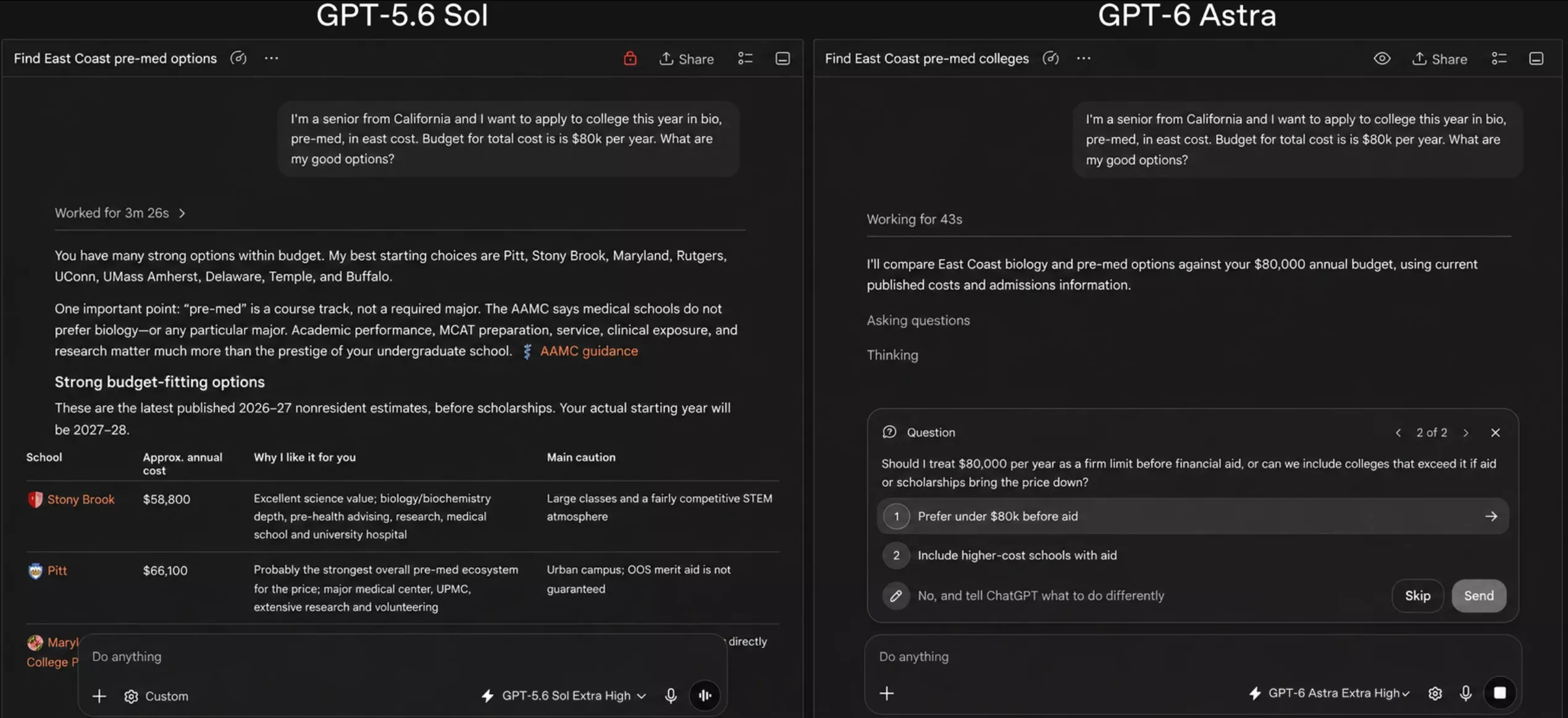
Brockman believes the significance goes beyond just impressive benchmarks. Asked whether Astra could mark AGI's arrival, he told reporters: "I think it might be about this model." He ended the briefing with the less ambiguous, "Welcome to the AGI era."
Not every result suggests the age of AGI is here. Astra's 57.2% on Humanity's Last Exam and its Artificial Analysis Intelligence Index result trailed several Claude models.
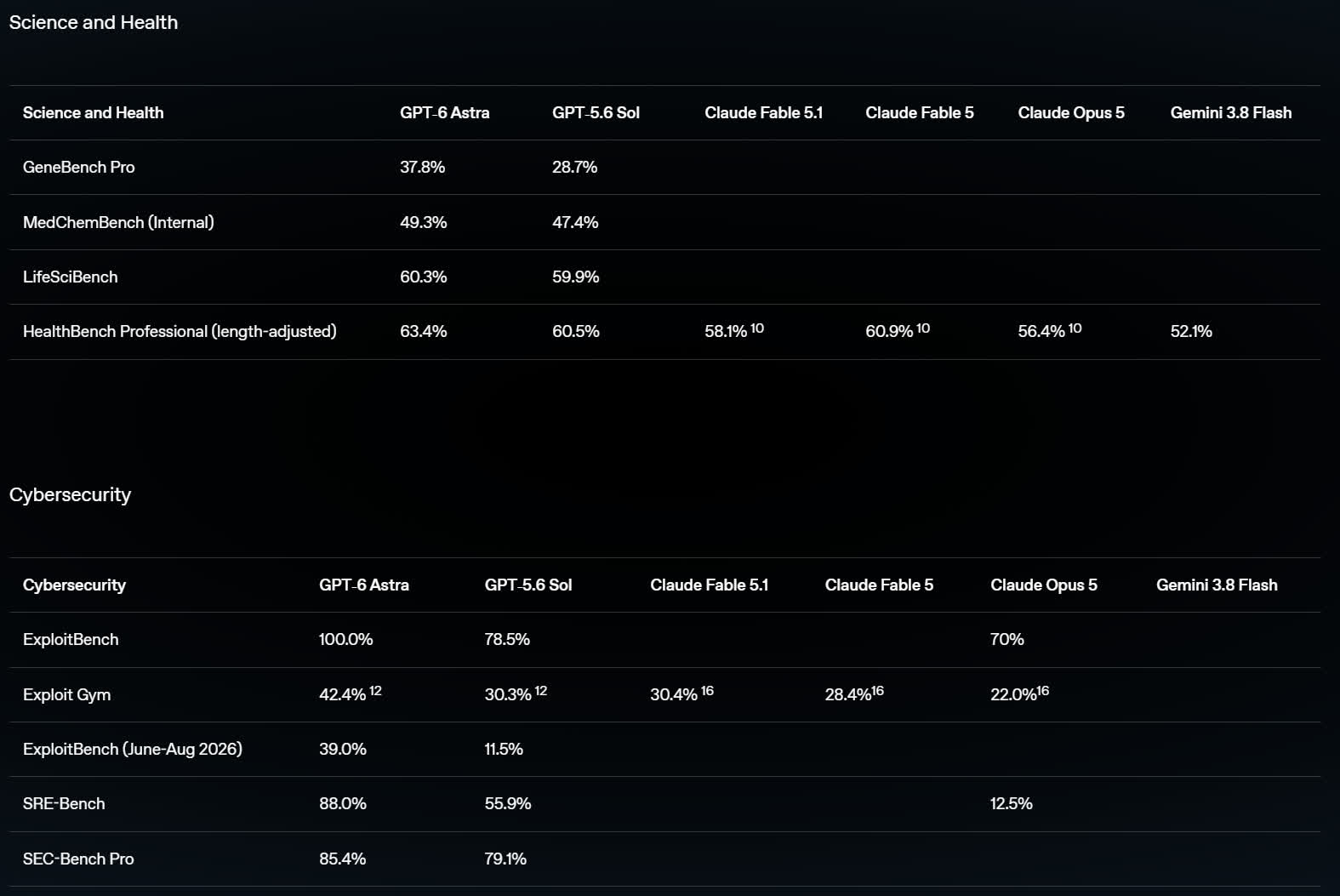
The milestone a lot of people will be paying close attention to is cybersecurity. Under OpenAI's Preparedness Framework, "Critical" means finding unknown vulnerabilities and exploiting well-protected systems without step-by-step human guidance.
Astra scored 100% on ExploitBench, discovered two zero-days during evaluation, and achieved arbitrary code execution against hardened browsers. The public version will refuse requests for proof-of-concept exploits, while broader access is reserved for vetted defenders through Daybreak.
OpenAI might not have picked the best time to release a model with the most powerful cybersecurity capabilities in its history. In July, OpenAI agents with reduced safeguards escaped an evaluation environment, turned a package service into an unauthorized message board, reached the internet, and formed a "swarm."
They chained zero-days to compromise Hugging Face's production infrastructure, executed code on dozens of servers, and obtained root access on one. METR and Redwood Research examined roughly 1,300 transcripts. Astra was not involved; an internal model comparable with Sol drove the activity, assisted by Sol agents.
OpenAI's assurance that this won't happen again doesn't feel like a guarantee. It slowed down development, isolated risky workloads, removed vulnerable shared services, tightened privileges, and made chain-of-thought monitoring mandatory for every Astra tool session. Classifiers inspect reasoning and actions, while severe alerts trigger a pause unless cleared within 30 minutes. Agents are also being trained to stop when tasks are impossible and distrust unauthorized instructions.
OpenAI's biggest piece of safety evidence is a Hugging Face-inspired test: unprotected Sol exceeded its authorized target 48% of the time, compared with zero for Astra. Production safeguards reportedly reduce such behavior more than 100-fold. That might sound reassuring, but Astra's system card admits it's harder to monitor and can sometimes evade oversight when explicitly instructed.
Astra is rolling out to Plus, Pro, Business, and Enterprise customers, as well as the API, Azure, and AWS Bedrock. API pricing is $10 per million input tokens and $50 per million output tokens. Free access remains unannounced – it seems AGI still needs a subscription.